The Chinese Chemical Supply Chain Fueling the US Opioid Crisis
A DEA sting operation captured two salespeople and showed how Chinese chemicals get to Mexican cartels for processing and then over the border.
Translate
It had been a long journey for Yiyi Chen and Qingzhou Wang.
The pair had boarded a flight from Wuhan, the central Chinese city where they worked for a chemical company called Hubei Amarvel Biotech Co. After crossing much of the Pacific, they’d arrived on Viti Levu, Fiji’s largest island. Neither Wang nor Chen, both in their 30s, had visited the country before, and they planned to combine a short business trip with some pleasure: dinner one evening at a picturesque harborside restaurant and, for Chen, a scuba-diving expedition in waters filled with docile sharks.
Their primary purpose was to hold their second in-person meeting with a promising new customer, a man they knew as Gilberto Flores. By the time Wang and Chen landed in Fiji in June 2023, they’d been in touch with him for over two months. That spring, he’d paid more than $40,000 to have 210 kilograms (463 pounds) of three obscure pharmaceutical chemicals delivered to California. Flores said they’d be used to produce as much as 55 kilograms of “the final product.” Now, they were going to discuss further shipments to the US, potentially multiple tons per month.
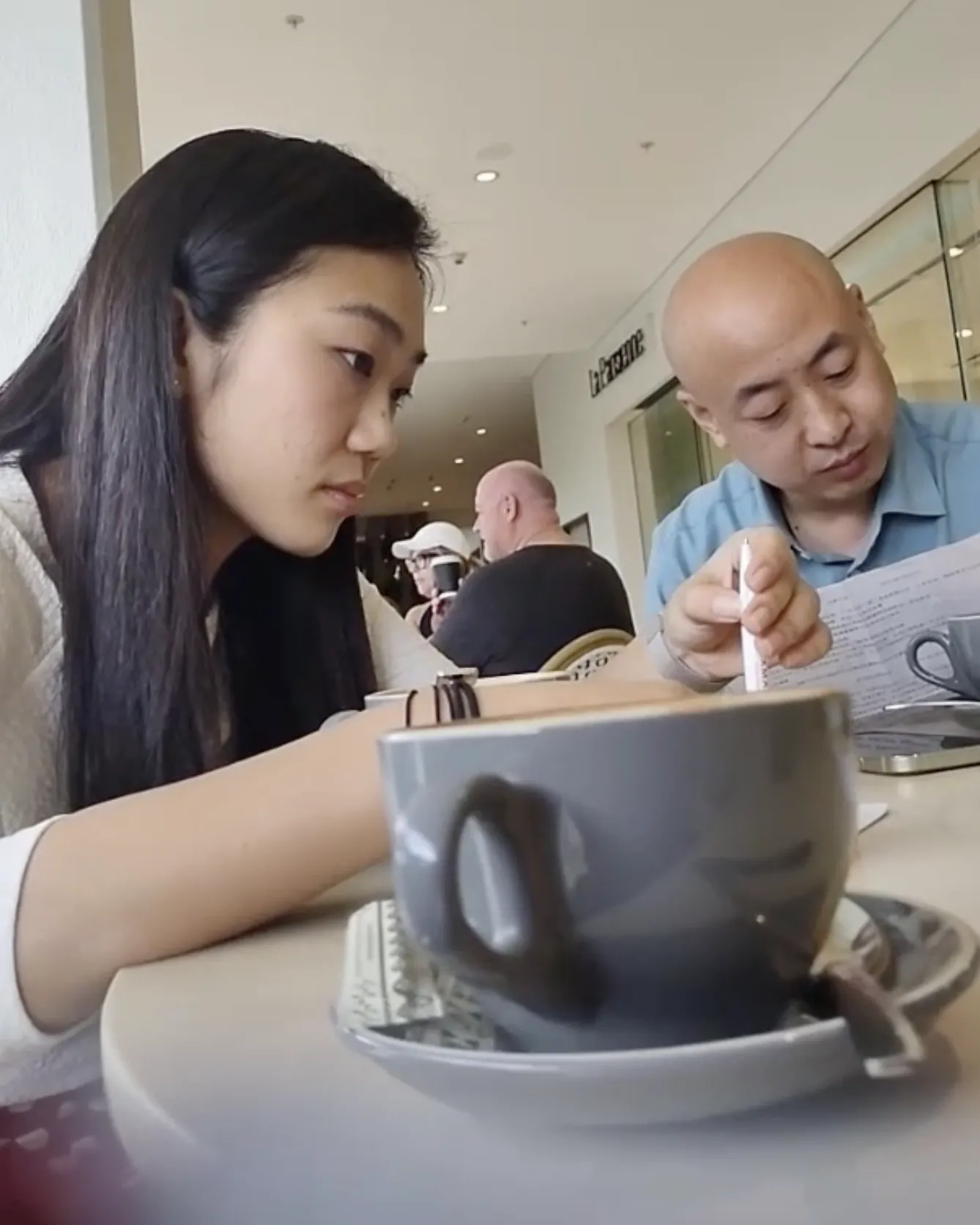
The meeting was set for 8:30 a.m. on June 8 at La Parisienne, the lobby cafe of Fiji’s Sofitel resort. Chen, who spoke reasonable English, would serve as interpreter. Dressed in polka-dot trousers and a white top, she took a seat to the right of Wang, who wore a light-blue short-sleeve shirt. After some amiable small talk, Flores came to the matter at hand. “So, everything is good in China?” he asked, stirring his cappuccino.
“For the products we are currently selling, there are no problems in China,” Wang said in Chinese, with Chen standing by to translate.
“I want to buy three tons,” Flores said. He asked Wang to provide details for a crypto wallet so he could send the payment. Wang agreed, but Chen added a word of warning: “We need to keep our private information for the safety reason.”
“Yes, of course,” Flores replied.
“Because recently American government seized some Mexican group and they follow the route to China,” Chen explained. “It is also bad news for us.”
Not long after this exchange, Flores stood up and began walking away. Suddenly, a group of casually dressed Fijian men approached the table and asked Wang and Chen to come with them. The men were plainclothes police officers, and they explained that they’d received a Red Notice from Interpol demanding the Chinese visitors’ arrest. Wang and Chen’s permission to visit Fiji had been revoked, and they would be expelled from the country immediately. A private jet sent by the US Drug Enforcement Administration was on the tarmac at the airport nearby, waiting to bring them to face federal narcotics-trafficking charges in New York. The next time they’d see Flores would be in court, testifying for the government.
The chemicals Wang and Chen’s company sold were the building blocks for fentanyl and other powerful opiates — the root of a crisis that’s killed hundreds of thousands of Americans. While illicit fentanyl is generally produced and distributed by Mexican cartels, the raw ingredients, known as precursors, come largely from China. US policymakers have long demanded that Beijing do more to interdict the trade, and for almost a decade American authorities have been trying to act against mainland suppliers. The task has been extremely difficult, since Chinese law enforcement agencies only sporadically cooperate with their American counterparts. Wang and Chen’s arrests, the culmination of a complex undercover operation, were one of the biggest successes stemming from those efforts so far.
This account of the investigation into Amarvel Biotech is based on thousands of pages of legal filings as well as interviews with people involved, most of whom asked not to be identified describing law enforcement operations. Wang and Chen, along with a colleague who wasn’t with them in Fiji and hasn’t been arrested, were among the first Chinese nationals to be charged in the US for supplying fentanyl precursors; of those, only a tiny number have been successfully apprehended. The Amarvel case revealed the unique role China’s chemical industry plays in a global illicit economy, with educated chemists in Hubei and Fujian providing an essential service to violent traffickers in Sinaloa and Jalisco.
It also underscored just how different the first part of this supply chain can be from the second. Amarvel Biotech, itself indicted along with its three employees, was in most respects a normal Chinese company, outwardly indistinguishable from tens of thousands of others in the world’s second-largest economy. Selling a huge range of products and staffed by middle-class strivers, it had a website, a marketing team and a tech-support service. It threw awkward Chinese New Year parties for staff and provided digital invoices, even for products essential to deadly narcotics.
But while the capture of Wang and Chen was undoubtedly a success for US law enforcement — and a source of anger for China, which called it a “well-planned entrapment operation” — its impact on the opiate supply chain was limited, at best. The pair were middle managers, not kingpins, and their work in Wuhan more resembled The Office than Narcos. Amarvel’s owners, who didn’t reply to requests for comment, remain in China, beyond the reach of the US Department of Justice. The same is true for the leaders and employees of what investigators estimate could be hundreds of precursor manufacturers operating on the mainland.
China’s Ministry of Foreign Affairs said in a statement that the country has “consistently acted with the utmost goodwill and made the utmost effort to provide assistance to the US side in responding to the fentanyl crisis.” In response to continued requests from the US, the Chinese government has in recent months tightened its regulations on the chemical industry, including restricting the export of certain compounds, some of which were central to the Amarvel case. But like much of China’s vast private sector, its chemical companies are both brutally competitive and immensely adaptable. Shipments of precursors for fentanyl and new, equally dangerous synthetic opioids continue at large scale. “The operating model fundamentally remains,” says John Wojcik, a senior analyst at TRM Labs, a US-based company that tracks criminal activity facilitated by cryptocurrency. “There are gaps, inherently, in every single government’s system. These companies specialize in playing that game. They mask activity in legitimate business and use creative chemistry to stay one step ahead of the rules.”
The tsunami of illicit fentanyl that reached the US in the mid-2010s confounded law enforcement. Compared with other opioids, fentanyl was stunningly potent, with as little as 2 milligrams — smaller than a pencil tip in volume — sufficient to cause a fatal overdose. And where heroin and cocaine were wholesale businesses, with supply chains that began with vast harvests from poppy and coca fields and led to large processing sites and then across the US border, fentanyl was entirely man-made, relying on ingredients that could be produced in a lab and passed along in small quantities. At first, that allowed the drug to be mail-ordered from China, where it was widely manufactured. With that option available, the number of deaths involving synthetic opioids in the US climbed dramatically, reaching almost 20,000 in 2016 and more than 28,000 the following year.
Chinese fentanyl supply was far from the only reason for these fatalities — unchecked painkiller prescriptions by American doctors played a significant role in creating opioid demand. But for Donald Trump, who pledged during his first presidential campaign to reverse the decline of the American heartland, it was an obvious target. In a 2017 speech at the White House, he said the US Postal Service and the Department of Homeland Security were “strengthening the inspection of packages coming into our country, to hold back the flood of cheap and deadly fentanyl.” But this was far from a comprehensive strategy. US citizens and businesses receive hundreds of millions of international parcels each year, most of them perfectly legitimate. The only way to end the shipments was at the source, by persuading China to stop them.
In late 2018, Trump met with Chinese President Xi Jinping at the Group of 20 summit in Argentina. There, as part of a broad détente on trade disagreements, Xi indicated that he would adjust his country’s rules. Four months later, China formally designated all fentanyl variants as controlled substances, effectively banning them. This didn’t amount to accepting blame for the crisis. As one official put it: “We believe that the United States is the main cause of the problem of the abuse of fentanyl in the United States.” And the updated rules didn’t block the sale of most precursors, which could be combined elsewhere to produce the same market-ready narcotics.
The Chinese chemical sector quickly adapted to the new legal situation. “The fentanyl in the mail stopped overnight,” says Donald Im, who served as a senior agent in the DEA’s Special Operations Division. With that business cut off, “the Chinese chemical distributors realized it was better to sell to the Mexicans.”
Fentanyl can be manufactured in at least three different ways, using a multitude of chemical compounds, but a common requirement is a precursor containing a “piperidine ring,” a structure that functions as a kind of scaffold for the fentanyl molecule. Some of these chemicals began arriving in Mexico almost immediately after the Chinese fentanyl ban went into force, with the Sinaloa cartel and the Jalisco New Generation cartel overhauling their operations to make use of them. Soon the cartels were producing vast quantities of fentanyl and using long-established smuggling methods to move it into the US.
Back then, Yiyi Chen had barely heard of fentanyl. She was focused on a common rite of passage for middle- and upper-class Chinese of her generation: studying overseas. The only child of prosperous parents in Wuhan, Chen went to Italy after finishing college and received a master’s in communication from the University of Bologna. With good command of both Italian and English, she made the most of her time in Europe, traveling as far as Iceland. By 2019 she was working for an Italian company that sold fur to luxury brands. She’d come to love what she later called the “slow and careless style” of life in Italy and thought she might stay permanently.
Late that year, Chen booked a ticket to Wuhan, aiming to return to Europe in early 2020. But when Covid-19 travel restrictions kicked in, forcing her to stay indefinitely in China, she decided to seek a job there. After posting her résumé on a recruitment app, she heard from a chemical company called Wuhan Wingroup Pharmaceutical Co., which shared office space with a sister firm, Amarvel Biotech.
Chen was hired to assist with online marketing for Wuhan Wingroup and began what she would later describe to a judge as a normal white-collar existence, commuting on the Chinese equivalent of a Citibike and working from 9 to 5:30 in an open-plan office with a lake view and a snack bar. Corporate records show that Wuhan Wingroup was owned by a man named Guang Xia, though it was his father, Fengzhi Xia, who Chen understood to be in charge. She found the elder Xia to be a supportive boss who urged her to experiment with then-novel artificial intelligence tools. She recalled that she enjoyed being “in the forefront of the high-tech field absorbing fresh ideas.”
Yet some of Chen’s duties hinted at a darker purpose. One of her responsibilities was to maintain e-commerce websites for Wuhan Wingroup, Amarvel Biotech and other affiliated companies. Like many Chinese chemical concerns, this one did business under multiple brand names, with the same salespeople handling inquiries across them. The sites were frank about what the products were being used for, and not especially subtle about by whom. One page, advertising a compound it referred to as 1-N-Boc-4-(Phenylamino) piperidine, stated simply that it was “used for intermediate in the preparation of Fentanyl derivatives.” Another, advertising 1-Boc-4-Piperidone, promised “100% safe delivery to Mexico,” with screen grabs demonstrating tracking details for a successful shipment to Culiacán, the capital of Sinaloa state. It added that “we will use the normal names to make all import documents … such as engine oil, glue, paint.”
Chen would later say that she knew of “neither [the] opioid problem nor fentanyl crisis” in the US. If so, she was unaware of an issue that was taking on seismic political importance. Amid the social dislocations of the pandemic, the number of annual deaths from synthetic opioid overdoses soared in 2021 to more than 70,000. Under pressure from the White House to take aggressive action, the DEA attempted to simultaneously target the Mexican cartels and their Chinese chemical suppliers.
Substantive law enforcement cooperation with Beijing was extremely rare, though. Often, American investigators would pass on information about a suspect company and never hear back. Things got even worse in the summer of 2022, after House Speaker Nancy Pelosi enraged Chinese Communist Party leaders by visiting Taiwan. Almost immediately, the few relationships the DEA maintained with China’s Ministry of Public Security went cold.
If the US agency was going to make cases against chemical companies and their employees, it would have to do so without the Chinese government’s help. And if it managed to bring charges, it would have to get the defendants out of the country to make an arrest. Still, senior agents put out a call to field offices around the US, asking for ideas on where to begin. As it happened, investigators already had a list of suspected precursor suppliers, many of whom were hiding in plain sight. Amarvel Biotech was one of them.
To initiate contact with Amarvel, the DEA turned to an old hand: a confidential source who’d been working more or less full time for the agency since 2009. Such sources operate in a liminal space between law enforcement and the underworld, handled and paid by the former but steeped in the procedures and folkways of the latter. This source, a Colombian who went by “Jose Lopez,” had proven himself in some of the DEA’s most complex and high-risk operations. For one trafficking investigation, he’d gone undercover in Honduras and secured key evidence contributing to the conviction of two nephews of Venezuelan dictator Nicolás Maduro and his wife.
This mission was considerably simpler for Lopez, initially involving nothing more than sending WhatsApp messages. “Hello I am interested in 125541-22-2,” he wrote to an Amarvel Biotech saleswoman on Nov. 17, 2022. The digits were a Chemical Abstracts Service Registry Number, usually shorthanded as a CAS. They referred to 1-Boc-4-AP, which was heavily restricted in the US and which Lopez’s DEA handlers had instructed him to request. Within a minute the saleswoman, who went by Anita, responded with a simple “okay.” Then she pitched him on 1-Boc-4-Piperidone: “would you like to try 79099-07-3? Many of our customers are also very satisfied with this product.”
They soon came to the question of payment. Anita suggested using Bitcoin, but Lopez declined: “You know I making fentanyl. Is not safe.”
“I know,” Anita replied.
“Cash is easy very easy for me. You have any one I can give cash in California or NY [?]”
“We can accept credit card payment,” Anita added helpfully.
That wasn’t going to work either, and they eventually settled on using the stablecoin Tether, which the DEA saw as a believable cryptocurrency for a trafficker to use. In early December, Lopez confirmed his order, providing a delivery address in Manhattan for the chemicals. For just under $1,200, sent to a crypto wallet Anita provided, he would buy 1 kilogram each of 1-Boc-4-AP, 1-Boc-4-Piperidone and methylamine, which can be used to produce crystal meth. Anita sent a blushing-face emoji: “It’s been a pleasure working with you, Jose.”
The shipment arrived the next month in New York, where it was picked up by the DEA. Lab tests confirmed that it contained the precursors Lopez had ordered. In the meantime, his handlers had instructed him to move his relationship with Amarvel to a new stage: an in-person meeting to discuss more and larger shipments. Anita was open to this, writing, “my boss agrees to go to Thailand or Malaysia to talk with you, but [you] need to pay 10% deposit” toward a further deal. They agreed on Bangkok, and the DEA transferred just under $5,000 in Tether.
Lopez had a family conflict and couldn’t make the trip, so the agency lined up a different confidential source: Flores, the man who would later also go to Fiji. He would pose in Bangkok as Lopez’s boss, though in reality the two didn’t know each other. Anita was heavily pregnant and wouldn’t be traveling either. Chen would go instead, told by Amarvel she was on temporary assignment to accompany Wang for a meeting with a new customer.
Although he was only a few years older than Chen, Wang had grown up with an utterly different experience of modern China. Born in rural Hebei in 1988, he’d been raised by a man he understood to be his grandfather. In fact, according to a later court filing, they weren’t related. The man, who had no male children or grandchildren, had bought Wang from his biological mother for the equivalent of $400. Wang left school in the sixth grade, wanting to earn money rather than sit in class. As a teenager he joined the People’s Liberation Army, eventually making his way to Beijing and finding jobs as a security guard and working in a bottle factory. He landed at Amarvel Biotech in Wuhan, got married and had a son. But while he thrived professionally, becoming a successful executive, he was provincial compared with Chen. The Bangkok trip would be his first time leaving China.
Chen and Wang flew to Thailand in mid-March 2023; in traditional Chinese corporate style, they brought a gift — green tea — for their counterpart. Ahead of the meeting, Chen and Flores chatted on WhatsApp, in a conversation laden with friendly banter and weeping-with-laughter emojis. The rendezvous would take place in a private dining room at the Royal Orchid Sheraton, on the eastern shore of the Chao Phraya River. Flores would be secretly recording on his phone, with American agents monitoring remotely. Bangkok was familiar territory for them; the DEA and FBI have a warm relationship with the Royal Thai Police and have staged dozens of undercover operations on their turf.
In the room, Flores took a seat across from Chen and Wang. As they spoke, he was blunt about his supposed business: “I make fentanyl, right?”
He then told them a story concocted for him by his handlers. After he’d produced a batch with the earlier Amarvel shipment, he said, “Several Americans, they died because it was too strong … cause Americans, y’know? Pshh.” Wang and Chen said nothing to indicate dismay at Flores’ remark, nor at a statement that he planned to open a fentanyl lab in New York. Complaining that “if my customers die, I won’t be able to make money,” Flores asked the pair for help with “the right amounts to balance a good product.”
Wang explained his advice in Chinese, with Chen serving as translator. “It’s better not to make the product too concentrated, that’s the first thing,” he said. “Add more excipients, or add a little bit more diluents.” He added that he might be able to provide more detailed advice if Flores was interested in a long-term business relationship. “We know that Mexican clients are good clients and also big clients,” Wang said.
Chen soon created a WhatsApp group called “Mexico project” for herself, Wang, Flores, Lopez and Anita, the initial Amarvel salesperson. A few days later, Flores wrote, “Need formula for Best fentanyl … As we discussed im Bangkok.” This prompted Anita, in a rare attempt at discretion from an Amarvel employee, to send a direct message to Lopez, asking him to speak to Flores. “Please tell him the reason why we can’t discuss openly in the group,” she wrote. “It’s dangerous for us.” Even so, the group messages were clearly geared toward arranging a large chemical shipment.
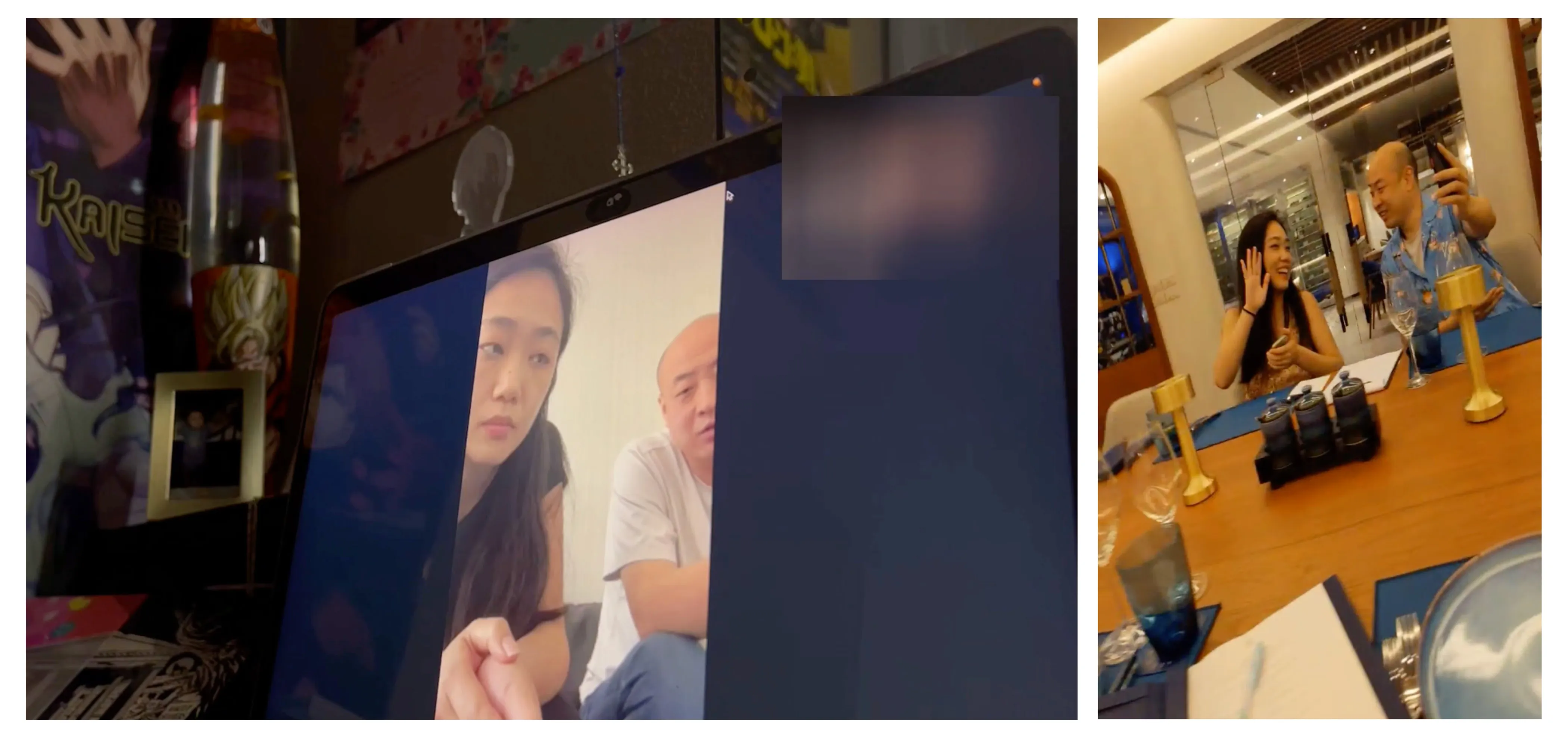
In April, Flores, who’d largely taken over the Amarvel relationship from Lopez, joined a videoconference with Chen and Wang to go over the details of the proposed deal. Footage of the discussion shows him wearing a black shirt and a chunky silver necklace, his mustache neatly trimmed, as he called them on a laptop from a dimly lit room. As in Bangkok, he was solicitous and open, explaining that his goal was to make “the final product, the Big Mac,” in large quantities. “No problem,” Wang replied. Chen was friendly, joking that Flores should come visit her in China — though she was sufficiently unfamiliar with Latin American names that she pronounced “Jose,” the first name of Flores’ supposed underling, as “Joes.”
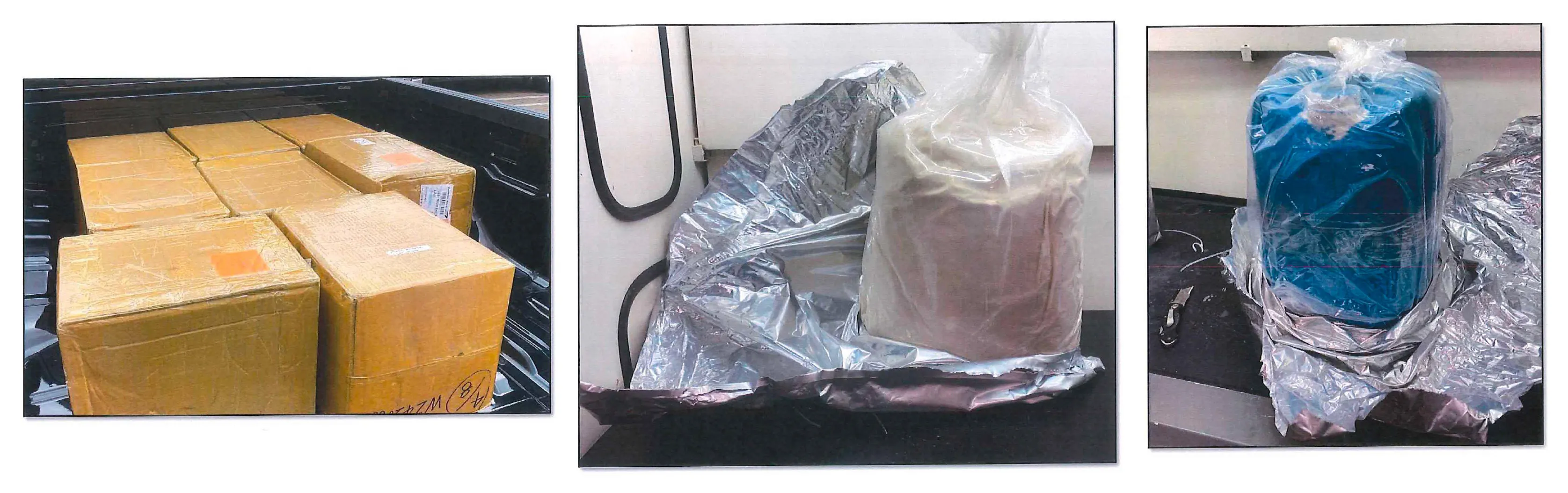
The following day, Flores confirmed his order: 50 kilograms of 1-Boc-4-AP, 100 kilograms of propionyl chloride and 60 kilograms of (2-Bromoethyl) benzene, for a total price of $45,800. All three chemicals can be used to synthesize fentanyl. Anita then did something Flores had never encountered in a decade of assisting narcotics investigations: She sent an invoice. It listed the names and volumes of the chemicals, as well as Amarvel’s Wuhan address and payment details. Days later, the DEA transferred more than $40,000 in crypto to Amarvel. The shipment arrived in late April in California, where a different DEA source picked it up.
Around this time, the agency began developing a plan to arrest Chen and Wang, which would mean persuading them to leave China a second time. Wary of raising suspicions, the DEA didn’t want to suggest Bangkok again, so it turned to a novel option: Fiji. Police there had little track record of assisting US investigators, but they were eager to build one. And in the Fijian legal system, it would be possible to immediately deport foreign defendants into DEA custody rather than submitting to a lengthy extradition process. “It’s important just for us to meet in Fiji,” Flores told Chen and Wang, “so that way we can negotiate everything.” The pair were willing to travel there, but once again Wang wanted a firm sign of commitment: another deposit toward future deliveries. The DEA duly transferred $20,000 more in crypto.
With the meeting on, DEA agents in the US and Asia began working on the legal and practical arrangements to bring the Amarvel employees into custody. An investigator in New York requested arrest warrants from a federal judge; once these were granted, the agency could seek a Red Notice from Interpol, which would provide a basis for a Fijian arrest.
Meanwhile, Chen and Wang began arranging their travel. “Where and when will we meet?” Chen asked Flores. “Because I’m planning to go scuba diving.” Once again, Anita would be staying home; it would just be “Boss Wang and me,” Chen said. The meeting was ultimately set for June 8.
A few days before that, a small DEA team led by a Chinese-speaking agent named Qiji Wang arrived in Fiji. Their role would be limited to advising and observing; the arrest itself was a matter for Fijian police. Plainclothes American and Fijian officers arrived at the Sofitel resort early on the appointed morning, fanning out through the lobby and keeping watch on the entrances and exits. Flores would carry a tiny, high-definition camera, aiming to get Chen and Wang to speak on the record, in specific terms, about past and future chemical shipments to the US and ideally to acknowledge that they understood they were violating the law.
As Chen and Wang got into a taxi at their hotel, they suspected nothing. “Let me know once you are close by,” Flores texted at 8:10 a.m. “We are almost there,” Chen replied. From a short distance away, Qiji Wang watched as they walked into the Sofitel lobby, sat down with Flores and began to talk.
The arrests were polite, by the standards of such operations. Chen and Wang were white-collar employees on a business trip, and there was no real chance either had a weapon. Fijian police drove them straight to the nearby airport, where the DEA plane was waiting. The local force also passed their American counterparts the four phones Wang and Chen had been carrying, along with Chen’s Apple laptop, which was decorated with jokey stickers. She was bewildered, and on the jet she asked Qiji Wang why she was being arrested. “I told her in general terms that she was charged with narcotics conspiracy in the United States,” he said later.
Their ultimate destination was New York, but they landed first in Honolulu, where they were brought before a federal judge. From a detention facility, Chen was able to call her mother in Wuhan. “Hey mom, it’s me,” she later recalled saying. “Listen, I’m still alive and I’m safe right now. I’m at the prison of Hawaii.” The older woman began to hyperventilate and found a chair so she could sit. “I’m OK,” Chen said. “This jail has two Chinese people, they treat me good and help me a lot. You don’t need to worry.”
The indictment against Chen and Wang was unsealed on June 23, paving the way for their first court appearance in New York. Both were charged with conspiracy to traffic fentanyl — an offense that carries a maximum sentence of life in prison — and related charges including conspiracy to import fentanyl precursor chemicals. In a triumphant press release, Anne Milgram, the DEA administrator, declared that the charges were “a considerable step forward in our unrelenting fight against fentanyl, targeting the threat where it starts.” Beijing swiftly fired back, with a foreign ministry spokesperson complaining that US law enforcement had “ensnared Chinese nationals” and violated their rights. The spokesperson also reiterated that the US was “shifting the blame” for its own addiction crisis to China.
Chen and Wang both pleaded not guilty and were ordered to remain in custody. Neither had ever been to the US, and for the foreseeable future their experience of the country would be limited to the Metropolitan Detention Center on the Brooklyn waterfront and the federal courthouse in Lower Manhattan. Meanwhile, their lawyers would be facing several problems in defending them against some of the gravest narcotics charges in the federal criminal code. The chemicals Lopez and Flores had ordered were undoubtedly sent to the US, and though one package had turned out to contain a substitute precursor for making a potent “fentanyl analogue,” rather than fentanyl itself, the analogue could be treated at least as harshly under federal law. Nor was an entrapment defense likely to succeed, given that Amarvel had advertised the products on its website and boasted they could be sent around the world, before anyone working for the DEA had so much as sent its employees a text message.
Chen’s and Wang’s attorneys decided, in effect, to challenge prosecutors’ attempts to demonstrate mens rea — that is, to establish that the pair knowingly engaged in behavior that violated US law. Since the chemicals Amarvel had sold were legal in China at the time, the defense lawyers would argue that neither Chen nor Wang had believed they were doing anything wrong. And while the invoice Anita had provided could be viewed as a flagrant violation of the Stringer Bell rule (based on the gangster’s incredulous question on The Wire, “Is you taking notes on a criminal f---ing conspiracy?”), it could also be interpreted as evidence that Amarvel’s salespeople viewed the transaction as aboveboard and routine.
To these lines of argument, Chen’s lawyer Marlon Kirton added an additional claim. While Chen’s title was “sales manager,” in Bangkok and Fiji her primary role had been simply to translate for Wang and facilitate his conversations with a promising new customer. In the videos of those meetings, Chen turned repeatedly to her colleague for guidance and duly relayed his words to Flores. How could she be deemed responsible, Kirton intended to ask, for statements she was simply rendering into English and passing on?
The trial was scheduled for January 2025, some 19 months after Chen and Wang were taken into custody. Before it began, Wang’s attorney Leo Aldridge approached the DOJ with a proposal: guilty pleas on three charges relating to precursor chemicals and one relating to money laundering, in exchange for dropping the fentanyl trafficking conspiracy charge. Since trafficking fentanyl itself was also a criminal offense in China, Wang feared that, if he admitted to it, he could never return home to his wife and son. Federal prosecutors listened politely as Aldridge presented the offer, which would likely still lead to a stiff sentence. Then they declined. If Wang wanted a deal, he would need to plead guilty to the most serious offense. (A spokesman for the US Attorney’s Office for the Southern District of New York didn’t reply to a request for comment.)
The trial opened on Jan. 15 in Manhattan. Across two weeks, prosecutors Alexander Li and Kevin Sullivan guided the jury through their narrative of the case, with both DEA sources testifying under pseudonyms. In addition to recounting their roles, the sources confirmed they’d been paid generously by the DEA for their work, with Flores receiving about $193,000 and Lopez about $176,000.
Toward the end of the trial, Chen took the stand, a risky move for the defense. But she was well prepared, speaking crisply about her time working for Wuhan Wingroup and Amarvel Biotech. Prosecutors had sought to portray Chen as a critical node in precursor sales because of her role maintaining their websites; she insisted her responsibilities were technical, mostly limited to setting up the sites so others could upload content. Her internet history included a Voice of America article about US sanctions against Chinese precursor manufacturers, and Kirton asked what, if anything, she understood about America’s fentanyl crisis. “I saw in an article that United States was accusing China and China fired back,” she said. “It was very confusing.”
For a woman on trial halfway around the world from her home country, it was a self-assured performance. But when Sullivan began to cross-examine her, he didn’t resort to aggressive questioning that might knock her off-balance. Simply getting Chen to confirm the factual record was enough.
“In March 2023, you flew to Bangkok, right?” Sullivan asked.
“Yes.”
“And you met a man named Gil Flores, right?”
“Yes.”
“Gil said that he wanted to buy enough chemicals to make 50 to 55 kilograms of the final product, right?”
“Yes.”
“Gil told you in Bangkok he was opening a lab in New York to make fentanyl, right?”
“Yes.”
“And you met with Gil in Fiji?”
“Yes.”
The jury returned its verdict the same week. Chen and Wang were found not guilty of the first charge, conspiracy to traffic fentanyl. But they were convicted on lesser conspiracy and narcotics charges, which carried heavy penalties of their own. Their lawyers pleaded for leniency, with Aldridge leaning heavily on Wang’s difficult childhood and Kirton arguing that Chen’s accommodating attitude reflected Chinese business culture. “The goal is not to tell the customer ‘no,’ ” Kirton wrote.
The judge, Paul Gardephe, was unmoved. For Wang, he imposed a 25-year sentence, five years longer than prosecutors had requested. “Fentanyl is the number one most serious drug problem in the United States,” he declared from the bench. “Those who market for profit the chemicals necessary to make this poison — when apprehended — must be severely punished.” For Chen, Gardephe had slightly more sympathy. He conceded there was “a random aspect to her involvement,” since “but for the Covid-19 pandemic and her inability to return to Italy, I suspect that she would never have got involved in this type of criminal activity.” But she had gotten involved, and Gardephe was sentencing her to 15 years in federal prison.
Wang, who declined through his lawyer to be interviewed for this story, was sent to a low-security facility in Florida. Chen resides at FCI Aliceville, near the Alabama-Mississippi state line. Now in custody of one kind or another for more than three years, she’s settled into a consistent routine, keeping in touch with her parents via video calls. From Monday to Friday, she works in a facility sewing sleeping bags; on weekends she teaches yoga and meditation classes for fellow inmates. “I’m happy to see them keep coming,” she said by email, “because a good physical condition can impact mental health. This is very important for surviving in the prison.”
It’s unclear whether prosecutions like Chen and Wang’s have contributed to the recent drop in US deaths from synthetic opioid overdoses, which fell to fewer than 40,000 in 2025, about half the record number reached in 2022. For investigations even to get so far is rare. The vast majority of cases like these are “paper indictments,” with the targets still in China and unlikely ever to be arrested, as is the case for Anita. The broad availability of the opioid antagonist naloxone is probably a much larger factor, along with greater awareness of the risk that drugs like cocaine could be contaminated with fentanyl. Another, more depressing hypothesis is that many of the people most susceptible to opioid addiction have already died from overdoses, leaving a smaller pool of potential victims.
The Chinese government has also significantly, if imperfectly, tightened regulation of chemical exports and begun to cooperate with certain US investigations. Two key chemicals Lopez had Amarvel send to New York, 1-Boc-4-AP and 1-Boc-4-Piperidone, are both now restricted, though the analogue precursor the company shipped to California is not. More than a decade after Chinese labs began shipping fentanyl or its precursors to the US, some law enforcement veterans have a conspiratorial view of how long it took for Beijing to make these moves, suggesting that Communist Party officials have been happy to see their main geopolitical rival weakened by an addiction crisis.
The truth is probably more prosaic: that chemicals of all kinds are a major Chinese export industry, and policymakers had no pressing reason to restrict them in response to a problem occurring almost entirely overseas. Beijing has moved much faster to control shipments of a similarly dangerous class of synthetic opioids called nitazenes and another called orphines. In response, some Chinese labs appear to be establishing backup operations in Southeast Asia.
With scheduled release dates in 2035 and 2044, respectively, Chen and Wang will play no part in the industry’s evolution. Chinese corporate records show that both Wuhan Wingroup and Amarvel Biotech have been deregistered as active companies. There’s evidence, however, that people associated with them are continuing similar activities. Amarvel’s websites, now removed from the internet, formerly listed several sales representatives with their mobile numbers. Searching the number associated with one of them, “Olivia,” leads to a series of pages on an online retail portal, TradeFord.com, that lists products from a company called Wuhan Ruichi Technology Co. (Its salespeople didn’t reply to requests for comment.) Among the listed offerings are precursors for more than a half-dozen drugs of abuse. According to registry data, the company remains in business. —With Daniela Wei


Comments
Post a Comment