The Fun Shortage Is Real, and It’s Making America Miserable
With fewer places to relax and socialize, and steeper prices for entry, having fun is quantifiably harder than it used to be.

Translate
Over the course of the past two decades, the US has lost 2,000 golf courses and 7,000 bars and nightclubs, and Americans now own 1.3 million fewer boats. It’s prohibitively expensive to open a new summer camp and practically impossible to build a beachfront resort or marina. Venue shortages afflict musicians looking for performance spaces, children looking to play in local sports leagues and adults looking to go out dancing. The best time to book a rental for this summer was last summer, and the best time to book for next summer is … well, it may already be too late.
America appears to be suffering from a fun shortage. For the industries supplying recreational amenities, this deficit is a business opportunity. But for everyone not positioned to profit from the trend, it’s a source of stress and frustration that’s been building for a while. It also has broad ramifications for the future of the economy, society and politics. On the eve of the country’s 250th birthday, it’s worth pondering whether the pursuit of happiness has become more difficult.
First, a quick definition: Experts on these matters generally agree that the kinds of fun we should be striving for are enjoyable experiences with others. A live show with friends, a vacation with family or even small talk with a stranger can all make us feel more connected and content.
By those measures, it’s clear that Americans are having less fun than they used to. Since its 2003 inception, the Bureau of Labor Statistics’ American Time Use Survey shows double-digit percentage drops in the hours spent each year on arts and entertainment activities, attending sports or recreational events, and attending or hosting social events. In a 2024 US Census Bureau survey, almost 80% of respondents said they saw friends or relatives fewer than three times a week.
Screen Time Rises as In-Person Time Falls
Average hours per year by activity, Americans 15 and older
Note: ATUS reports average hours per day. Annual figures are calculated by multiplying daily averages by 365.
Source: Bureau of Labor Statistics’ American Time Use Survey
The US, along with Australia, Canada and New Zealand, seems to have grown uniquely unhappy over the past 15 years, according to the annual World Happiness Report, which combines data on more than 140 countries. For good reason, we often blame smartphones and social media for making us feel worse. But most of the world uses these digital tools at least as much as Americans do, and the US still came in 23rd on the global happiness ranking in 2026, down from 13th a decade prior. America’s happiness decline must have another major cause, says report co-editor and University of British Columbia professor emeritus of economics John Helliwell. He points to the “often forgotten” factor of fun. “It’s not just connections” with other people, he says. “It’s how much you’re enjoying the connections.”
The good news is Americans seem to be seeking out these kinds of shared experiences. A growing pile of evidence suggests most people want nothing more than to get out of the house and put away their screens for a while. Stereotyped as especially awkward and anti-social, Generation Z seems the most eager to get out and do things together. A Bank of America Corp. survey this spring found 93% of young people plan to travel this summer, and 91% plan to attend more or the same number of concerts, sporting events and festivals than they did in 2025. “There’s such a passion for experiences with Gen Z,” says Mary Hines Droesch, BofA’s head of consumer products. The higher gasoline prices and airline fares resulting from the war in Iran seem to have barely dented travel demand. Even when Americans stay closer to home, they’re swapping smaller screens for larger ones, with domestic box-office receipts for US movie theaters surging in 2026.
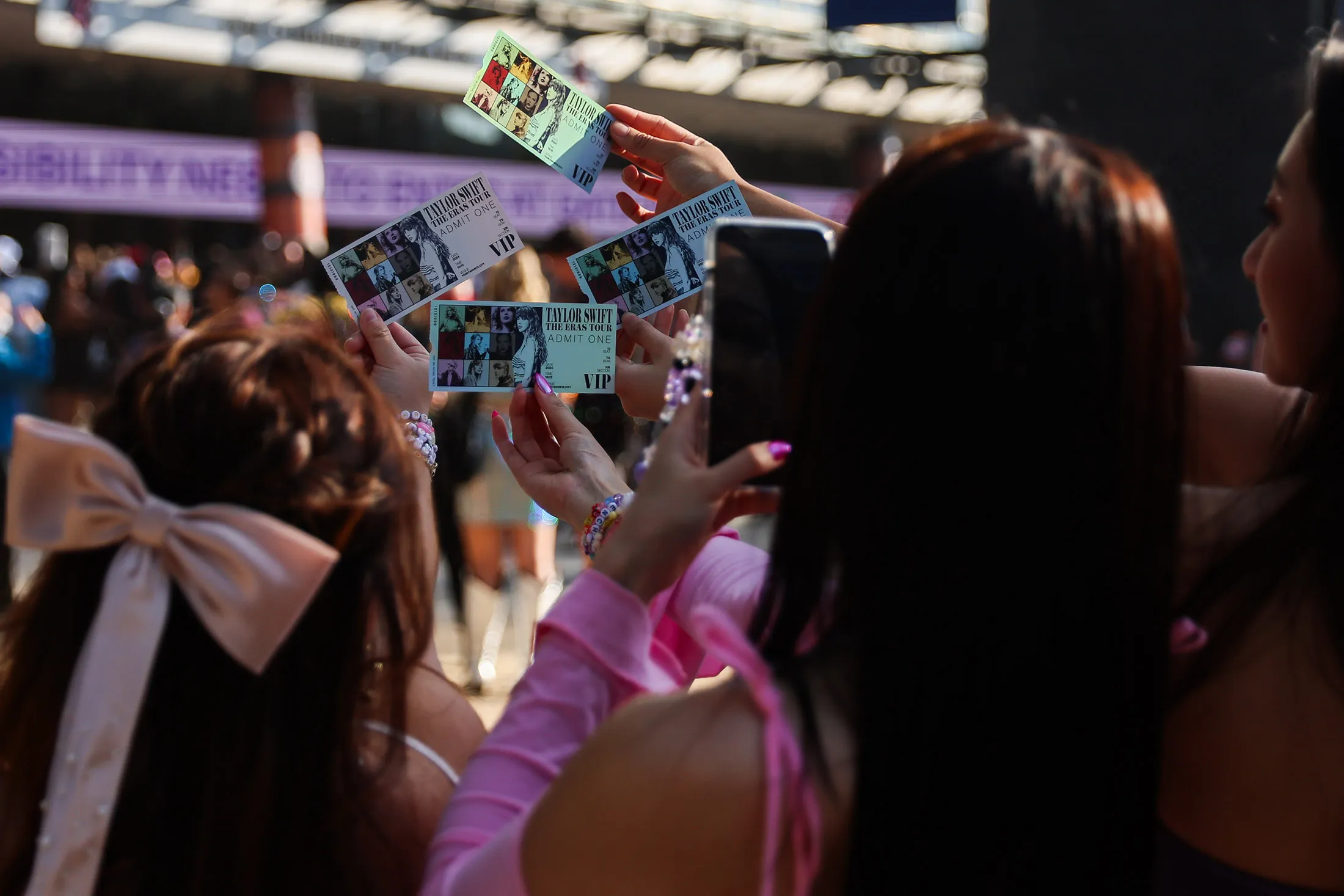
The bad news? It keeps getting harder — and more expensive — to have fun. A combination of factors is delivering a summer of higher prices, fewer options, limited vacancies and longer lines.
No matter how enthusiastic Americans are for offline experiences, there’s a limit to how much they can afford, with prices rising at the fastest pace in three years. As the cost of commutes, housing, utilities and other necessities climbs more quickly than wages, people have little choice but to skimp on fun. Meanwhile, the prices of some key categories of fun have been rising even faster than inflation. The price of a ticket to one of the top 100 concert tours in North America averaged $134 last year, trade publication Pollstar estimates, a 42% increase from 2019. Vacation rentals in coastal destinations jumped 38% over the same period, to $413 per night, according to data analyst AirDNA LLC.
Fun isn’t just harder to afford. It’s harder to access. The US has lost a fifth of its movie theaters and almost a third of its bowling alleys since 2001, Bureau of Labor Statistics data show. Camp spots for children fill up quickly, with more than 80% of organizations reporting steady or increasing enrollment last summer, according to the American Camp Association. At US country clubs, the median initiation fee has doubled since 2019, to $51,500, at the same time that waiting lists have also doubled in length, according to data firm Club Benchmarking.
Fewer Places to Relax and Socialize
US establishments per 100,000 people
Note: “Movie theaters” includes drive-ins. 2025 population data based on US Census.
Sources: US Bureau of Labor Statistics, World Bank, US Census
Demographics are driving more competition for a scarce number of opportunities. Since the turn of the 21st century, the US has added 61 million people, a 22% population rise. Now in their retirement years, baby boomers have free time and 401(k)s to spend. The even larger millennial generation is entering middle age, the prime years for joining country clubs, getting into golf and looking for activities for their kids.
Golf participation has surged 41% in six years, the National Golf Foundation estimates, but the US has about 2,000 fewer courses than during Tiger Woods’ peak playing years two decades ago, the last time the sport was this popular. More courses report being at or near capacity, almost two-thirds of public courses and three-quarters of private courses last year, according to the foundation.
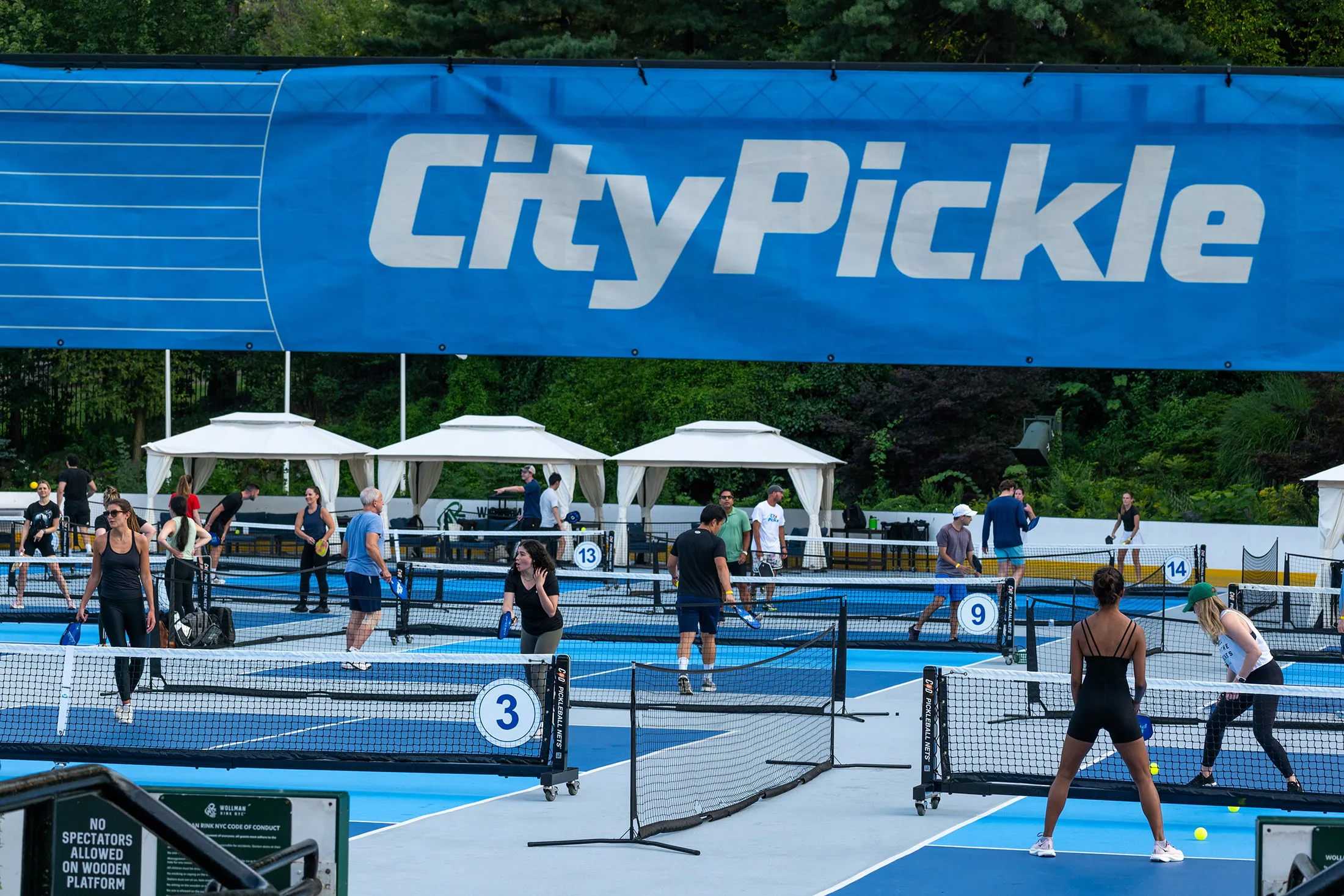
Parks departments have added thousands of pickleball courts to meet demand, but the new facilities often come at the expense of basketball and tennis, which have also been getting more popular, while the rest of the park gets busier as well. Park space per person declined in 65 of the 100 largest cities from 2016 to 2023, according to the Trust for Public Land. Record crowds are also inundating the National Park Service’s most scenic spots and descending on America’s most popular beach towns. With tours, hotels and beach houses booking up early, planning a vacation has turned into a thankless task of gaming out the distant future. “Availability is becoming a bigger issue than price,” says Laura Mattia, a financial adviser at the firm Wealth Enhancement in Sarasota, Florida. “I see clients booking rentals six to nine months ahead, committing before they have fully thought through the trip, or saying yes to expensive options simply because they are available.”
Rising inequality is making the problem worse, as the superwealthy bid up the costs of fun, whether luxury hotels or the best seats at sporting events. A 2011 study showed lower levels of happiness in areas of Switzerland with more Ferraris and Porsches. “Inequality matters objectively to people, but when it’s thrown in their faces, they like it even less,” Helliwell says.
The unmet need for fun could represent an opportunity for entrepreneurs who can dream up affordable alternatives. This happened in the early 20th century, when the US boomed with new theaters, dance halls, movie houses, penny arcades and beach resorts built to accommodate the large crowds that had recently arrived in cities from the countryside and abroad.
Instead, businesses today are simply charging more for less. When fun feels scarce, companies find it easier to boost prices, while also getting customers to pay extra for premium add-ons such as better seats and shorter lines. On airplanes and at concerts and theme parks, people can pay widely different prices for wildly different experiences. Some providers of in-person fun have been accused of exploiting their market power to squeeze customers. A New York jury in April ruled concert giant Live Nation Entertainment Inc., the parent company of Ticketmaster, is an illegal monopoly that overcharges fans.
There are some good reasons that entrepreneurs have stopped making more fun. Creating special places can be a complex and slow process. The price of a night at the shore has increased fastest in beach destinations with geographic constraints. On Cape Cod, in Massachusetts, for instance, accommodations rented for an average of almost $600 a night last summer, according to AirDNA estimates, up 49% from 2019. It doesn’t help that the cost of construction has surged. Across the US, developers have largely stopped building luxury beachfront hotels, despite overwhelming demand from affluent travelers. The number of rooms at US resorts rose only 5% in the decade from 2015 to 2025, according to data from CoStar, while their average price jumped 47%.
Number of US Resorts Levels Off While Room Rates Surge
Percentage change since 2015
Source: CoStar
Although a spot at a sleepaway summer camp is a hot commodity these days, it’s hard to make more space for more kids. With most of the beautiful spots either taken or very expensive, “starting a new overnight camp is hugely capital-intensive,” says Henry DeHart, chief executive officer of the American Camp Association. Expanding an existing camp can also be a complicated endeavor. “You would think that bed space is the limiter. But it’s actually how many people you can feed.” With labor and food more expensive, keeping a camp going can be difficult. In June a for-profit operator of 22 overnight camps serving mostly Jewish families across the Northeast declared bankruptcy.
Nightlife, meanwhile, has been steadily shrinking for decades, with the number of US bars and clubs per capita falling by almost two-thirds since the late 1970s, according to an analysis of Census Bureau tallies. A key reason is that opening a venue can tangle you in millions of pages of red tape, much of it dating from the early 20th century. And though that includes some well-intentioned safety rules, most are ancient regulations designed to discourage the wrong kind of people from having the wrong kind of fun. Especially heavily regulated is dancing: Once a regular activity for Americans of all ages, tearing up the dance floor is now relegated mostly to weddings.
Nowadays, independent venues are struggling to survive rent hikes and the lingering aftereffects of the pandemic. Almost two-thirds of performance spaces said they were not profitable in a 2025 survey by the National Independent Venue Association. With fewer options nearby, people stay home, increasingly isolated and unhappy. Going online doesn’t help things. Using digital media just makes people more bored, a 2024 University of Toronto study showed. “A shrinking supply of in-person fun isn’t just less fun, it’s a loss of one of the few everyday settings that still mixes people who wouldn’t otherwise meet,” says University of Zurich researcher Hugo Subtil.
This fun shortage may be shifting American politics in significant ways. Studies in the UK and continental Europe show voters are more likely to vote for right-wing candidates in the years after local social spaces such as pubs shut down. “When the last gathering place in a town goes, people experience it as a sign of being left behind, of a place emptying out,” says Subtil, the author of a new paper showing France’s far-right National Rally party has benefited from the closure of thousands of bars-tabacs, shops where customers can make a bet, get a coffee or pick up a newspaper.
Replenishing America’s inventory of fun won’t be easy at a time when digital tools are absorbing ever more attention and economic resources. It will take creativity and capital to generate real excitement in real spaces where real people interact. Encouragingly, there are signs of a shift: After New York City repealed century-old rules against dancing in bars in recent years, New York Governor Kathy Hochul announced a similar statewide policy in May. Massachusetts, meanwhile, has loosened rules that capped the number of liquor licenses, which Boston Mayor Michelle Wu argued were starving neighborhoods of local gathering places. The city may add 225 liquor licenses, the vast majority designated for areas far from the tourist sites downtown.
Local governments “really need to think about fun, leisure and entertainment for everyone,” including children and seniors, says Jess Reia, a professor of public policy and data science at the University of Virginia.
In the meantime, Americans are finding cheaper ways to fill their free time. Participation in outdoor activities and team sports has soared in the past five years, reaching record levels, according to a long-running survey by the Physical Activity Council, which estimates the number of “inactive” Americans has dropped by 13.6 million, or 18%, since 2020. Plus there are signs that young people are taking up old-school hobbies, such as crafts and birding, Reia says. “People are trying to find the fun where they can.” —With Mathieu Benhamou


Comments
Post a Comment