- Get link
- X
- Other Apps
Chinese Bank Is Hub for Iran, Russia Money
By Alexander Osipovich , Rory Jones and Patricia Kowsmann
The U.S. has tried for years to cut off its adversaries from the world’s financial system. But money from places such as Iran and Russia has kept on flowing—in large part thanks to banks in China, people familiar with the activity say.
The challenge is exemplified by a regional bank in eastern China, which in recent years emerged as a key conduit for Iranian and Russian financial transactions, according to former U.S. officials and documents seen by The Wall Street Journal. The funds were used to buy Chinese goods in violation of Western sanctions, including some with potential military applications, the documents show.
The bank, Zhejiang Chouzhou Commercial Bank, was flagged internally by U.S. officials during the Biden and Trump administrations for facilitating transactions that appeared designed to evade sanctions, former officials said. ZCCB, founded in 1987 in Yiwu, China, home to the world’s largest marketplace for wholesale goods, stood out from other Chinese banks for how frequently it came up in U.S. monitoring of Iranian and Russian money flows, they said.
U.S. reluctant
But Washington stopped short of slapping ZCCB with sanctions. It was difficult to determine whether ZCCB knew about the funds’ origins, and Washington worried that targeting the bank could upset relations with Beijing or disrupt China’s financial system, the former officials said.
The U.S. faces similar dilemmas in dealing with several other Chinese banks involved in trade with Russia and Iran, current and former officials say. The Treasury Department in October 2025 said Chinese bank accounts were the main source of roughly $5 billion that Iranian shell companies moved around the world in the prior year.
ZCCB said it has always adhered to Chinese law and closely monitored international regulation. “We are committed to conducting business in compliance with applicable laws and regulations, including applicable anti-money-laundering, counterterrorist financing, and sanctions risk management requirements,” ZCCB said.
China says it abides by international law in trade with Iran and Russia, but it rejects what it describes as unilateral American sanctions against the countries.
Documents seen by the Journal show Iranian companies attempting to send money to ZCCB, routing it through what the U.S. government calls a Tehran-backed shadow banking network. Other documents show ZCCB was a frequent destination for payments made through A7, a Russian sanctions-evasion network that was labeled a “significant transnational criminal organization” by the Treasury last month.
The documents don’t show whether ZCCB’s management knew the funds involved sanctioned entities in Iran and Russia, whose roles were obscured behind a web of front companies and intermediaries.
Experts say the flows expose a weak point in U.S. sanctions. Beijing has been a key trading partner for Iran and Russia and giving them a foothold in the global financial system through Chinese banks.
“There is no policy appetite to sanction these banks, which would be perceived as an escalation by China,” said Alex Zerden, a former Treasury official during Trump’s first term and founder of advisory firm Capitol Peak Strategies.
Any foreign bank that facili-tates Iran’s access to global money flows risks being cut off from the U.S. financial system, a Trump administration official said. “No institution is beyond the reach of U.S. sanctions,” the official said.
U.S. sanctions limit what Iranian and Russian entities can buy and sell abroad, so they have largely stopped trading with the West, instead buying goods from Chinese suppliers. To pay for them, they have to find a bank willing to accept the funds, which could expose that institution to U.S. penalties. That is where banks such as ZCCB come in.
In February 2025, a nowdefunct company in the former Soviet republic of Kyrgyzstan agreed to pay about $1.5 million to a Chinese supplier for 40,000 kilograms of molybdenum trioxide, according to an invoice seen by the Journal. A metallic compound, molybdenum trioxide can be used to make tough, heat-resistant alloys used in armored vehicles or missile engines. The shipment was to be delivered by truck from China to St. Petersburg, Russia, the invoice shows.
Chat messages
The buyer, called Trading Co. of the Kyrgyz Republic, paid for the shipment in two installments to be deposited at the supplier’s account at ZCCB, according to payment records seen by the Journal. Trading Co. of the Kyrgyz Republic has been described by U.S. officials as one of hundreds of front companies for A7. The invoice and payment records were part of a trove of A7 files made public after hackers attacked the network and released employee chat messages. Those chats led researchers to an unsecured drive where an A7 developer had left thousands of files exposed to the public internet.
Out of some 3,500 transactions detailed in the documents, ZCCB was the most frequently occurring bank for the receipt of payments, said Zachary Tvarozna, an independent researcher who analyzed the files.
The transactions detailed in the A7 documents took place from late 2024 to mid-2025, and included purchases of civilian goods such as cars as well as items with potential military uses, such as electronics used in drone warfare.
ZCCB told the Journal that it had launched a new round of internal investigations in light of the Treasury’s latest sanctions against A7 in early October, and that it couldn’t confirm that relevant funds originated in Russia.
A7 didn’t respond to a request for comment. In a statement posted to social media in early October, A7 said it was created “to ensure uninterrupted payments for the Russian market, which has been subjected to illegal restrictions.”
A separate set of documents reviewed by the Journal show how Iranian companies sought to use ZCCB.
In December 2023, an Iranian manufacturer called Saab Steel Development agreed to pay $101,297.46 for coiled sheets of steel from a Shanghai- based supplier, according to an invoice seen by the Journal.
The supplier’s bank was ZCCB, and the steel was to be delivered to Iran’s port of Bandar Abbas over the next year, the invoice shows. The U.S. has repeatedly issued sanctions targeting Iranian industry and steel imports.
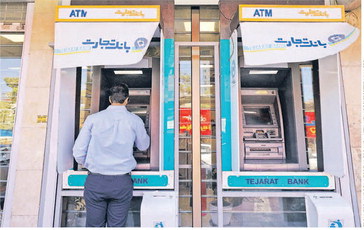
Two payment orders from April 2024 show the next steps. The manufacturer first instructed Bank Tejarat, an Iranian state-owned bank, to send $101,297.46 to the supplier’s ZCCB account. Bank Tejarat requested the payment be made through a money changer called Sadaf Exchange, which U.S. officials say operates shell companies to make and receive payments on Iran’s behalf. Based on the documents viewed by the Journal, it couldn’t be determined which company was supposed to send the payment, or if ZCCB received it.
ZCCB said it has never received any funds remitted from Sadaf Exchange but declined to answer further questions about transactions detailed by the Journal. The U.S. sanctioned Bank Tejarat in January 2012 and Sadaf Exchange in June 2024. Tejarat, Sadaf and Saab didn’t respond to requests for comment.
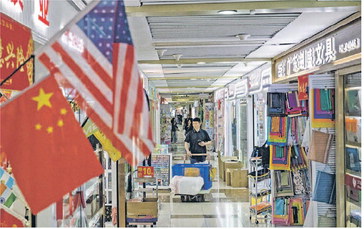
The world’s largest wholesale market is in Yiwu, China, ZCCB’s original base. Below, Iran’s Bank Tejarat is sanctioned by the U.S.
FROM TOP: ANDREA VERDELLI FOR WSJ; ATTA KENARE/ AFP/ GETTY IMAGES
- Get link
- X
- Other Apps


Comments
Post a Comment