Taiwan’s War Games Are Spilling Into Everyday Life
The island’s annual military exercises are becoming broader and more realistic, reflecting efforts to prepare both the armed forces and civilians for conflict.
Translate
7:57
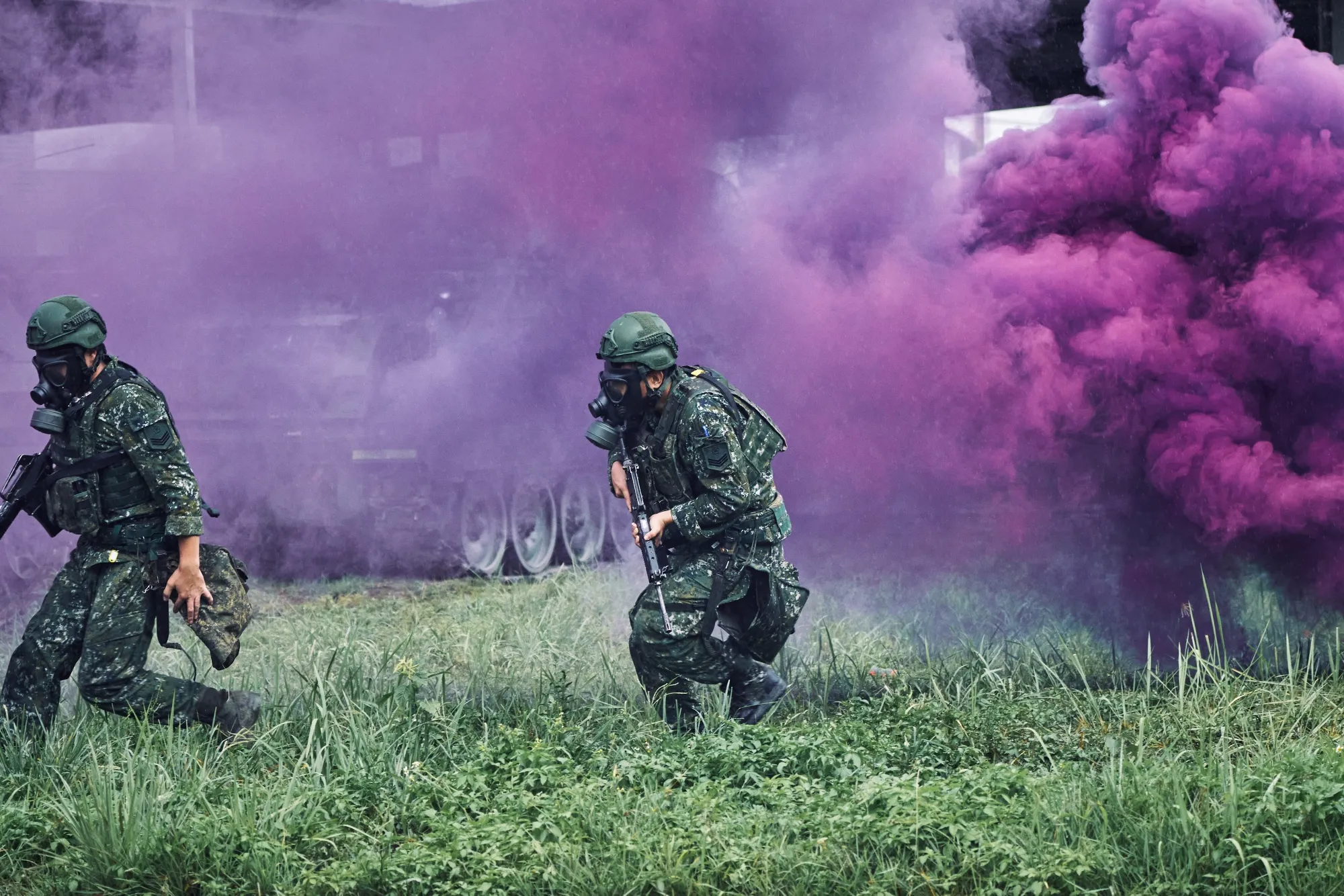
Dozens of flatbed trucks carrying CM-21 armored vehicles and M60A3 tanks rumbled through tunnels carved into the cliffs of Taiwan’s east coast. A typhoon had just brushed the island’s north, and soldiers sweated in the humid night air.
The convoy was heading north toward Yilan, where the armed forces were rehearsing for a Chinese landing that would require reinforcements from Hualien, two hours south. Civilian traffic was halted on a major highway, with cars backed up at checkpoints waiting for the column to pass.
It was the fifth day of Taiwan’s annual Han Kuang military exercises, held this month against a worsening security backdrop. Beijing claims Taiwan as its territory and has vowed to bring the self-governing democracy under its control. The People’s Liberation Army has pressured Taiwan over the years with air and naval drills widely viewed as preparation for a blockade or invasion.
The growing urgency among Taiwan’s defense planners has been reinforced by President Donald Trump’s transactional approach to alliances, raising questions across Asia about the durability of US security commitments. Although the US ended its formal military alliance with Taipei after switching diplomatic recognition to Beijing in 1979, US law still requires it to provide Taiwan with defensive arms.
The 10-day drill reflected a broader shift in Taiwan’s preparations for war. President Lai Ching-te’s government has promoted a “whole-of-society” approach to resilience, combining higher defense spending and expanded military training with plans to keep transport, communication and other critical services running in wartime.
The preparations are unfolding against a profound shift in Taiwan’s identity. The proportion of people identifying solely as Taiwanese has risen to 63.1% from 17.6% in 1992, while the share identifying solely as Chinese has fallen to 2.5% from 25.5%, according to a National Chengchi University poll in June.
Whether that translates into a willingness to fight is less clear. Surveys have produced sharply different results. A 2025 poll by Global Views Monthly found that 63.9% of respondents didn’t want themselves or family members to go to war. By contrast, an Academia Sinica study this year found that as many as 58.7% were willing to resist a Chinese invasion, regardless of whether the US intervened.
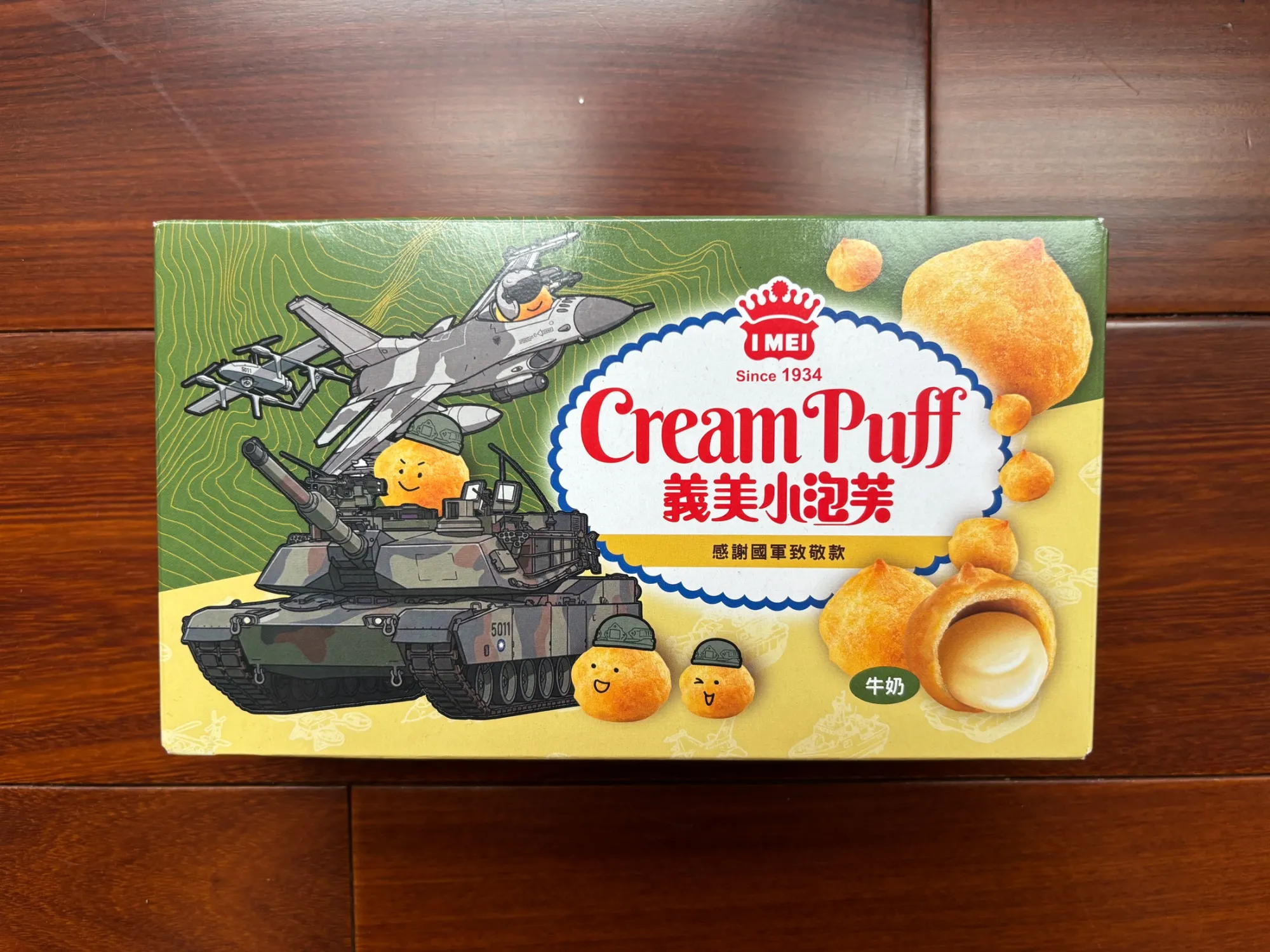
The exercises, which have taken place for 42 years, are becoming more realistic — and increasingly intruding into the rhythms of everyday life. For the first time, the war games included a simulated slowdown of mobile internet services in selected areas to familiarize people with the disruptions conflict could bring. To raise awareness and drum up public support, the military partnered with a food company on a special edition of Cream Puff snacks featuring tanks and fighter jets on the packaging.
Lai himself took part, rehearsing how to thwart a possible decapitation strike against him by Chinese forces.
The drills also became a talking point on social media, with the military’s ready-to-eat meals generating particular interest. They included tapioca pearls, a signature Taiwanese treat — meaning troops could, at least in theory, make themselves a cup of boba tea on the battlefield.
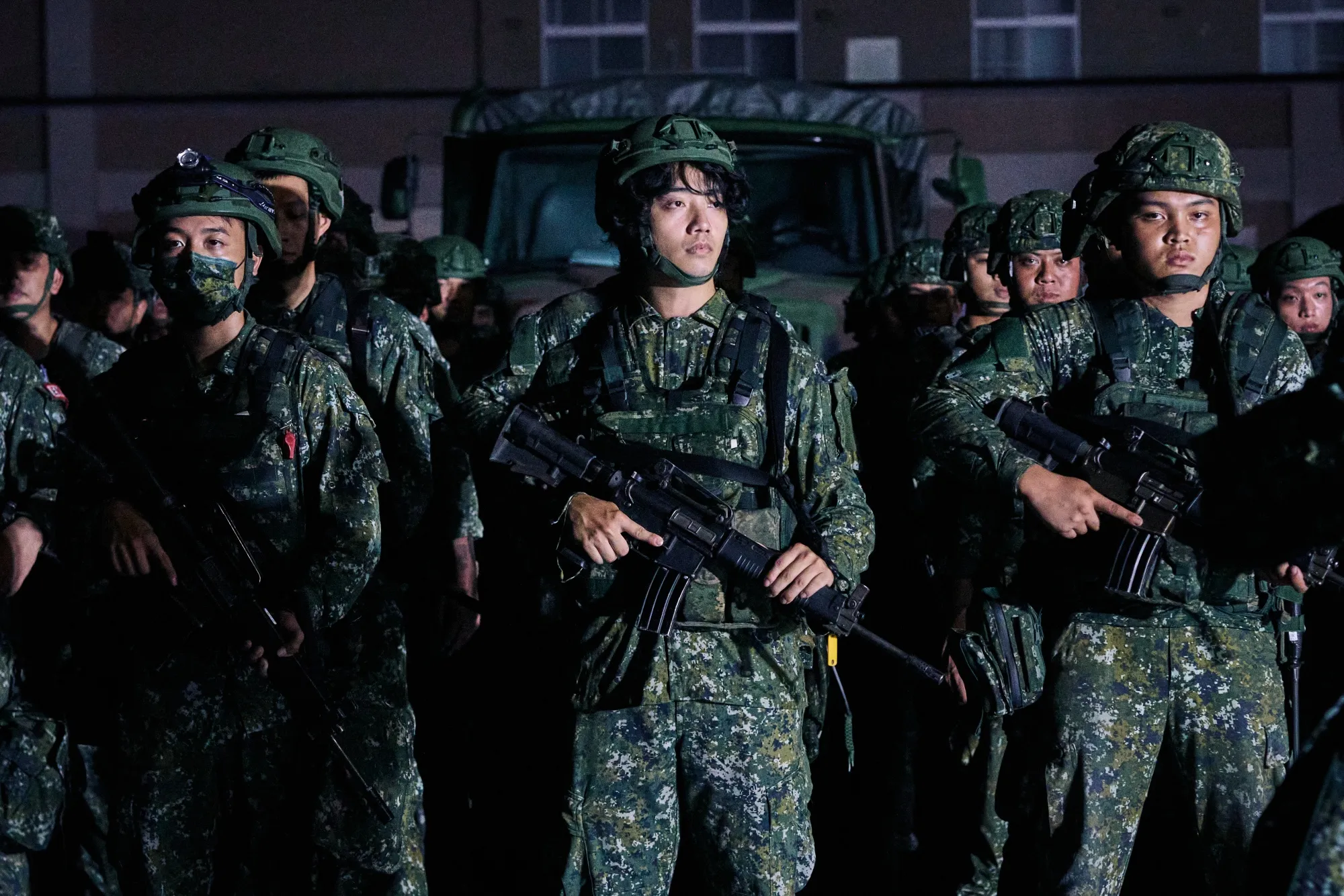
Journalists were also embedded with military units for the first time, another step toward making the exercises more closely resemble wartime conditions. I spent two days on the road with soldiers and reservists, riding in armored vehicles, sleeping barely 3½ hours on the floor of an indoor basketball court, and watching troops defend a naval base against a simulated attack.
Much of what we were allowed to see felt carefully managed. We weren’t permitted to photograph the base itself. Instead, the action unfolded outside the gates, where troops fired blank rounds at an imaginary enemy as a surveillance drone hovered overhead.
The scenes brought back memories of my own compulsory military service 15 years ago. Before the convoy rolled out, the battalion commander gathered his troops and urged them to defend their families and friends from an “evil enemy.” It echoed the rhetoric I remembered from my year in uniform, when many conscripts regarded such exercises as ritual rather than genuine preparation for war.
While this year’s war games still contained elements of theater, the scale, logistical planning and emphasis on moving troops and equipment suggested the military is preparing for a contingency that feels less abstract than it once did.
Many of the soldiers and reservists called up for the exercise made the same observation. “If all the training is as rigorous as this, I think I would feel more confident about fighting for Taiwan against a Chinese invasion,” said Lin Ping-hsuan, who completed his compulsory military service a decade ago and was called back to Hualien for reserve training as an armored-vehicle driver.
But greater preparedness comes with a cost. Asked whether he wanted to be called up again, the self-employed excavator operator said another two-week stint would mean a loss of income. “I still need to earn money to support my family,” he said, though the military provides basic subsidies for reservists in training.
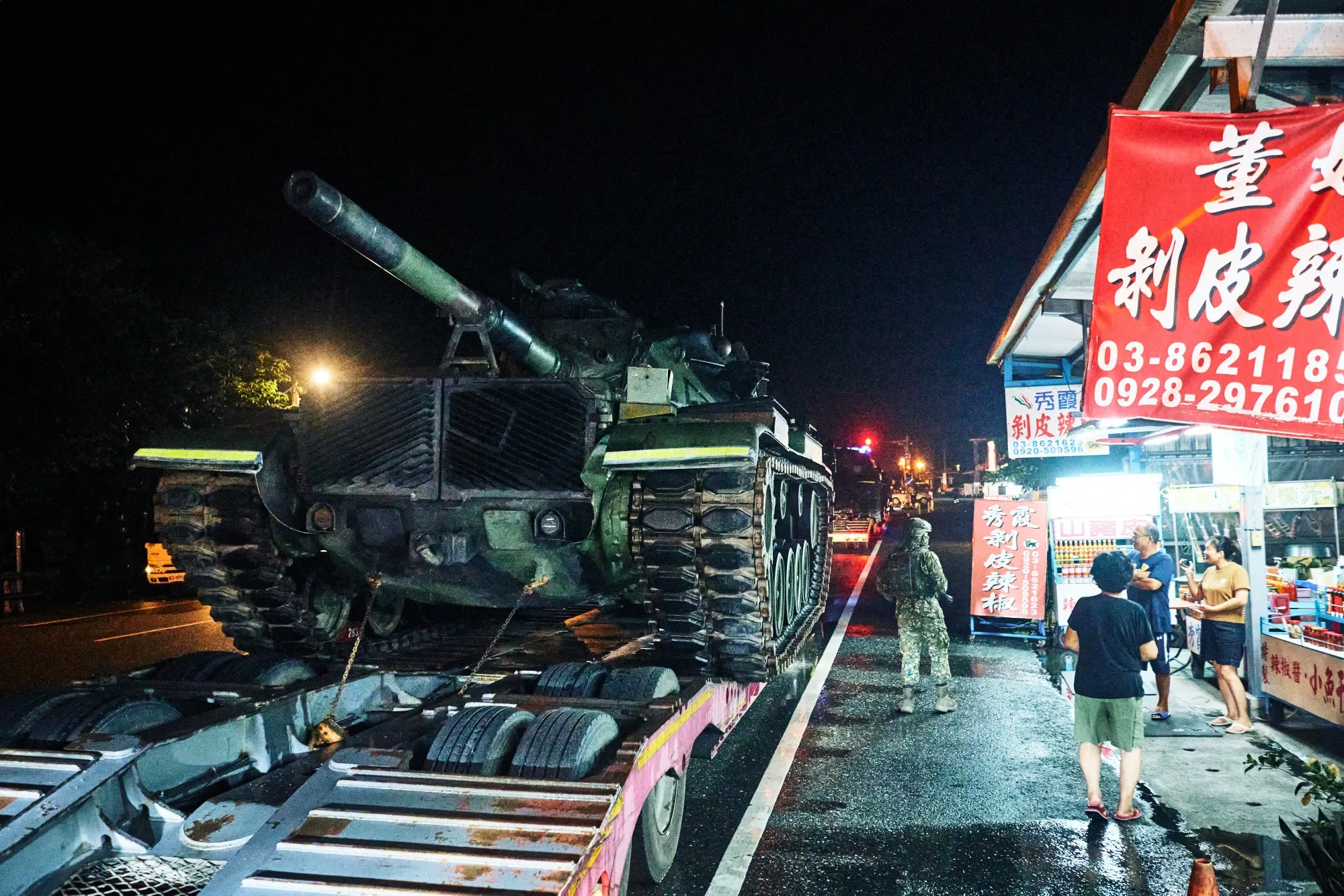
Military officials said it was the first time during Han Kuang that private transport companies had been enlisted to move equipment over long distances. At 1:20 a.m., after a four-hour journey from Hualien, truck drivers and crane operators unloaded tanks and armored vehicles in a factory parking lot — offering a glimpse of how civilian transport and logistics could be integrated into military operations during a conflict. The government has contracts allowing their trucks and services to be requisitioned in wartime.
One reservist said US military personnel in Taiwan — known euphemistically as “English teachers” because China opposes a formal American presence — had raised concerns that the exercise initially focused too narrowly on defensive operations.
“One of the squad leaders even said directly that English teachers were shocked when they saw our plans,” said Kevin Chiang, who finished his military service six years ago and was called back for the exercises for the first time. “Everything was focused on defense, defense, defense” but was broadened to include training on logistics, resupply and responding to unexpected situations to address US concerns, he said.
The US is Taiwan’s most important military backer, but much of the cooperation has historically taken place out of public view. Retired Rear Admiral Mark Montgomery told a congressional hearing in 2025 that about 500 US military trainers are stationed in Taiwan.
Taiwan’s defense ministry and the American Institute in Taiwan, which is the de facto US embassy, didn’t immediately respond to a request for comment. Taiwan and the US maintain close, long-standing military exchanges across a wide range of areas, the Taipei-based Central News Agency reported earlier this month, citing Defense Minister Wellington Koo.



Comments
Post a Comment