How Long Will China’s Trump Dividend Last?
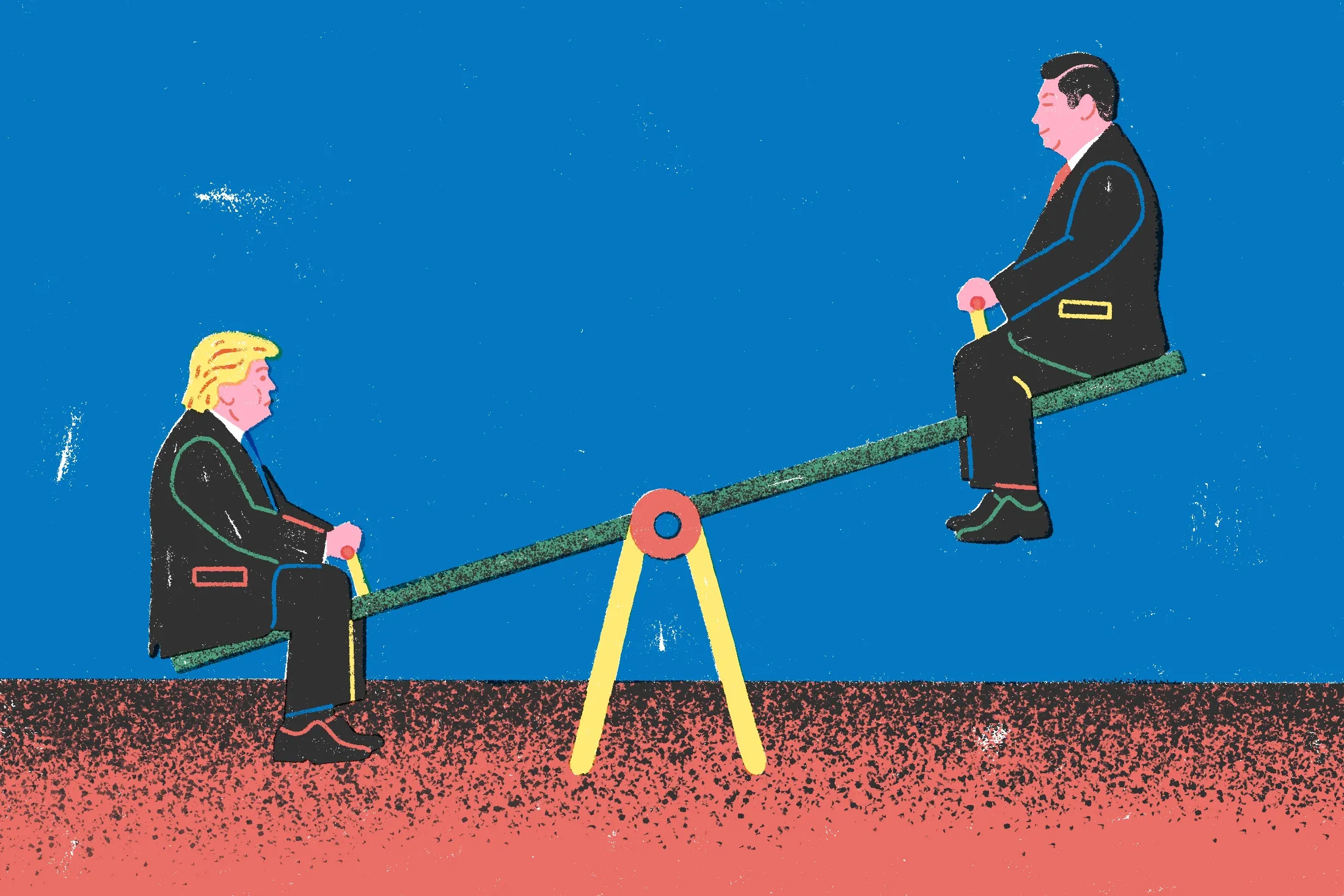
From India to Europe, countries are seeking greater autonomy from Washington. But deep distrust of Beijing is keeping them anchored in the Western-led order.
Translate
12:13
In all of Beijing, it would be hard to find anyone who’s improved China’s image faster than Donald Trump.
A Pew Research Center study released last month showed China is now viewed more positively than the US in 25 of the 36 nations surveyed — a dramatic swing from 2023, when America was well ahead in all but a handful of countries. Chinese President Xi Jinping is more trusted than Trump even in the UK, Canada, France and Australia — all longtime US allies.
While a stunning milestone, it’s hardly a surprise. It would’ve been more head-turning had the US somehow managed to avoid a reputational hit from Trump’s indiscriminate tariffs, threats to seize territory, new immigration curbs and regular insults tinged with “America First” bravado. Canadian Prime Minister Mark Carney warned in January that middle powers must band together to avoid getting swallowed up by predatory hegemons.
Yet the Pew survey also showed the limits of how far the world will swing toward China. In nations such as France and Germany where public sentiment flipped to Beijing, China’s favorability ratings were in the low to mid-30s — barely enough to eclipse a Trump-led America. Of the six countries that still viewed the US more favorably, four — Japan, South Korea, India and the Philippines — sit on China’s doorstep. Vietnam and Taiwan, two other places sparring with Beijing, weren’t included.
Countries in China’s neighborhood need protection from territorial grabs, economic pressure and other gray-zone tactics Beijing uses to assert control. While nations including Japan and South Korea are investing more in their own defense, the US remains the only effective counterbalance short of a destabilizing sprint for a nuclear deterrent.
Economics also come into play. Even with higher tariffs, many Asian nations rely on the US as a vital export market. China now accounts for almost a third of the world’s manufactured goods — a concentration of industrial power unseen since the US after World War II — and dominates electric vehicles, robotics and other leading-edge industries. That makes access to non-Chinese supply chains for critical minerals and advanced technology not just a strategic hedge but also an economic necessity.
Then there’s simple transparency. Traditional American allies and security partners may no longer trust the US, but at least anyone can see its internal debates play out in real time, one Truth Social post after another. American democracy, while under stress, maintains basic civil liberties and regular elections, with Congress and the Supreme Court still restraining executive power, at least to some degree. The Chinese Communist Party, by contrast, remains a black box.
Even as US allies reduce overall reliance on Washington, they aren’t jumping into Beijing’s arms. Instead they’re hedging through trade and defense deals with like-minded partners, a strategy known as aligned diversification. On issues central to national security — including advanced technology, export controls and defense partnerships — many middle powers remain anchored in the broader US-led system.
Although Xi has done well to capitalize on US overreach, refraining from the aggressive “wolf warrior” diplomacy deployed during Trump’s first term, the opacity of China’s political and legal systems limits how much geopolitical advantage Beijing can extract. Public opinion may have shifted toward China, but strategic alignment is proving much harder to budge.
Hedging, Not Switching
India, which took Trump’s wrecking ball on the chin last year, offers a telling example of the limits of any broader pivot toward China.
Since the end of the Cold War, successive US leaders have courted India as a counterweight to China, overlooking its close military ties with Russia to deepen defense cooperation. Progress was often painfully slow, but Washington stayed the course.
That uneasy balance collapsed after India’s military clashed with Pakistan in May 2025. Trump’s repeated claims that he brokered a ceasefire were strongly denied by Indian Prime Minister Narendra Modi, who would’ve faced a political uproar at home if he acknowledged bowing to foreign pressure. A few months later, Trump hit India with some of the highest US tariffs over its purchases of Russian oil and made it harder for skilled workers to get visas, disproportionately affecting Indians.
Nevertheless, the Pew survey showed the US retained a 22-point edge over China among Indian respondents — the third-biggest after Israel and Japan. Perhaps even more surprising is the extent to which officials in India still see the US as a crucial long-term partner.
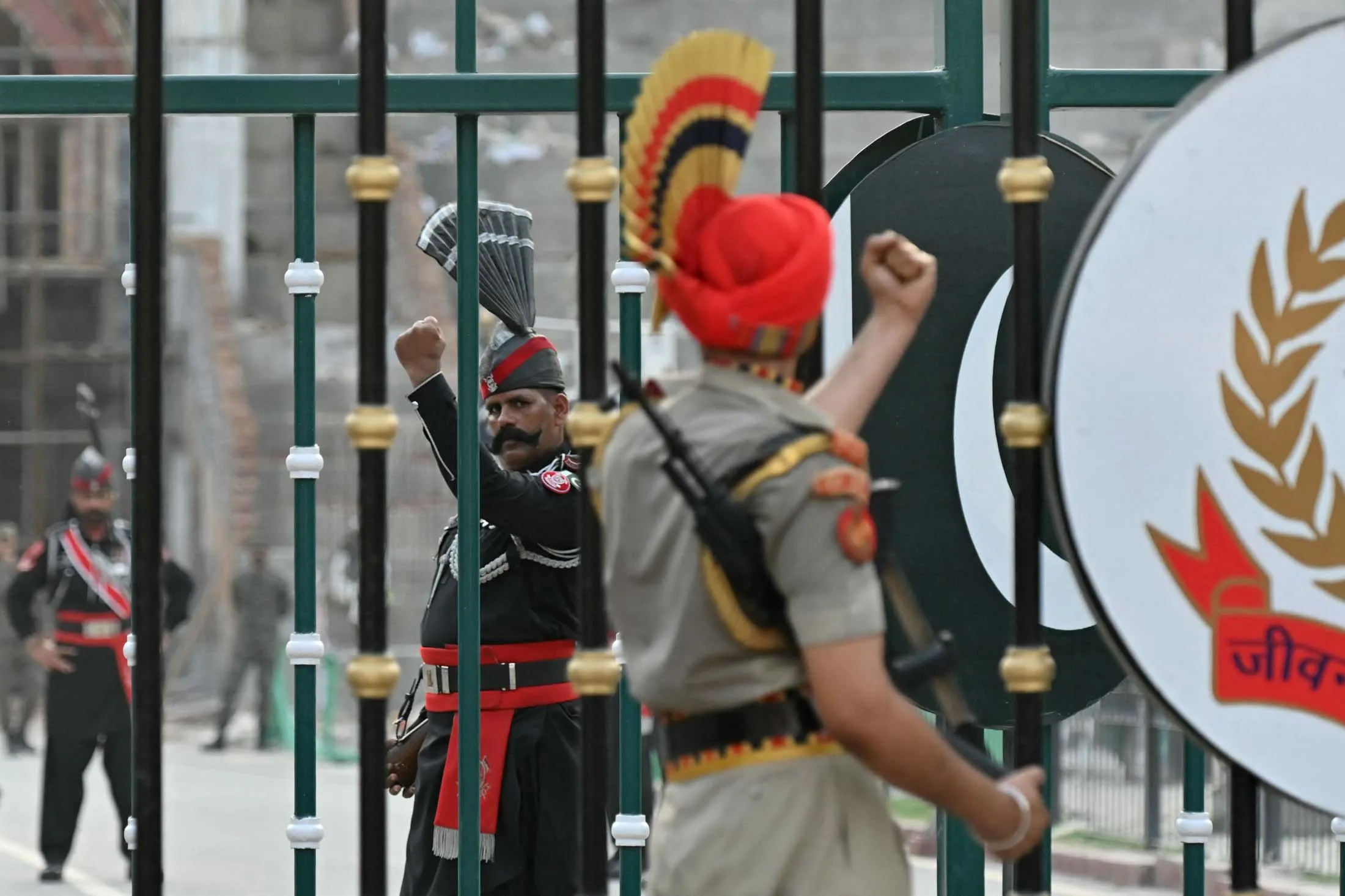
On a visit to Delhi last month, as the monsoon rains gave way to a rare few days of clear blue skies, Indian officials discussed the US with a sober realism. For years bureaucrats had debated whether India could trust the US. Trump gave them their answer: No.
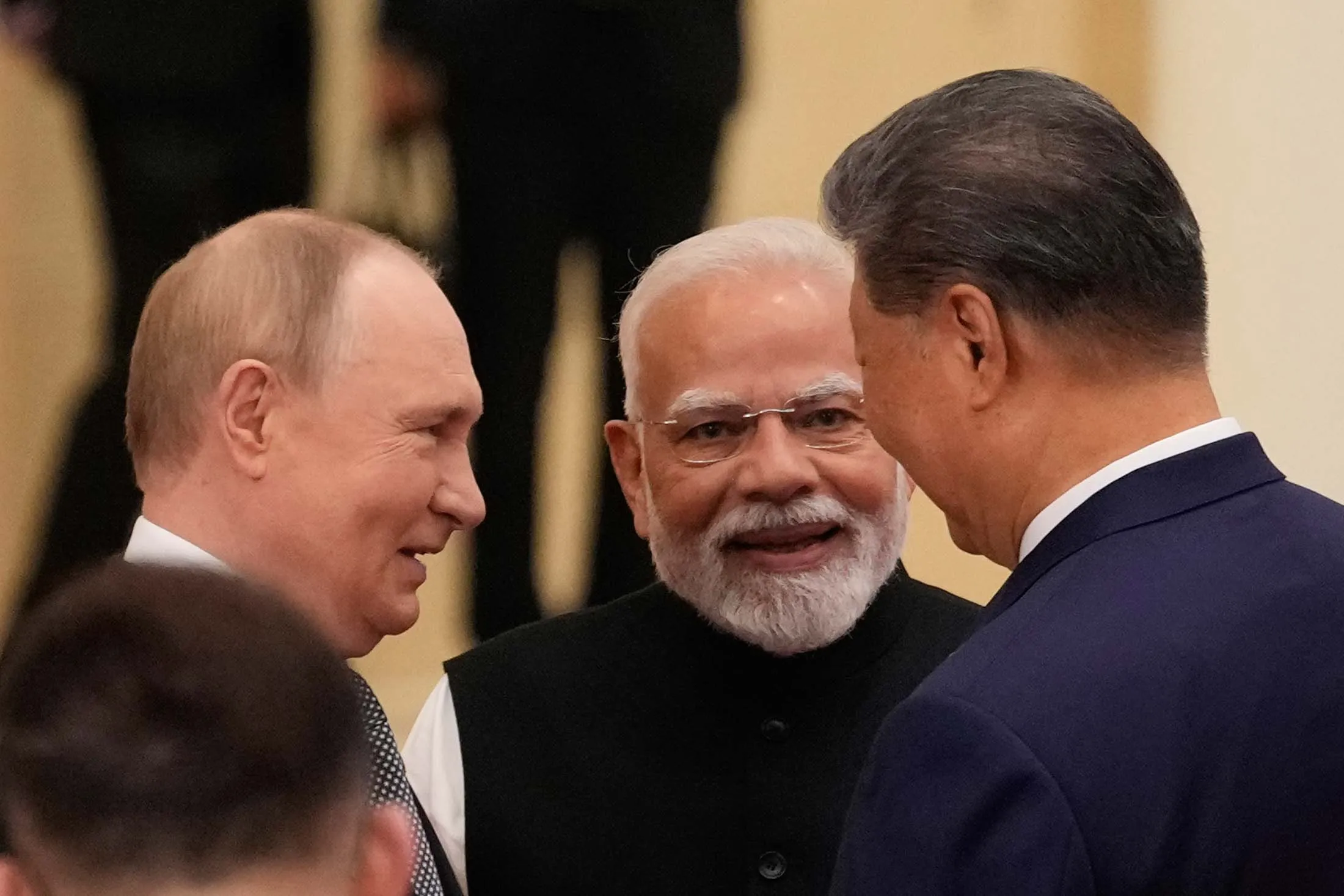
The response, however, was not to abandon the US for another partner but to reinforce India’s long-standing pursuit of strategic autonomy. Modi headed to China and held chummy talks with Xi and Russia’s Vladimir Putin, making sure photographers captured the trio holding hands and laughing. The Indian leader is set to meet both Xi and Putin again next month at the BRICS summit in Delhi.
Yet neither relationship offers India an easy alternative to Washington. Cooperation with China in particular has clear limits: Their disputed Himalayan border remains a flash point, and economic tensions persist. Although India needs certain advanced technology from China to boost its manufacturing sector, building on Apple Inc.’s push to make more iPhones in South Asia, leaders in New Delhi remain wary of becoming more economically dependent on China. Beijing, for its part, has little interest in helping India become a viable manufacturing alternative.
India’s close ties with Russia date back to the Cold War, and Putin remains a reliable supplier of cheap oil and weapons. While Modi’s government has sought to reduce its dependence on Moscow, officials in Delhi say India would never scale back the relationship as much as the US would like.
At the same time, Indian leaders realize that Russia’s economy isn’t exactly a growth engine and that India’s economic future hinges more on strong ties with the West. Within Modi’s government, the current friction with the Trump administration is seen more as an aberration in a decade-long trend toward closer ties between two countries that are naturally aligned.
One official describes the strategy this way: Work quietly to repair ties with the US while strengthening relations with its partners, which India had previously neglected when it could speak directly with “Uncle Sam himself.” Over the past year or so, India has raced to sign long-stalled trade agreements and improve defense cooperation with a range of nations in the broader US security orbit.
Since Trump first shocked the world with his “Liberation Day” tariffs in April 2025, India has concluded trade negotiations with the European Union and completed deals with the UK and New Zealand. It’s also strengthened defense ties with the EU and with three of America’s staunchest allies in Asia — Japan, Australia and the Philippines.
“He’s a great disrupter who has probably done us a great favor,” the Indian official says of Trump. “Some things needed a massive shake-up, which is hard to do unless you have this kind of chaos.”
The Art of Strategic Autonomy
Europe has long offered examples of hedging and diversified alignment. Perhaps the most famous was French leader Charles de Gaulle’s pursuit of strategic autonomy, culminating in his 1966 decision to remove France from NATO’s integrated military command and force allied troops to leave the country.
Dressed in a double-breasted suit before more than 1,000 journalists crammed into the Élysée Palace in Paris, the former general said France’s ability to control its own destiny “is incompatible with a defense organization in which she finds herself subordinated.” Warning that the US could drag NATO nations into war, he said Europe would “be automatically involved in the struggle even though it would not have wanted it.”
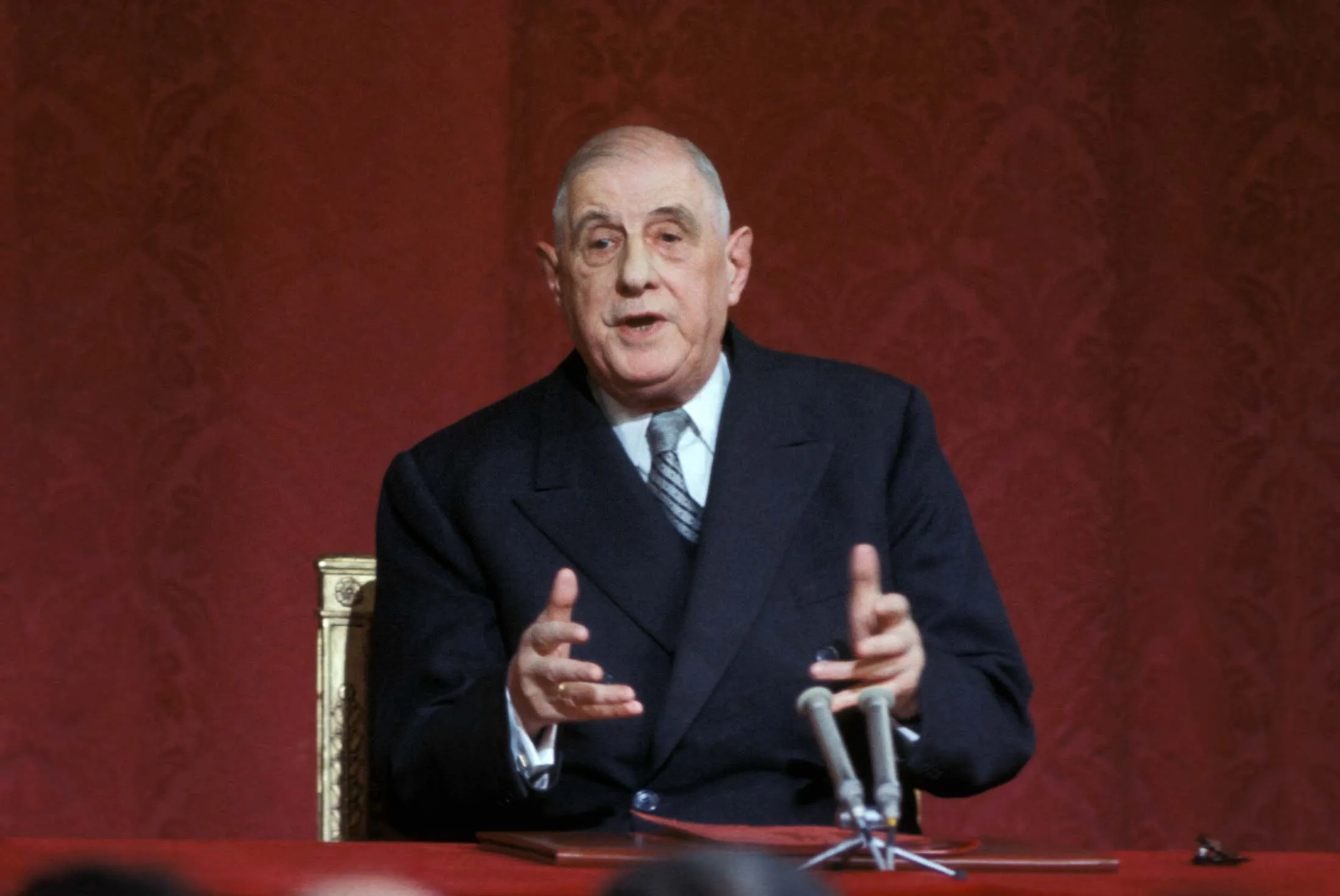
Yet de Gaulle stopped short of abandoning the Western alliance — leaving just the integrated command through which nations pool resources and operate as a single entity. “This is not at all a breakup, but a necessary adaptation,” he said. A year later, NATO shifted its headquarters from Paris to Brussels.
France would remain outside the integrated command until President Nicolas Sarkozy rejoined in 2009. In an address at a Paris amphitheater named after Marshal Ferdinand Foch, who commanded Allied forces in World War I, Sarkozy said France’s “proclaimed but unrealized distancing from NATO limits our national independence and our room for maneuver.” It was possible, he said, to be allies with the US while remaining “friends making their own decisions, independent allies and free partners.”
One reason for the shift was a recognition that the nature of national security itself had changed. “France’s defense is decided now as much on our territory as thousands of kilometers away, in space or on IT networks,” Sarkozy said.
Current leader Emmanuel Macron has aligned himself more with the de Gaulle camp, asserting France’s strategic autonomy and calling for European self-reliance on defense. At the World Economic Forum in Davos, Switzerland in January, he criticized both the US and China while touting France as a bulwark against a “new colonial approach” characterized by “the law of the strongest” and “vassalization.”
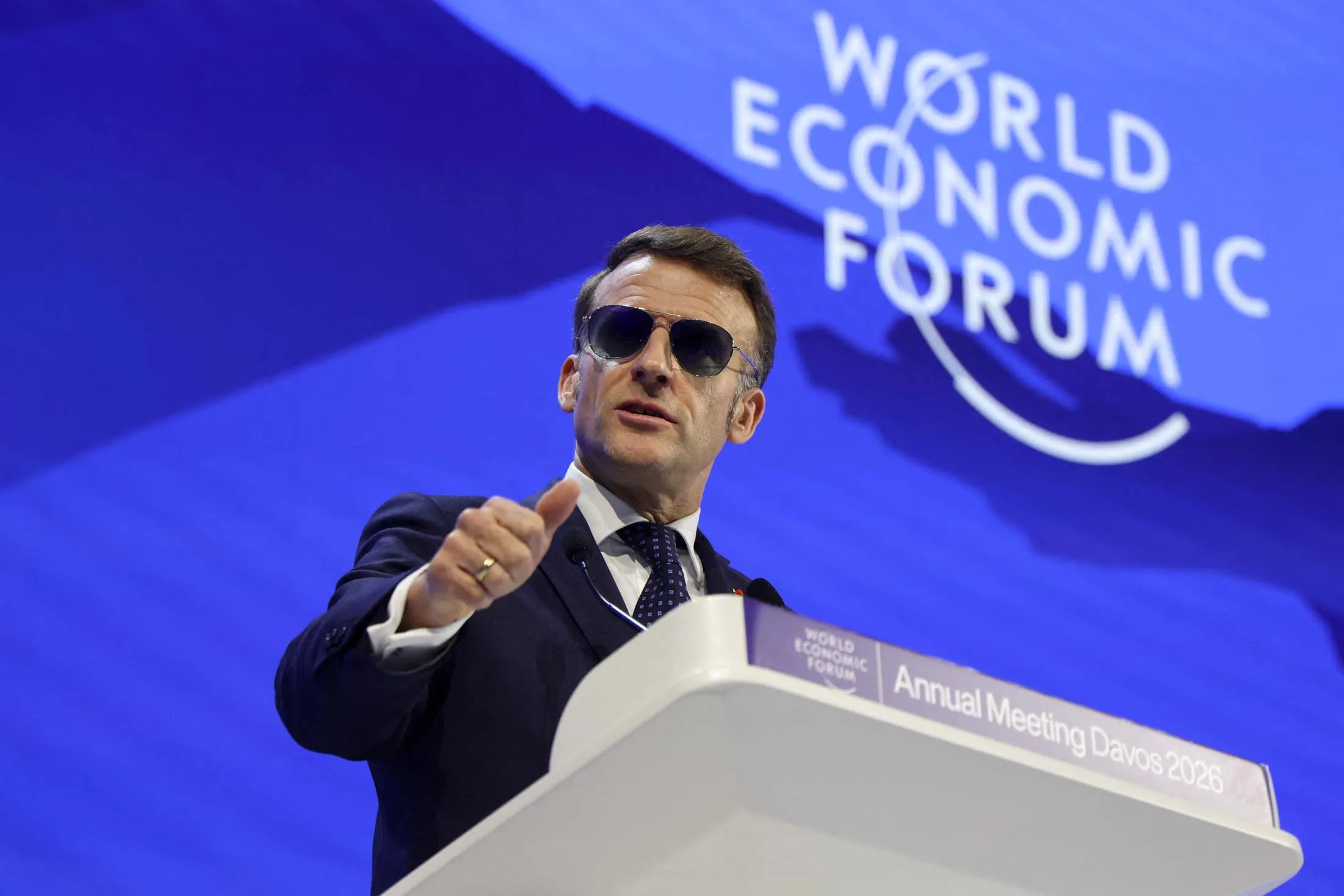
Yet for all Macron’s criticism of Trump, on everything from tariffs to Greenland, he’s not contemplating pulling out of NATO. In June he joined four other European leaders in declaring they were “committed to a stronger European role within NATO, with Europe taking greater responsibility for our shared transatlantic security, coordinating closely with the US.”
Nor has greater independence from Washington meant more accommodation of Beijing. While proclaiming he’s not “anti-China,” Macron has sought to rally the EU to take a stronger stance against China on economic matters. In a joint press briefing with German Chancellor Friedrich Merz last month, Macron warned that Europe faced an “aggressive” trade war, noting that France and Germany had “never been so convergent” on China.
Old Alliances Still Matter
For all the talk of middle powers charting a new course, traditional Western bodies such as NATO, the Group of Seven and Five Eyes — an intelligence-sharing group comprising the US, the UK, Canada, Australia and New Zealand — have proved durable despite Trump’s broadsides. And newer groupings are still forming along similar geopolitical fault lines.
The US has stepped up efforts to break China’s dominance of critical minerals, hosting 55 countries earlier this year — including India and France — in a bid to “reshape the global market” for the elements. France also used its G-7 leadership to advance an overlapping “Critical Minerals Resilience and Production Alliance” with fellow members Canada, Germany, Italy, Japan, the UK and the US.
The emerging governance structure for AI reflects similar divisions. The US-backed Pax Silica includes the EU among roughly two dozen other members, while the China-initiated World Artificial Intelligence Cooperation Organization counts Russia and Myanmar among almost 40 signatories. Only Kazakhstan has joined both, prompting the US to reportedly consider demanding that Pax Silica members pick sides in the AI race with China.
Whether the world ultimately bifurcates into two separate AI supply chains remains an open question. Hardware is the clearest dividing line so far, with the US pressuring allies and partners to block China from obtaining the most advanced chips. Beijing has countered American restrictions on computing power by releasing cheaper, more accessible open-weight models, helping Alibaba Group Holding Ltd.’s Qwen and Moonshot AI’s Kimi K3 gain users around the world, including in the US, Europe and India.
So far the US hasn’t directly banned Chinese models, a move that would be technically difficult to enforce and could backfire. Mistral AI, Europe’s challenger to global participants such as Anthropic and OpenAI, has embraced Chinese open-weight models on its platforms, downplaying potential security risks.
But while Western nations debate the threat posed by open-source models, concerns about Chinese hardware are only growing. Amid fears that China could siphon data, the US Federal Communications Commission recently tightened curbs on a range of products including robotics, Wi-Fi routers, data center components and drones. The UK disclosed this month that some components of its naval drones were secretly transmitting signals to China.
That vast and lingering trust deficit means US-aligned partners remain wary of becoming beholden to China even as they seek to benefit from its low-cost, high-tech products. Perhaps one day Chinese innovations will offer such a decisive advantage that keeping Beijing at arm’s length becomes too costly.
Until then, many US partners are likely to remain anchored in the Western-led order, even as they hedge and diversify away from Washington. One Indian official likens it to a group of investors who put much of their cash into a single stock only to see poor management send the shares lower. Nobody is ready to sell their entire stake at a loss, and they still hope it can recover.
Daniel Ten Kate is an executive editor overseeing Bloomberg’s economic and government coverage in Asia



Comments
Post a Comment