Rush to net zero is a huge risk for the grid
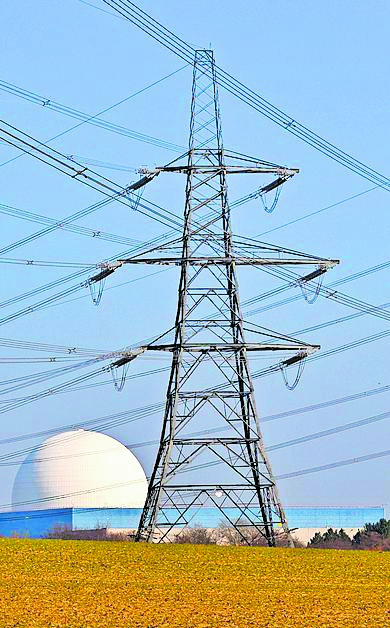
If you have ever walked under a very big electricity pylon, you will have heard that buzz. It’s the sound of the cables’ powerful electromagnetic field charging the air around them, sending loose electrons crashing into air molecules.
Across thousands of miles, the exact frequency at which that electromagnetic field oscillates is being directly and precisely controlled by the spin speed of huge coils of wire inside most power plant generators. This control is what keeps the grid stable and power flowing. But the average phone user, head buried in TikTok, spends not a single second concerned with the engineering magnificence of these electrical eyesores — until something goes wrong.
Something is wrong, according to the shadow energy secretary Claire Coutinho, who has been asking ministers about the risk of blackouts triggered by the breakneck speed of the energy transition. She has three times been accused of “scaremongering”. But she has also, she says, been contacted by more than one whistleblower working at the National Energy System Operator (Neso), raising concerns about how it is running the grid.
Neso first played down her claims.
Now it has opened an investigation.
For the duration of our climate targets, politicians and officials have given little thought to the grid. The key, they believed, was to switch from dirty fuel, which you dig up and burn, to clean fuel, which you harvest seamlessly from the weather.
The missing piece was the immensely complex system that sends the energy from generators to factories and houses in a stable, reliable fashion. Successive governments have never seriously considered the possibility that if you drastically change your energy mix without radically overhauling the grid, it might fall over.
This is odd, because in Spain and Portugal last year, that is exactly what happened. The entire Iberian power system tripped out and engineers spent 16 hours very, very carefully turning it back on to avoid frying and wrenching apart large components of the system. Nothing like this had happened in Europe for a generation or more, and it was directly related to Spain’s hasty switch to solar power.
It was a temperate day in April. The heaters and air conditioners were off but the sun was shining, meaning the great array of Iberian solar farms were producing a huge surplus of electricity. Even now, no one is quite sure what set it off: a faulty piece of kit at a big solar farm, price swings sending large batches of power this way and that, or something else. But there was a series of big oscillations, unusual spikes up and down in the electromagnetic heartbeat of the grid.
Zap, zap, zap: rooftop panels, substations, big plants, they all tripped
Few realised the grid was fragile. On sunny days, Spain exports excess power, but its interconnector runs down a single tunnel through the Pyrenees, forming a bottleneck. Its solar farms are fitted with kit — inverters — meant to stabilise the grid but they don’t respond the way old-fashioned stabilisers do.
In a conventional grid, the sheer inertia of the generator rotors (the huge spinning metal coils) dampens sharp changes. Even if demand or supply suddenly drop, the heavy rotors change speed slowly, providing time for operators to respond.
Electronic inverters, however, don’t react directly to grid conditions and can switch on and off suddenly.
Each time the voltage (pressure) shuddered up or down, grid operators tried to fix it. They linked and unlinked power lines. They connected and disconnected “shunt reactors” that soak up excess power. But the oscillations returned. The Iberian grid began to get dangerously out of sync with the rest of Europe. To stop these oscillations rushing back and forth into France, grid operators cut exports. But that sent the voltage at home up even further. They tried to get more grid-stabilising gas plants online, but by then, it was too late.
As voltage spiked, it set off a spectacular 90-second chain reaction.
It started tripping equipment, including the very inverters that were meant to be dampening the voltage.
Zap, zap zap: little rooftop and balcony panels tripped; big plants tripped; substations tripped. The grid’s electromagnetic field oscillated wildly, one moment faster than its neighbours, the next moment slower, like a chorus dancer doing the opposite of everyone else. To protect themselves, interconnectors to Morocco and then to France tripped.
Less than two minutes after the surge, voltage collapsed to zero.
It could never happen in Britain — could it? Well, there were signs beforehand that something was off with the Iberian grid, such as oscillations outside the safe range.
And if you were looking for notable quirks in the British grid, you wouldn’t have to look far.
On May 2, for example, electricity demand and supply abruptly went out of balance to the extent that grid frequency dropped sharply, for reasons that are still unclear. Three weeks ago, during the intense June heatwave, Neso issued its first urgent call for more electricity supply in summertime. Nothing bad happened.
It was all handled. The British grid runs on wider safety margins than Iberia’s and the share of power generated on wind and solar, which both require inverters, is lower. So maybe it’s all fine.
Then again, under Ed Miliband’s plans, wind and solar are meant to account for well over half of power generation by 2030, like in Spain. And there are those whistleblowers. They have made three claims, according to Coutinho. First, the grid wasn’t managed correctly during the June heatwave; second, records about its operation are being kept in live documents that get edited without a record, so you wouldn’t necessarily be able to reconstruct what happened (or released it under FoI) if something did go wrong; and third, the body’s lobbyists are meddling in its operations to protect its reputation.
The grid operator is supposedly independent, though it was nationalised by Labour 18 months ago. But even before that, energy experts noticed that its forecasts about the cost and design of the netzero grid seemed to be rather more supportive of the government than others are. For example, whereas Neso suggests the cost of a “clean power” system might be £200 billion over five years, the Royal Society estimates a true “clean power” system could cost up to £400 billion, without including full grid upgrades.
That’s to cover things like cabling, transformers, redundancy, energy storage, AI power management systems, cyber-defences and so on.
It is obvious why a government committed to the notion that net zero is “the cheap way to go”
(Miliband’s words) would want to gloss over these costs. But the Iberian blackout shows what happens when you go too fast and cut corners.
Ministers, officials, Ofgem, Neso: they’ve all been warned. Political power is a nice thing, but electric power is governed only and always by the laws of physics.


Comments
Post a Comment