Putin’s War Budget Faces Growing Strains as Peace Talks Resume
Translate
5:17
Takeaways by Bloomberg AI
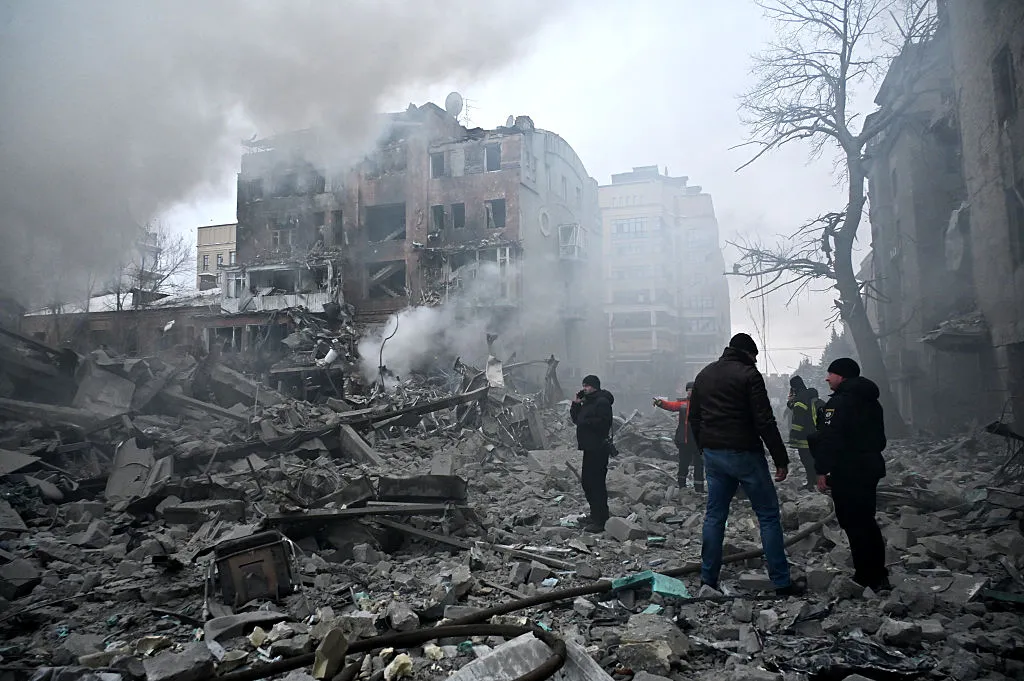
President Vladimir Putin faces a narrowing window to reach a peace deal in Ukraine as Russia wrestles with a widening budget gap to fund its war.
With Kremlin envoy Kirill Dmitriev set to hold talks with US officials in Miami Saturday, Russian officials are concerned that budget spending this year will again exceed planned levels if additional outlays on the war are needed, according to people familiar with the matter. They’re scrambling to find new sources of income of as much as 1.2 trillion rubles ($16 billion) to balance a key budget indicator.
That’s equivalent to an additional 0.5% of gross domestic product beyond the planned deficit for this year of 1.6% of GDP, amid declining revenue from energy sales and the impact of an unexpectedly strong ruble, they said.
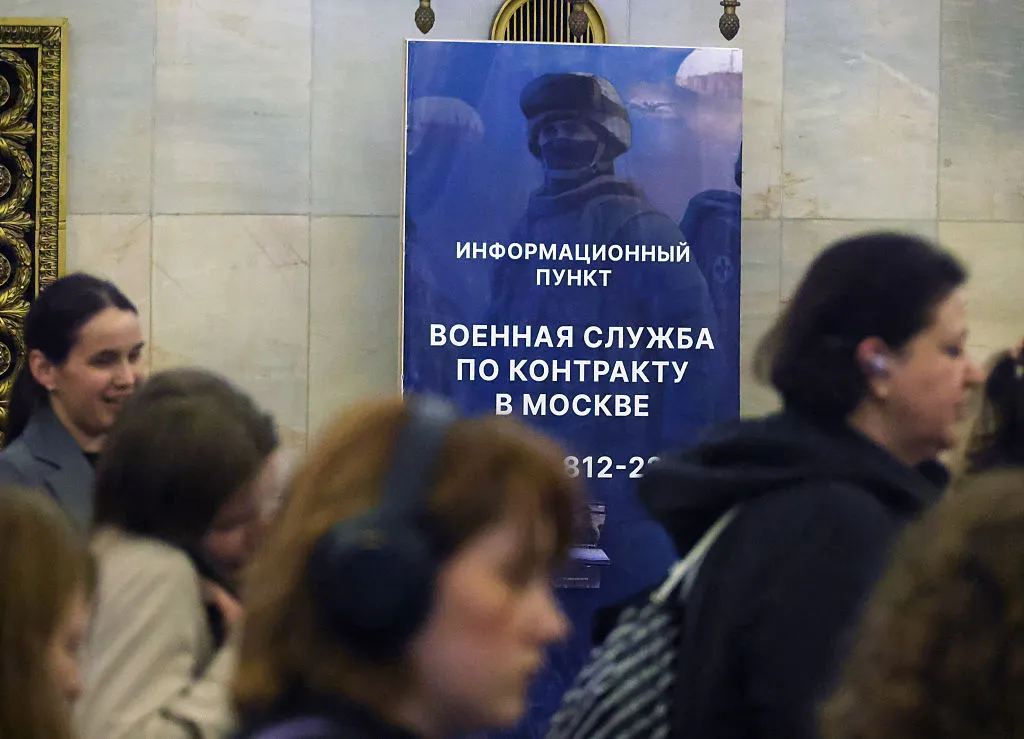
Economic strains are growing as Russian and US representatives explore ways to try to end the 2022 full-scale invasion. Still, Putin shows no sign he’s ready to roll back on maximalist demands for territory in eastern Ukraine, even as US and Ukrainian officials have voiced optimism about progress in negotiations to end Europe’s biggest conflict since World War II.
Moscow sees little chance of a breakthrough at the peace talks, the people said. While Russian and Ukrainian military delegations are clarifying technical details related to implementation of any potential ceasefire, disputes over territory require political decisions at the leadership level, they said.
The territorial question is “the one remaining item” to be resolved, US Secretary of State Marco Rubio told Senate lawmakers in Washington on Wednesday. “It’s still a bridge we haven’t crossed.”
The US political calendar may also become a factor for the Kremlin as President Donald Trump increasingly focuses on November’s midterm congressional elections, according to Alexander Gabuev, Berlin-based director of the Carnegie Russia Eurasia Center.
“The terms Trump’s offering to end the war are the best on the table for Putin in the whole four years,” he said. “It’s unlikely such proposals will be offered indefinitely and if Trump loses control of the lower house, which is likely, then it’ll be able to put a stick in the wheel of whatever he wants to do.”
Russia’s budget position may deteriorate further as US sanctions force oil producers to discount already weak crude prices. The 2026 budget assumes oil and gas revenues of 8.9 trillion rubles with a Urals crude price of $59 per barrel and an exchange rate of 92.2 rubles per dollar.
Urals crude is currently trading at $55 per barrel with the ruble around 75 per dollar. If those levels persist, oil and gas revenues would amount to 6.75 trillion rubles, leaving a shortfall of nearly 2.2 trillion rubles, according to Bloomberg calculations.
To be sure, Russia’s planned budget deficit this year is low by international standards. Still, the government drastically revised its deficit target last year from 0.5% to 2.6% of GDP, and had to slash spending in December to meet that goal. It plugged the spending gap by issuing a record level of increasingly costly debt in the form of OFZ bonds.
Putin wants Ukraine to cede control of its eastern Donbas comprising Donetsk and Luhansk regions as part of what Russia says are the “Anchorage understandings” reached at his August summit with Trump in Alaska. Fighting would be frozen along the current lines of contact in the southern regions of Kherson and Zaporizhzhia.
The Kremlin considers this a concession by Putin, who has laid claim to all four regions of Ukraine, according to the people with knowledge of the situation. That’s even as his forces have never fully occupied those territories.
Ukraine rejects demands to withdraw its forces from heavily fortified areas of eastern Donetsk, which Russian forces have failed to conquer in fighting dating back to 2014, unless Putin also pulls his troops back in equal measure. US proposals have suggested turning the unoccupied area into a de-militarized or free economic zone under special administration.
There’s “general agreement” on postwar security guarantees for Ukraine, Rubio told the US Senate’s Foreign Relations Committee hearing. “Those security guarantees basically involve the deployment of a handful of European troops, primarily French and the UK, and then a US backstop,” he said. “But in fact, the security guarantee is the US backstop.”
Putin’s foreign policy aide Yuri Ushakov told reporters on Thursday those guarantees hadn’t been agreed upon with Russia. While territory is the main issue, there are other unresolved questions, he said.
An earlier round of talks in Abu Dhabi were constructive and focused on issues including implementation of a ceasefire if one could be agreed, according to people familiar with the matter. Military officials plan to continue those talks, though there’s little optimism about a truce without movement on the territorial question, the people said, asking not to be identified discussing private deliberations.
Putin met with UAE President Sheikh Mohamed bin Zayed Al Nahyan at the Kremlin on Thursday and thanked him for hosting the talks.
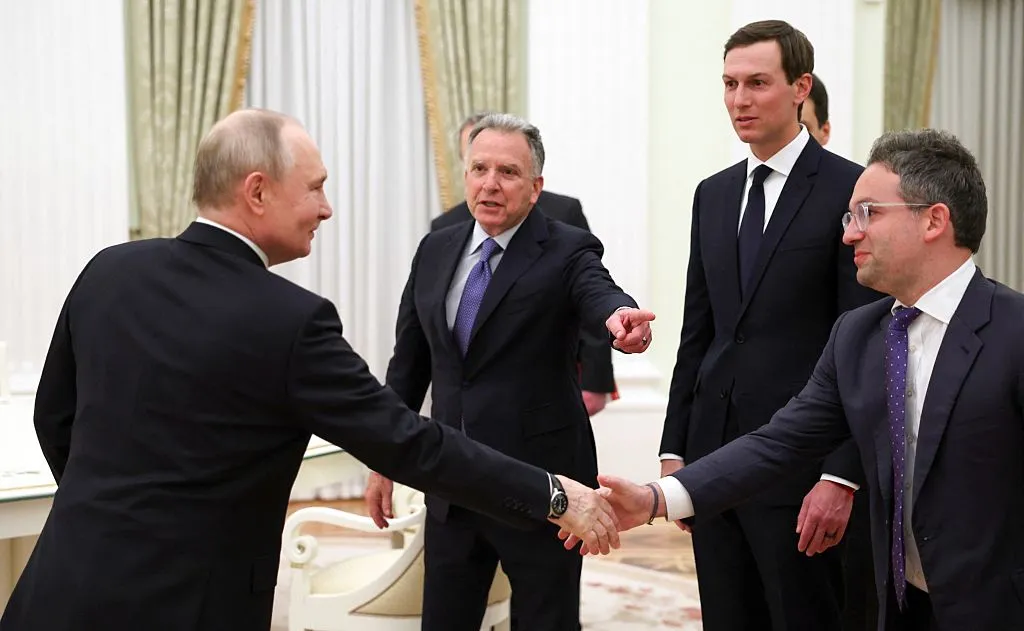
US presidential envoys Steve Witkoff and Jared Kushner, Trump’s son-in-law, attended those negotiations after flying to Abu Dhabi from Moscow, where they held nearly four hours of talks with Putin.
Europe isn’t at the table in Miami and has little insight into whether there’s been any shift in the Russian position according to a European diplomat.
German Foreign Minister Johann Wadephul offered a pessimistic assessment during a visit to Latvia this week, criticizing “Russia’s stubborn insistence on the crucial territorial question.”
“If there is no flexibility here, I fear that the negotiations could drag on for a long time or not be successful at all,” he said.


Comments
Post a Comment