I’ve never seen a judge so angry as during Harry v the Mail. We should all be livid too
The temptation is to think that Prince Harry’s court case was just another bit of celebrity nonsense. It remains difficult, in this country, to take princes seriously. They prance around and ride in golden carriages.
They have cocktails with Sir Elton John.
So when Harry came back to England earlier in the year, to sue Associated Newspapers for hacking, bugging, bribing and other illegal activities, the general feeling was, well, he’s suffered.
Also: it’s only grimy newspapers, isn’t it? How harmful could it be? Sitting in court 76 at the Royal Courts of Justice, in the first week of the trial in January, though, I began to wonder.
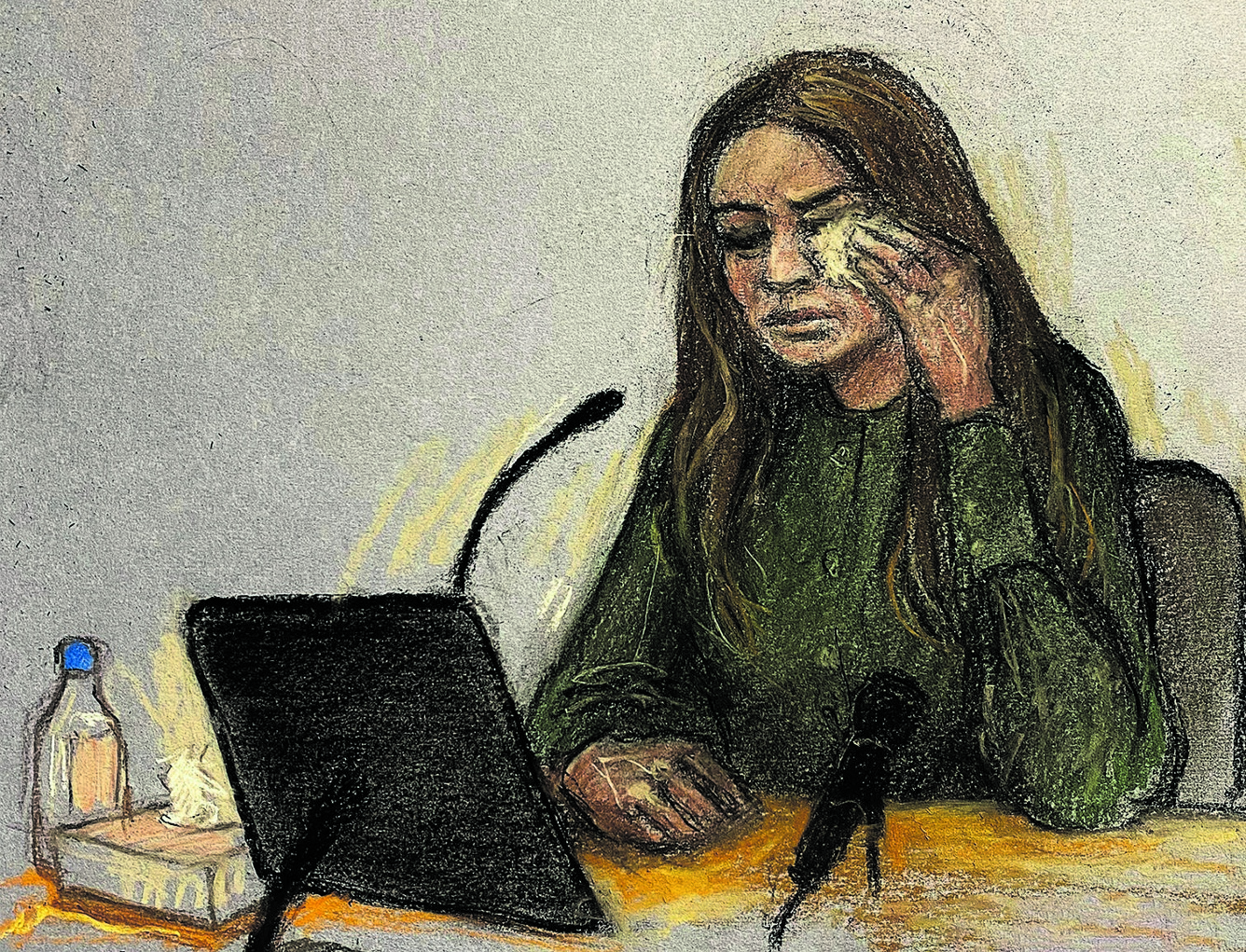
Around me, for a start, there was much more emotion and anger than I’d expected. There was Liz Hurley, sobbing for her life in the witness box. Sadie Frost, actually fleeing the box (“Can I get a break now?”). And then there was Baroness Lawrence, Stephen Lawrence’s grieving mother, who believed, like everyone else — the other claimants included Elton and David Furnish — that she had a case.
Going through Mr Justice Nicklin’s ruling now, though, you think, who on earth persuaded her of that? To read this 436-page judgment, published on Tuesday, is to enter a deluded, mirror world. Here was a set of people — lawyers, activists, celebrities — who truly, madly wanted to show that the paper had attacked them, and they were prepared to say whatever to back this up. Yet on all 97 counts — after requiring Associated to comb through 40,000 documents — they failed to produce any evidence of wrongdoing at all.
In Lawrence’s case the findings were particularly embarrassing. For one allegation, the claimants argued that a payment related to her when it most likely referred to Frances Lawrence, the wife of the teacher Philip Lawrence. For another, she said she would never give interviews over the phone to journalists, yet at the same time claimed she’d done just that.
Witnesses were, said the judge, with great economy, “prone to reconstruction”. One (Evan Harris) had devised a “dishonest” plot. Even Harry was caught out several times. He had never been to a “carnival”, he spat at one point. But you wrote you’d been to one in your book, said Associated’s KC.
As for the rest of the ruling, it was the prince’s basic nightmare. On page after page, Nicklin praised individual Mail journalists as “impressive”, “honest” and “candid”. Paul Dacre was “robust” and “truthful”. Harry had risked millions — only to be told how brilliant Paul Dacre was? It could not be worse.
Yet there’s a more serious issue beneath the jokes at Harry’s expense.
How healthy is it, I wonder, for a society to allow a prince to drag scores of innocent journalists through the courts? You may disagree with the Mail, or feel these journalists somehow deserved it, and in some other, separate cases they have. But there is a principle here, and it is freedom of speech. Just because some people abused that freedom, it does not mean you get to throw that freedom away or use it as a weapon.
Here was a set of people who truly, madly wanted to show the paper had attacked them
You cannot argue that just because someone’s a journalist they’re innately guilty of something, which is what the claimants sought to do. If there isn’t evidence, as the judge said, there isn’t evidence, full stop. There is no “propensity” among journalists to do any particular thing. They are not, qua journalists, inherently criminal. That we needed a three-month trial, at a cost perhaps of £50 million, to tell us this is what worries me.
For many journalists this job only gets harder. There are now fewer of us, yet the stories are getting more serious as politics changes. If anything, there are more people in power who wish to obstruct the truth, and they will go to any lengths to do this, even smear an entire trade as grifters peddling “fake news”, while using their own lies to advance their own false narratives. This case was an incredible example of that.
A group of activists had persuaded themselves it was necessary to do almost anything, to bully whoever they wanted, to allege whatever they wanted, to use as much money as they wanted, to crush a decent paper because they disagreed with that paper politically and therefore thought they had the moral high ground.
No one was off limits: even journalists covering the case. On the first day of the trial, Harry’s PR man swaggered up to me to tell me Harry didn’t like the tone of one of my pieces (I had suggested the prince might be a liar).
Who is Harry to enforce what is acceptable to think and what isn’t? He doesn’t even live here.
If his team had time to try and bully me, what would they do to other, more vulnerable people? The emotional, weak celebs he lured into this case. Or Doreen Lawrence: what does her life look like, now that a share of the £50 million legal bill is hanging over her head? There is no better example, by the way, of what newspapers can achieve than when the Mail named all five of her son’s killers on its front page, risking contempt of court. It was sad to hear Lawrence claim the Mail had only done this because it wanted “credibility for supporting a black family”. What a place Harry’s warped world takes you to: dumping on the very people who helped convict your son’s murderers.
To the prince, this ruling is, by contrast, more or less risk-free. He can declare it “a complete and obvious whitewash” and insinuate it is part of a conspiracy to “exonerate the Mail” without worrying someone will take his job away, or how he’s going to pay the massive fees. There will always be someone to swoop out of nowhere to save him as they have done many times. But until those costs are settled, what will everyone else’s life feel like? It took nearly three years to sort out Wagatha. As for the legal profession, I’ve never seen a judge so livid as during the Mail trial.
What happens if a society becomes so obsessed with a moral idea of itself that it endangers its own freedoms: its media, its lawyers? Politicians now find it too easy to evade interviews (Andy Burnham) or complain if their properties are doorstepped (Nigel Farage). Does Harry realise his role in any of this: how he has helped the worst people scream “privacy”, while preying on the best?


Comments
Post a Comment