How Brands Sneak In Cheaper Ingredients to Protect Their Profit Margins
Companies are enlisting consultants and spending millions to reformulate their most beloved products.

Translate
9:52
Takeaways by Bloomberg AI
We all have our breaking points. For Brad Reese it was no longer being able to wear his bright orange racing jacket in public — the one with the word “Reese’s” emblazoned across the chest in yellow cursive. His grandfather created the eponymous chocolate-peanut-butter cups in 1928, and Reese likes to wear the jacket out to “experience people’s love” for the iconic American candy. “I’ll be walking in Manhattan, and I swear to God the sidewalk will part,” he says. “People step aside, and they’ll all be smiling — everybody from the 4-year-old up to the 104-year-old.”
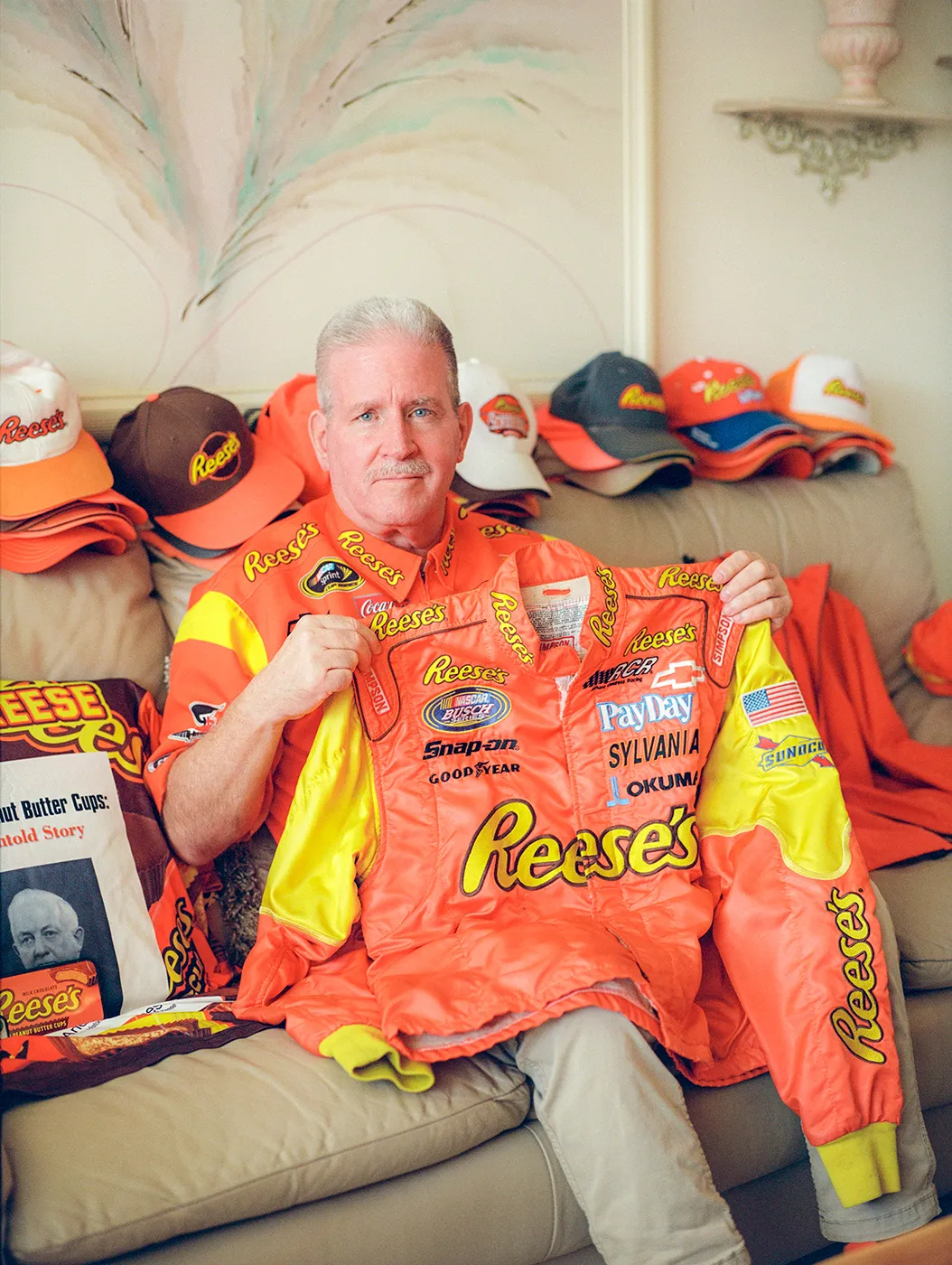
Hershey Co. purchased Reese’s in 1963, and over the years, Reese, who is 70, has noticed changes to his namesake sweet. “I’d eat a peanut butter cup and say, ‘Something’s not right.’ And then I’d look at the wrapper and, sure enough, it would say ‘made with chocolate,’ which means vegetable oils.”
When companies swap out ingredients or replace them with substitutes, they often have to tweak the wording on the packaging. For something to be called “chocolate,” the US Food and Drug Administration requires that roughly 15% of the product come from an actual cacao bean (10% if it’s milk chocolate), otherwise it must be called “chocolate candy.” If OJ doesn’t contain at least 10.5% orange juice, you might see “orange juice beverage” on the bottle. If your peanut butter isn’t at least 90% peanuts, it might go by “peanut butter cream.” These sleights of labeling are often the only clue something has changed — that and the strange feeling your favorite food tastes a bit off.
Right now companies are reformulating pretty much every product in your shopping cart, says Edgar Dworsky, a consumer advocate who’s run the watchdog website Consumer World for the past 30 years. Every week, Dworsky calls out brands for watering down detergent, replacing the cream in ice cream with oil or skimping on the beef in beef stew. “It comes in cycles,” he says. “In times of inflation you see more examples of it.”
Dworsky says companies use two main tricks to mask price increases: shrinkflation (keeping the price the same but cutting the amount of product you get) and skimpflation (swapping out ingredients for cheaper alternatives). He says he’s seeing a lot more skimpflation lately, which is more likely to go unnoticed since consumers aren’t in the habit of memorizing nutrition labels. “You can’t assume a product is going to stay the same anymore,” Dworsky says. “There seems to be more deception involved these days.”
For Reese the call to action came in the form of a bag of Reese’s peanut butter mini hearts he bought just before Valentine’s Day. “I literally had two bites and had to spit it out.” He looked at the package: “It was ‘chocolate candy with peanut butter cream.’ ”
Reese was devastated. His namesake candy had been so skimpflated that he no longer felt like he could wear his orange jacket with pride: “I can’t go out and promote Reese’s when I think the quality is crap.” His posts on social media complaining about the changes went viral, and Reese was inundated with messages. “People saying, ‘Thank you! I thought I was going nuts.’ ” (Not long after, Hershey announced it would be reverting to the “classic” recipe.)

Skimpflation may just be the biggest consumer grift going — almost no one and nothing is safe. Yet nobody really seems to be winning. Dworsky talks to companies every week that are struggling to navigate inflation, tariffs, rising wages and spiking fuel prices. Americans are paying about 31% more for groceries than they were before the pandemic, according to government data. But a gauge that tracks what companies pay for ingredients has risen nearly 49% over the same period.
This pressure has been showing up on companies’ bottom lines: Kraft Heinz Co. cited inflationary pressure as one of the factors behind a more than 4% decline in operating income in the first quarter. Hershey’s stock has lost a quarter of its value in the last three years, and, while earnings are up this year, it’s selling fewer candy bars, cookies and snacks. Procter & Gamble Co. warned in April that rising oil prices could add $1 billion to costs in the next fiscal year, potentially forcing the company to raise prices for some of its soaps, detergents and razors. Any increases would be “combined with innovation,” said Chief Financial Officer Andre Schulten in an earnings call.
Innovation is in the eye of the beholder, though. One product manager’s money-saving hack may feel like sacrilege to a devoted brand loyalist. Reformulating a product is serious business, and companies often hire outside consultants to get it right. Gail Vance Civille, who heads Sensory Spectrum, a product consulting firm in New Jersey, says demand for its services has been booming in recent years thanks to supply chain disruptions caused by Covid-19, climate disruptions and President Donald Trump’s tariffs.
Civille is a chemist by training, and at 83 she’s been a professional taster for 60 years. She can pick out the woody, green notes in a fresh strawberry and the hints of raisin and Play-Doh (aka heliotropin) in a good vanilla, and she’ll wax poetic about the texture of a Snickers bar.
When a company comes to Civille looking to replace an ingredient, she deploys a team of trained tasters to figure out whether the best option is finding another source for that nut, fruit or spice (maybe in a country with a lower tariff) or developing a combination of flavorings and chemicals that can mimic that taste. New versions of the product are then formulated and tested again and again until the taste, texture and mouthfeel are as close to the original as possible. Done right, Civille says, the process can take as long as a year and cost millions of dollars. But a lot of times companies are under financial pressure and don’t want to wait. “I’ve seen it where executives just say, ‘That’s good enough. People won’t notice.’ But, you know, they might.”
Some flavors are relatively easy to mimic, while others are tougher, but in Civille’s experience there are four so complex that re-creating them is a sensory feat comparable to summiting Everest. Those are: wine, coffee, chocolate and peanuts. Each of Civille’s Big Four has jumped in price in recent years, so if companies can find viable substitutes, they stand to save millions. Right now there’s a raft of startups working on fake chocolate, though Civille doubts a truly convincing dupe can be engineered. “You have to find chemicals that are going to deliver what we call ‘chocolate essence,’ ” she says. “It has a nuttiness and a wininess to it. It’s very, very hard to replicate.”
Peanuts are also tough to crack. Even if you get the flavor close to right, you also have to nail that unctuous peanut butter texture. Otherwise you’ll leave people in a kind of uncanny valley of flavor, where the taste is familiar but something is amiss.

Bloomberg may send me offers and promotions.
For a company such as Hershey, the process of finding suitable alternatives is especially fraught. For countless Americans a Reese’s peanut butter cup is the equivalent of Marcel Proust’s madeleine, a treat that instantly transports us back to childhood (Halloween! Birthday goodie bags!). Ioannis Evangelidis, a professor of marketing at Esade Business School in Spain who studies shrinkflation and skimpflation, has found that while cutting down the amount of product might annoy customers, it usually won’t stop them from buying something again. Changing the ingredients, however, is a different story. “People react really badly,” he says. “It’s like the essence of the product has kind of gone. They don’t want to buy it again.”
That’s only if they notice, but with social media, the few instances that catch on can make a lot of noise, Evangelidis says. “Then you have the risk of long-term reputational damage.”
Neal Chauhan, 31, runs a social media marketing business in Toronto and, in his spare time, has become something of a consumer-rights crusader. Frustrated at some of the changes he was seeing in his favorite products, he started posting daily videos about his discoveries. Several years in, the videos have been viewed millions of times on TikTok and Instagram, and he’s recruited a volunteer network of tipsters who work in grocery stores and drugstores. “ I’m continuously surprised at how creative companies can be at hiding this. It’s almost impressive,” Chauhan says. “I would say this is one of the more nefarious grifts.” Still, he says, complaints can amplify quickly, and if the optics get bad enough, “companies have to respond.” Like Ventura Foods, which added more water to its popular Smart Balance vegan butter spread in 2022, taking it from 64% vegetable oil to 39%. Customer backlash was fierce, and the company quickly reverted to the original formulation. A couple of years ago, Whole Foods tried to dial back the berries in its Berry Chantilly cake until angry TikTokers called out the supermarket chain.
And just a few weeks after Brad Reese’s social media post, Hershey announced it would be going back to the “classic milk and dark chocolate recipes” in all Reese’s products, though Chief Executive Officer Kirk Tanner told Bloomberg News it was a long-planned change and not a reaction to public scrutiny: “We’re going to make some small investments to really align the portfolio to what the brand stands for.” The new-old cups are scheduled to arrive early next year.
Reese is anxiously awaiting them. In the meantime he’s been wearing his orange jacket out again with a new kind of pride. “ I was at the beach, and this guy comes up to me and goes, ‘Are you the grandson of Reese? I’ve been reading about you. You’re sticking up for the integrity of your family’s brand, and I think that’s really cool.’ ”
Read next: The Infuriating Rise of the $8 Ice Cream Cone


Comments
Post a Comment