Chinese Spies, Smuggled Drugs Fuel Takaichi’s Security Push
Translate
Takeaways by Bloomberg AI
Sign up for the Next Japan newsletter, for an inside view of the forces reshaping Japan, and what’s next for its businesses, markets and consumers.
Chinese spies stealing Japanese industrial secrets in boardrooms. Chip smugglers ferrying Nvidia’s prized artificial intelligence semiconductors via Japan. Drug gangs quietly slipping fentanyl across Japan’s borders to a US opioid crisis.
Across a range of industries, Japan’s economic-security vulnerabilities have been on display in a slew of recent incidents. The cases show how foreign actors increasingly see Japan as an attractive target — and, in some instances, a convenient gateway — for espionage and other illicit activities.
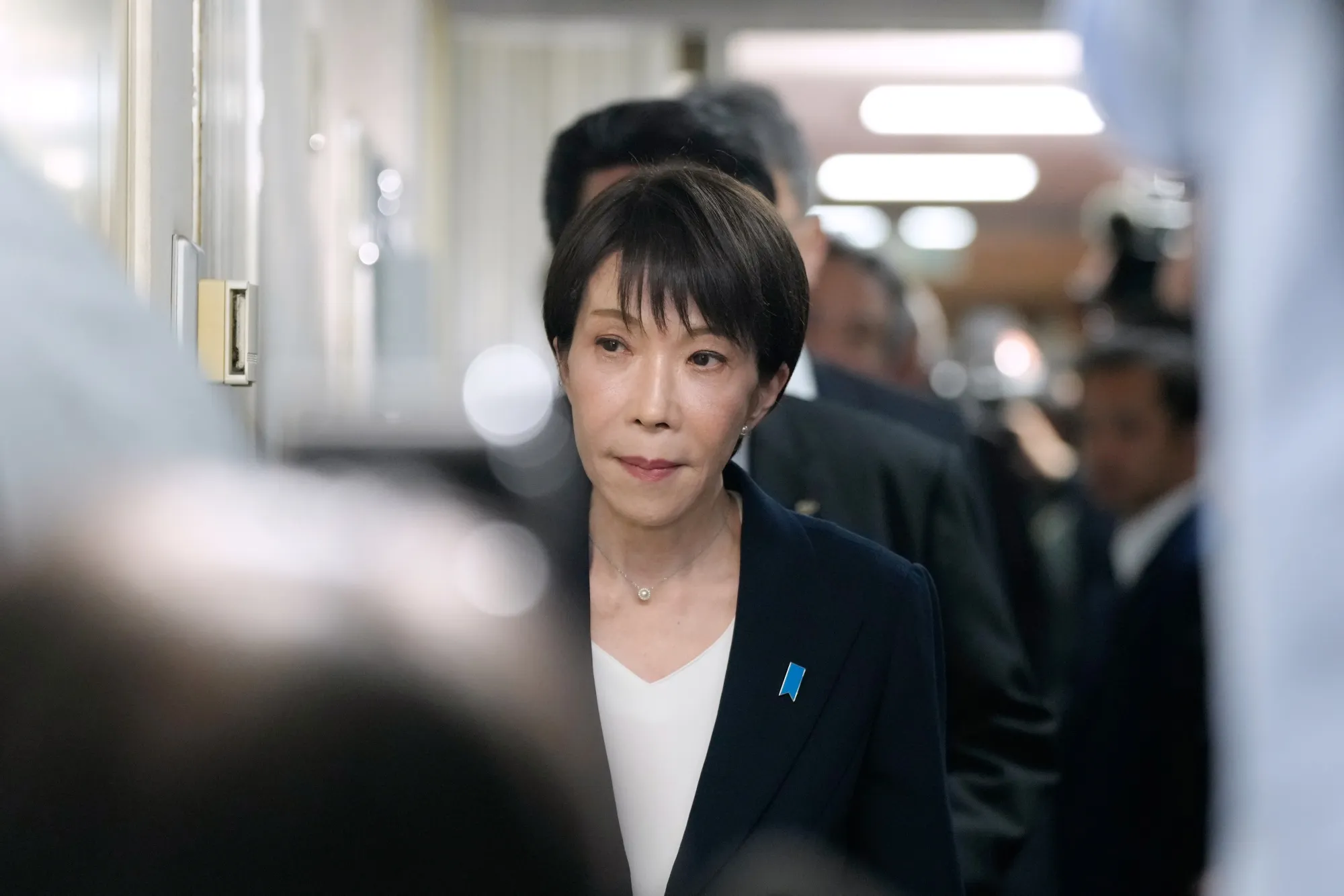
That’s helping drive Japan’s most ambitious economic-security push in years under Prime Minister Sanae Takaichi, a longtime advocate of stronger safeguards against such threats. Her administration is on the cusp of launching what’s been billed as the Japanese equivalent to the Committee on Foreign Investment in the US, or CFIUS, in an effort to broaden and intensify reviews of overseas funds eyeing local targets.
“Takaichi is pushing forward through the menu of economic security policies that policymakers, bureaucrats, even academia have been advocating over the last few years and actually implementing it,” said Akira Igata, who leads the Economic Security Intelligence Lab at the University of Tokyo.
Like its US counterpart, Japan’s CFIUS — which is set to launch Monday — will coordinate across government ministries to vet foreign investments for national security risks. That differs from the current approach, in which reviews are largely just handled by the Finance Ministry and the ministry overseeing the relevant industry.
The panel is being established as part of a recent revision to the Foreign Exchange and Foreign Trade Act. The new legislation also expands pre-screening requirements to cover certain cases of indirect ownership and gives authorities broader powers to examine transactions by high-risk investors — such as foreign governments or state-controlled entities — even outside traditionally sensitive sectors.
Japan’s foreign investment pre-screening filings have climbed in recent years since a previous overhaul of FEFTA in 2019. Before then, foreign activist funds could acquire up to 10% of a company’s shares without government scrutiny. But after, the threshold was lowered to 1%, capturing far more attempts by activist investors to influence target companies.
After meeting with Japanese officials last month, Treasury Secretary Scott Bessent touted the US’s support for Japan’s efforts to build an investment screening mechanism.
Before she ascended to the premiership, Takaichi served as chief of her party’s cybersecurity headquarters and then as the minister in charge of economic security from 2022-2024. In the more recent role, she worked extensively on legislation to protect the nation’s supply chains, infrastructure and technology from global risks. Japan’s leader has since driven the expansion and revision of that law, known as the Economic Security Promotion Act.
The US CFIUS heavily focuses on threats from China, and Japan’s will probably be no different.
“When seeking to strengthen supply-chain resilience and information security, we must not forget the existence of China,” Takaichi wrote in a 2024 book titled Japan’s Economic Security: Protecting the Nation and Its People.
She noted that China is Japan’s largest source of imports, exerts significant influence over global supply chains and sends large numbers of researchers and students abroad. She also pointed to a Chinese national intelligence law, which she argued can compel Chinese nationals to assist the state in collecting information.
Many of the recent episodes highlight her concern. In just the past few weeks, Nikkei has reported that Japan’s defense forces used USB drives with a virus linked to China as well as Japanese ties to Chinese organizations illegally exporting fentanyl. And last month, Bloomberg reported that prosecutors in Taiwan suspected that three individuals successfully smuggled at least one shipment of Nvidia Corp. AI chips to China after first exporting them to Japan.
But the issue goes beyond China as threats increasingly come through digital channels, as National Police Agency data show. Japan has detected suspicious cyber activity from all around the world, namely from the US and Russia. But it can be difficult to identify where the attacks are actually coming from due in part to spoofed IP addresses, a report from the agency suggested.
As security concerns ramp up officials are using new tools. In April, the Japanese government opposed Seoul-based MBK Partners Ltd.’s bid for machine tool maker Makino Milling Machine Co., invoking a national security law for only the second time in history. The review of Taiwanese Yageo Corp.’s acquisition of Japan’s Shibaura Electronics Co. stretched seven months last year, while the government’s security labeling of Seven & i Holdings in 2024 contributed to regulatory hurdles that eventually derailed a takeover bid from Canada’s Alimentation Couche-Tard Inc.
Strengthening investment screening addresses only part of the challenge. Risks remain particularly acute for smaller firms, which account for nearly all of Japanese businesses. Despite forming the backbone of the country’s manufacturing supply chain, many lack the resources and expertise needed to protect sensitive technologies.
Aichi-based mold manufacturer Make Start Co., which employs about 100 people and supplies components to major auto part makers, is one of the exceptions. Partly in response to client demand for stronger security, the firm is trying to protect its data and technology by keeping more than 90% of production in-house and providing company-issued smartphones to staff.
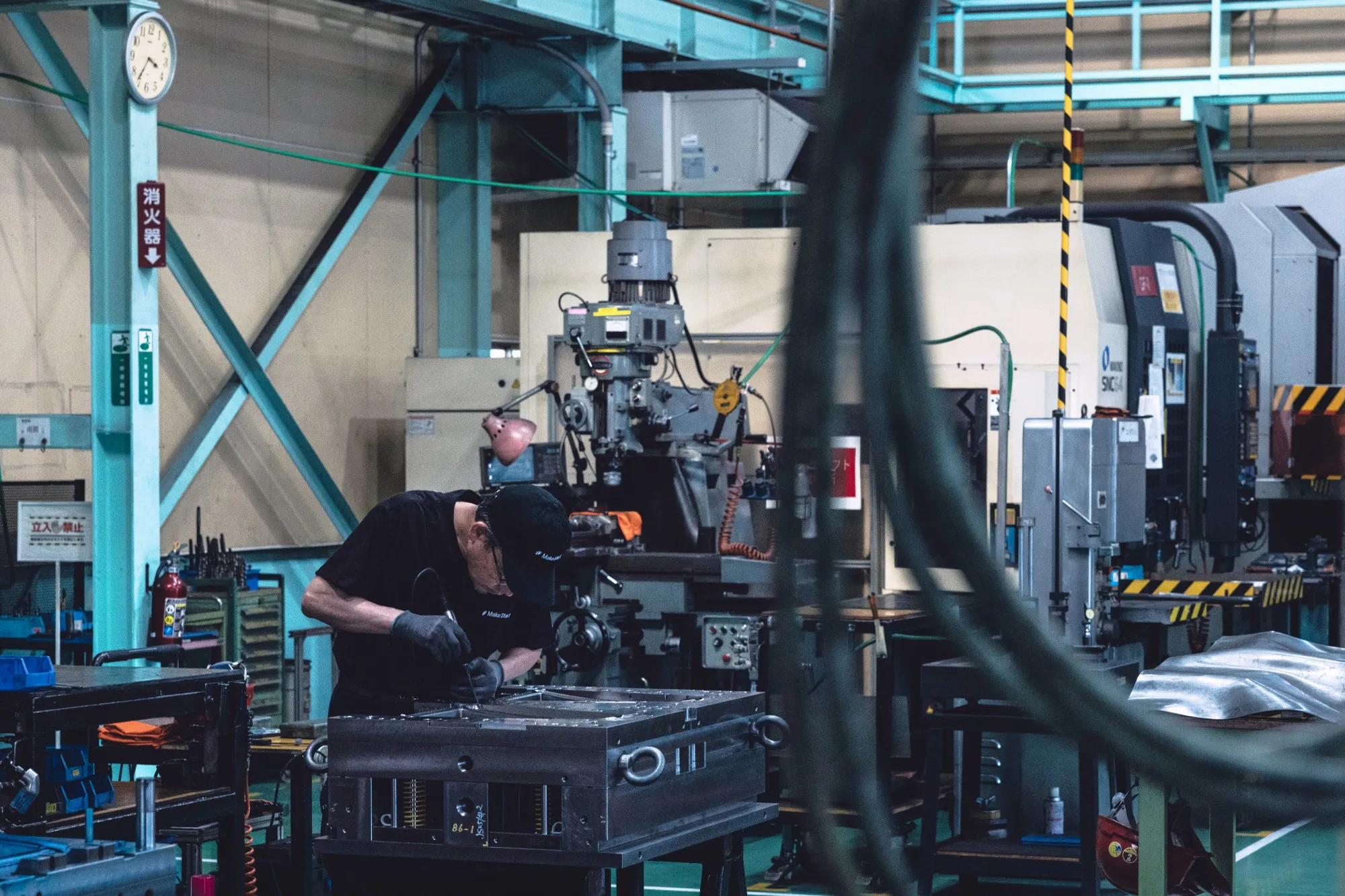
It’s a combination of these small steps that prevents leakages, said chief executive officer Kunihiro Sakoda. Breaches can happen when employees change jobs and take their experience and intangible know-how elsewhere, or posts on social media that inadvertently show confidential information, he said.
“I do think these measures would have been put on the back burner if I had to sort this all out myself,” Sakoda said, crediting a partnership with a cybersecurity specialist.
Yuzo Murayama, professor emeritus at Doshisha University, credits the government and police for devoting “considerable resources” to the issue and in turn garnering attention from business owners. The administration is heavily promoting the development of dual-use technologies — items with civilian and military applications — highlighting how the products can both fuel the economy and protect domestic supply chains.
“The Takaichi administration came into office and began talking about turning the defense industry into a growth industry,” Murayama said. “I think that has significantly raised awareness.”


Comments
Post a Comment