Brexit Was Only as Good as Its Plan… Oh, Wait
There never was one. Ten years later, what still Remains is the muddle and anger.

Translate
To get John Authers’ newsletter delivered directly to your inbox, sign up here.
“We didn’t have a plan for what to do next,” said Boris Johnson, “because we didn’t think it was our job to have a plan.” That note of devastating honesty from the leader of the campaign for Britain to leave the European Union concluded Brexit: A Very British Civil War, a BBC documentary broadcast this week to celebrate the 10th anniversary of the Brexit referendum. It’s already featuring in pro-EU commercials, and it vitiates the intense debate over whether the UK could ever benefit from the decision it made to go.
As John Micklethwait and Adrian Wooldridge laid out last month, the momentous decision entered into so casually has proved to be quite a watershed moment in global history. Its significance spreads far beyond arid arguments over customs unions, tariffs, and agricultural subsidies. And it hasn’t gone away. Brexit framed Andy Burnham’s big victory in this week’s Makerfield byelection, where his main opponents were populist parties that grew directly out of the Leave campaign. But his real opponent was Keir Starmer, the unpopular leader of their Labour Party, whom he is now in pole position to unseat. If Burnham succeeds in doing so, as looks likely, Starmer would become the sixth Brexit-era prime minister to fall.1 Whoever heads the government will face calls from some in the party to rebuild links with Europe and possibly even overtures from the EU itself to rejoin.
The anger and bitterness among many Britons is undeniable and appears constant. But the 10th anniversary has brought a fresh wave of attempts to account for exactly what the effects have been, and they produce a surprising consensus given how divisive the debate continues to be: Leaving the EU hasn’t helped Britain at all. Indeed, it’s made the economy somewhat worse. Leavers and Remainers agree on this.
Perhaps more surprisingly, and in stark contrast to the passionate debate in Makerfield and elsewhere, there’s also a growing body of opinion that in economic terms, leaving the EU might not have proved to be that big a deal. Britain was already on a downward trajectory a decade ago. What’s happened since hasn’t been great, but hasn’t been a disaster, either.
Judging the Counterfactuals
The greatest problem is unavoidable; we cannot know the counterfactual of what would have happened without the divorce from the EU. UK in a Changing Europe, an academic think tank, summarized the various studies that tried to deal with this, while Julian Jessop, an independent economist, offers a useful summary of critiques of those studies.
The lack of clarity is worsened by the additional shocks that have hit since. The pandemic, which arrived within days of formal exit from the EU in January 2020, was the biggest, but there was also the energy spike that followed Russia’s invasion of Ukraine two years later, and then last year’s disruption from the Trump 2.0 tariffs.

There’s also the issue of disentangling the opportunities and costs that come with being out of the EU from the expensive process of leaving. The British establishment spent 42 months tearing itself apart over the issue, and held two general elections before departure was finally achieved. The National Bureau of Economic Research summarized:
Brexit generated persistent uncertainty that weighed particularly heavily on investment. Survey data show that nearly 40% of firms rated [it] as one of their three main sources of uncertainty immediately after the referendum, rising to 55% in 2019 before declining following the December 2019 election that cleared the path for the UK’s formal exit.
The interminable wrangles undermined firms’ productivity, according to the NBER, which found that they suffered from “reduced innovation, lower IT investment, and management time diverted to Brexit preparation.” Nearly 10% of chief financial officers reported spending six hours or more per week between 2017 and 2020 on planning for leaving the EU.
Supporters can claim these problems resulted from the poorly managed transition (and Boris Johnson’s non-existent plan), which is now over.
Brexit by Numbers
While we don’t know the counterfactual, it’s clearly a fact that UK economic performance has been weak in the last decade. Some specific issues that were at the center of the debate have shown an obvious deterioration.
Eurostat data show the total volume of imports to the euro zone has risen by 5.7%, while the volume of imports from Britain has dropped by 48.1%. Common sense suggests that the extra non-tariff barriers and paperwork that UK exporters must now go through will have had an impact on that.
Immigration was the other key issue in the campaign, and as far as employers are concerned, it is so far impossible to say that leaving the EU has helped. The Confederation of British Industry, the main employers’ organization, conducts closely watched surveys of its members. In the 10 years leading up to June 23, 2016, an average of just under 10% complained of labor shortages. In the last three years (a period that excludes the greatest pandemic disruptions), that figure has risen to 18.25%.
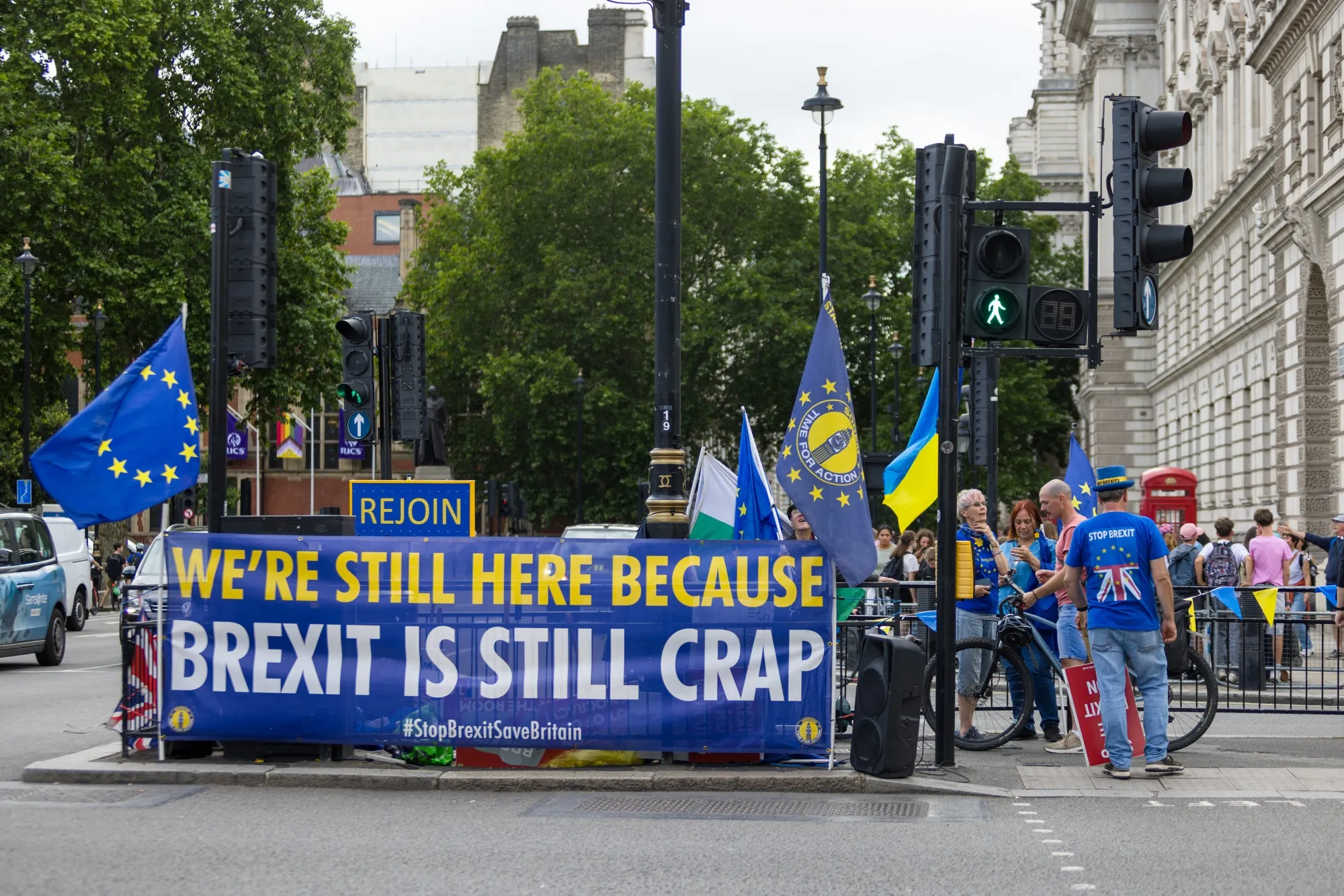
Erik Britton, economist at Fathom Consulting, supported staying in the EU but says the outcome has been unclear. Things grew steadily worse for the UK in the decade before the vote and carried on worsening at much the same rate over the decade since. “There just isn’t any clear evidence of a Brexit effect in trade, investment or growth,” he says. The UK’s current account position with the EU “is awful, but no worse than it was before Brexit.” Growth in gross domestic product for the EU has been little different from Britain since Covid.
Market Verdicts
If there is one variable that really did change, it’s the currency. Traders chopped off more than 10% of the pound’s value against the dollar on the night the results came in, and in nominal terms, sterling has only very rarely exceeded the level at which it came to rest that night. Such a devaluation should improve trade by making exports more competitive, but it hasn’t.
The stock market came to a similarly negative but not catastrophic judgment. The referendum shows up as a waymark in a steady decline, not as a huge game changer. In the 10 years leading up to the vote, the FTSE All-Share index lagged FTSE’s index for the rest of the world by 30.7%; in the subsequent decade, it’s trailed by 49.5%. Russ Mould, investment director of AJ Bell in London, argued:
Wriston’s Law of Capital states that, “Capital will always go where it’s welcome and stay where it’s well treated,” and in the wake of the Brexit vote capital did not necessarily feel it was either welcome or likely to be well treated. The British voted for it, but financial markets did not like it.
Credit markets echo this. Alberto Gallo, a credit hedge fund manager with Andromeda Capital in London, points out that the referendum was followed by a number of high-profile bankruptcies of companies that were very levered, and “because they were in the UK, they could not survive.” Investors have now removed the advantage that British firms once enjoyed in borrowing costs. “UK companies used to trade at a lower spread versus Spanish or Italian companies. Now that premium is no longer there.”
Brexit hasn’t created a market disaster, but it does continue the gradual squeeze on the UK’s access to the capital that makes it ever harder to return to robust growth.
What Went Wrong?
The question tainting the debate remains the chaotic way in which the split from the EU was handled. After Makerfield, Keir Starmer now looks likely to be the latest failed post-referendum premier in what has been an unprecedented degree of political turmoil. That has had costs.
European regulations were adopted as UK law when Brexit was made official, and many remain on the books. There has been no great deregulation. Neither has there been any reduction in the tax burden, with tax revenues hitting a record 37% of GDP this year, four percentage points higher than 10 years ago. If Britain wanted to become “Singapore-on-Thames,” a haven from regulation and taxes, it hasn’t even started.
Such a plan would have helped the services sector. As for the former manufacturing heartlands that backed Leave most strongly, new non-tariff barriers have made things far harder. Supply chains and logistics were far easier when the entire EU could be treated as one country.
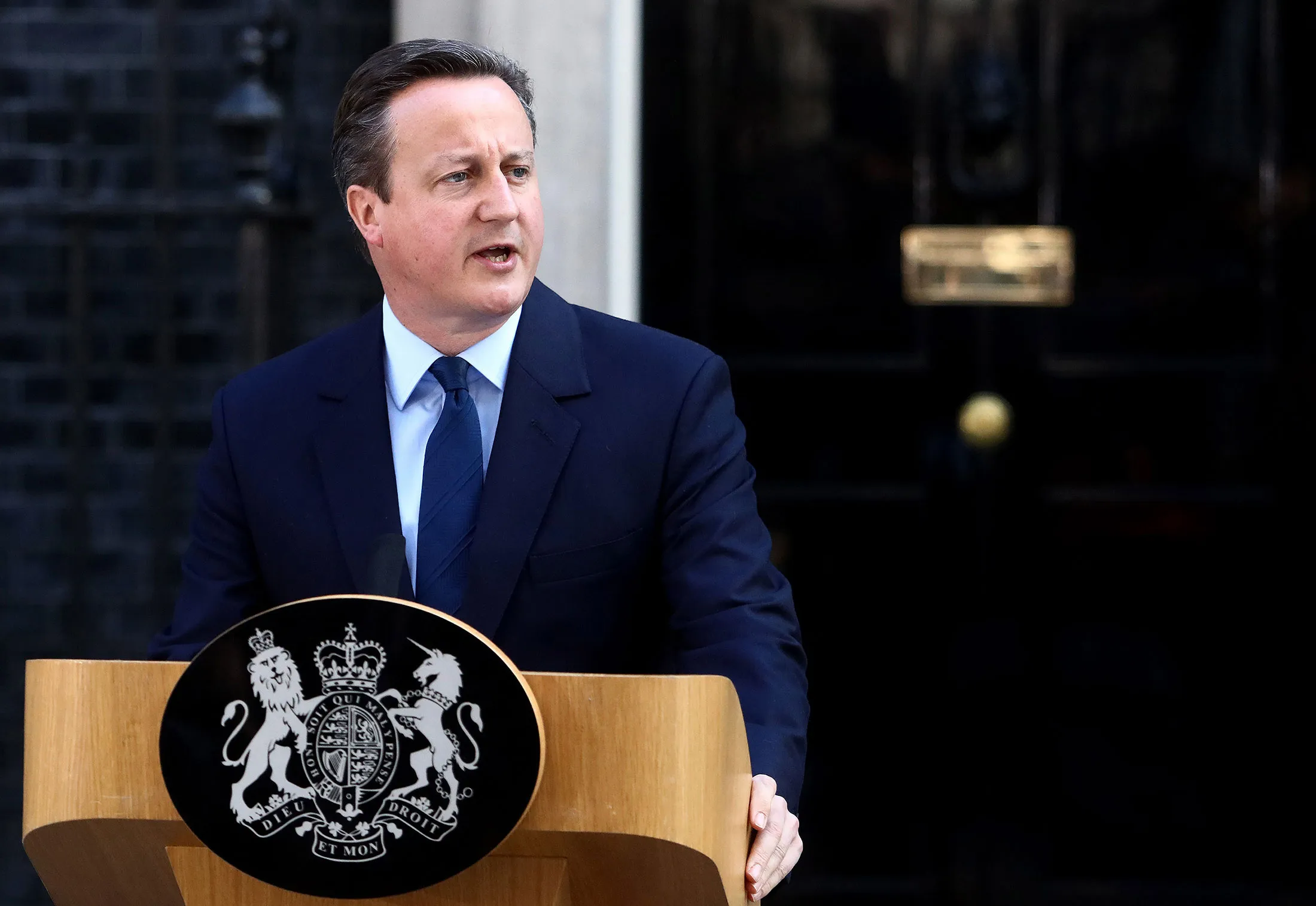
So while it’s impossible to argue that Brexit has gone well economically or delivered on its promises, it’s still very much possible to contend that this is due to faulty implementation by half a dozen short-term prime ministers. As Johnson admitted, he and his fellow campaigners had no plan if Britain voted to leave. Neither did David Cameron, who called the referendum in the first place, and who instantly resigned rather than take responsibility for the mess.
This irresponsibility by the leading figures in the drama explains the emotion the issue still generates. Cameron and Johnson are alumni of Eton and Oxford. Britain remains bedeviled by its class system. The vote amounted to a furious reaction against the elites. And yet any chance to gain from Brexit appears to have been squandered by over-privileged and feckless men. Of course people are angry about it.
More From Bloomberg Opinion
- Britain Can Survive Another Few Months of Starmer Drift: Rosa Prince
- FIFA Was Right About Ticket Pricing: Juan Pablo Spinetto
- Warsh Loves Brevity Almost as Much as He Hates Inflation: Jonathan Levin
Want more Bloomberg Opinion? OPIN. Or you can subscribe to our daily newsletter.
Like Bloomberg's Points of Return? Subscribe for unlimited access to trusted, data-based journalism in 120 countries around the world and gain expert analysis from exclusive daily newsletters like Markets Daily or Odd Lots.
Preceded by David Cameron (who resigned after losing the referendum he'd called), Theresa May, Boris Johnson, Liz Truss and Rishi Sunak.
View in article
This column reflects the personal views of the author and does not necessarily reflect the opinion of the editorial board or Bloomberg LP and its owners.


Comments
Post a Comment