Alan Greenspan Loved America, Capitalism — and Gold

Translate
Takeaways by Bloomberg AI
“Do you ever indulge?” Alan Greenspan, then in his early nineties, asked with a twinkle in the eye. We were both flagging — it was four in the afternoon, and we had been laboring since nine — and I replied, flustered, that I might have done a bit as an undergraduate, but those days were over. The former Federal Reserve chairman immediately got up from the large table where we sat, walked over to his desk with a surprisingly jaunty step given his back problems, and produced a slim package wrapped in silver foil. We then sat in silence munching on his secret stash of dark chocolate.
I had never met Greenspan when our mutual editor at Penguin decided it might be an idea to put us together to write an economic history of the US, eventually published as Capitalism in America: A History. The ex-Fed boss concluded that I passed his ideological test largely because, when he first called me, I was attending the Edinburgh Book Festival and he associated the city with Adam Smith and the Scottish Enlightenment.
We spent many weeks working together every day in his office on Washington’s Connecticut Avenue. He liked to talk extempore while I took notes, though he frequently interrupted his flow with calls for his assistants to produce charts. There followed months of me submitting drafts and him returning them scrawled all over in handwriting almost as illegible as my own.
I naturally started off in awe — Greenspan had been at the heart of the global economy for decades and had an exotic background as a jazz saxophonist and Ayn Rand disciple while I was a mere scribbler — but he treated me as an equal. He called me at odd times, often prompted by the discovery of a historical curiosity. Always charming and often funny, he was free from the self-importance that is almost obligatory for Washington’s great and good.
Greenspan came across as a 1950s organization man. He always wore a suit and tie, and his office was spick and span. When I suggested that the Silicon Valley of the 1980s owed something to the spirit of the counterculture, he refused to countenance it. For him, the computer revolution was the handiwork of men in white shirts and pocket protectors. Yet there were plenty of contradictions beneath the surface.
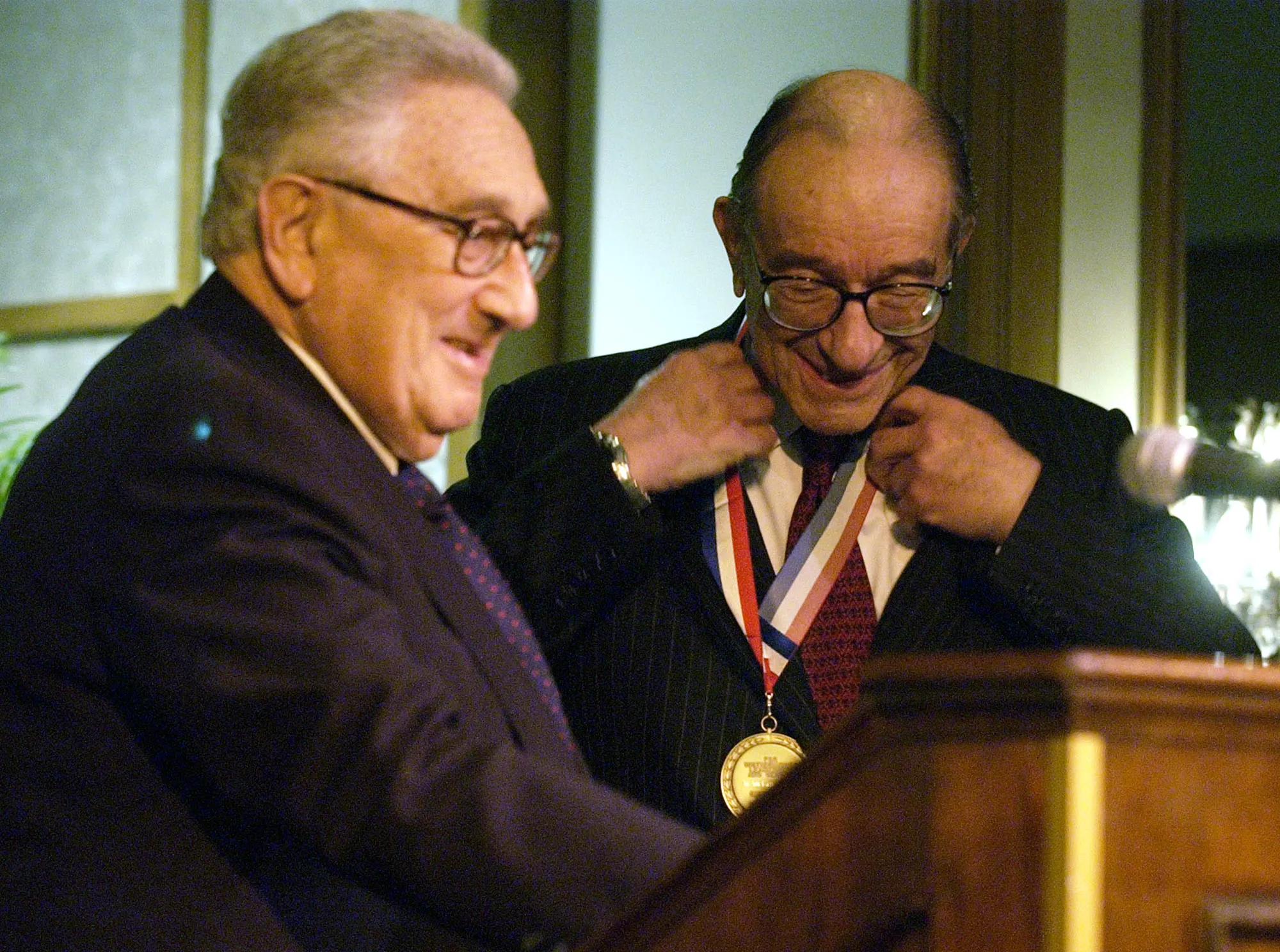
He was an ideologue with an acute political sense; a libertarian who had thrived at the heart of big government — and who had once outmaneuvered Henry Kissinger. In his nineties, he frequently reverted to his youthful passions. He sometimes talked about the desirability of returning to the gold standard and painted both FDR and the New Deal in the blackest colors. I tried to moderate these enthusiasms not by direct argument but by appealing to his political sense. Such arguments might arouse unnecessary hostility, I argued, and therefore reduce our chances of getting our bigger message across.
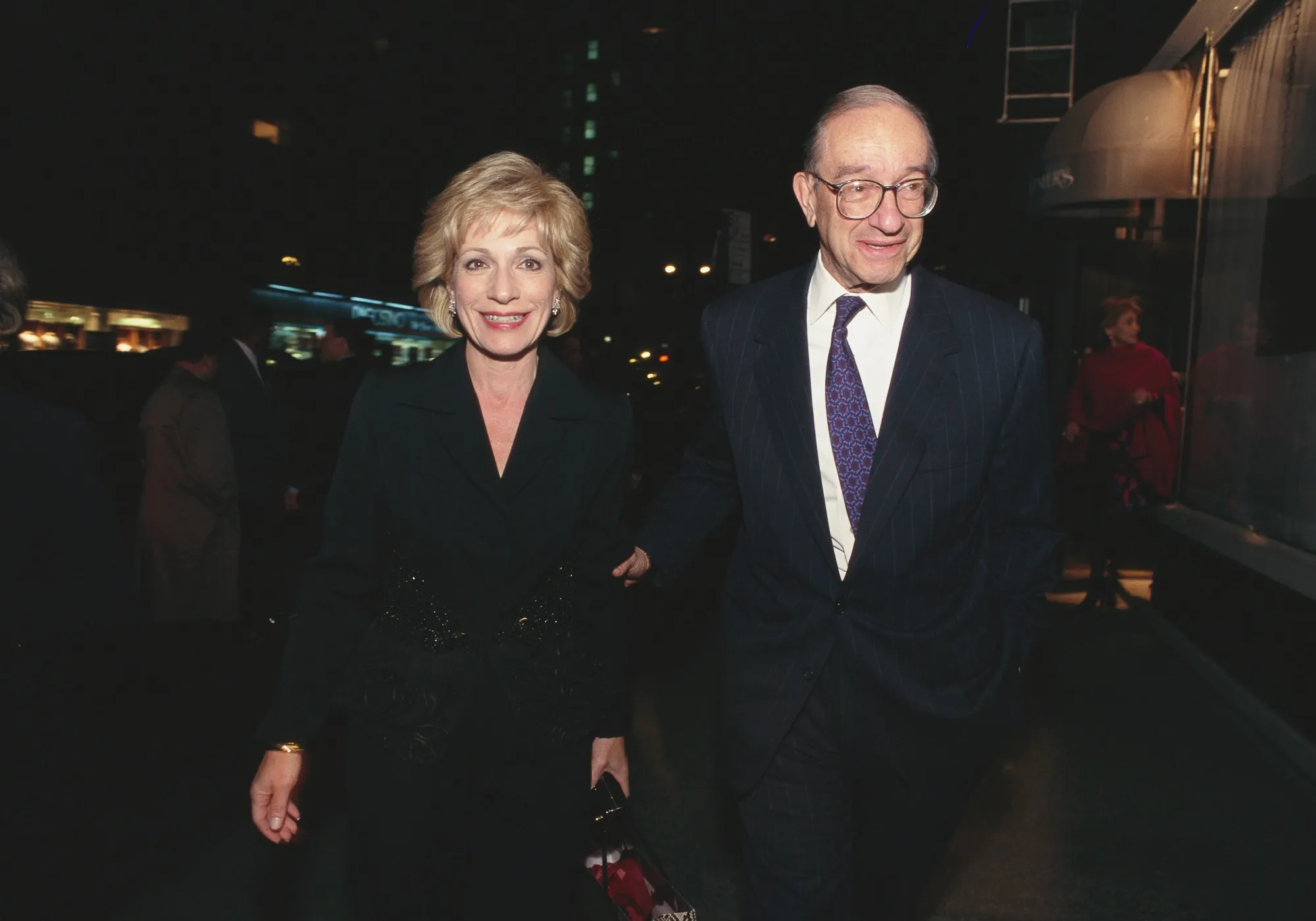
He was also a hard head with a soft heart. The five-volume Cambridge Historical Statistics of the United States occupied pride of place on his shelves, almost like a religious icon. His appetite for work was boundless, almost as if he thought it would suspend the aging process. Yet he doted on his wife, NBC’s Andrea Mitchell, either watching her TV appearances live or recording them. and he had an eclectic collection of heroes such as James Hill, the railway tycoon, Grover Cleveland, the US president who defended laissez-faire orthodoxy, and Alexander Hamilton. He confessed he was so fascinated by gold that he often spent the evening staring at a lump of it.
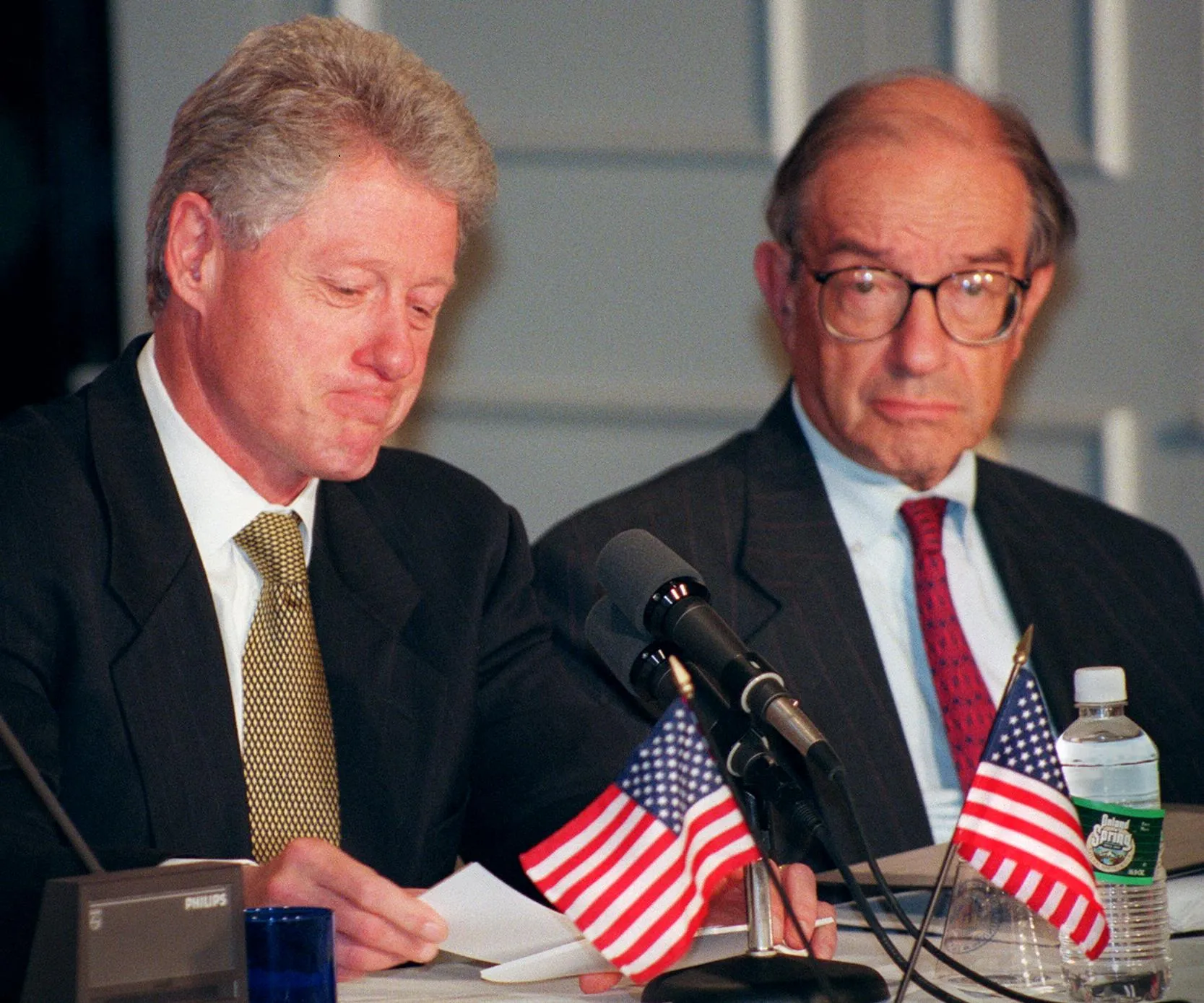
He was not so sentimental about his lifetime in politics. There were no misty-eyed reminiscences. An obvious reason was that the Democrats, under Bill Clinton, had done a better job of delivering his ideal of a balanced budget than his own party, the Republicans. He frequently mentioned that Clinton was the most intelligent president he had worked for, along with Nixon. He seemed detached from the contemporary conservative movement. He frequently mentioned that Donald Trump cheated at golf, a grave sin for this golf- and tennis-loving man. He was furious that a right-wing talk show host who moved into his neighborhood was building a giant deck. Brexit for him was pure folly.
This points to another Greenspan contradiction: He was a conservative ideologue who loved the Washington establishment. He cited liberals such as the historian Alan Brinkley and the Supreme Court judge Stephen Breyer as sources of historical wisdom. This all melded into Anglophilia. His favorite TV show was Downton Abbey. His favorite UK politician, as far as I could tell, was Gordon Brown, who invited him to give a speech at Adam Smith’s birthplace. He was inordinately proud that he shared a birthday with the queen.

Yet there can be no doubt about the radicalism of his view of economic history. Greenspan shared Joseph Schumpeter’s belief that the most powerful force in human affairs was creative destruction. The only way for society to get richer is to increase productivity. And the only way to lift productivity is the ruthless replacement of inefficiency with efficiency. This will always be fraught because interest groups will favor the past over the future and political fantasists will pretend you can have high living standards without incessant renewal.
Greenspan regarded the US as the greatest theater of creative destruction because it combined economic freedom, enshrined in the constitution, with vast natural resources. He celebrated the ability of business geniuses to imagine the future and then summon up giant enterprises to bring it into being. For him, Carnegie and Rockefeller were giants of creativity rather than robber barons.
His favorite era of US history was the gilded age when business towered over government. For all his years at Washington’s heart, he believed the job of politicians was to provide a stable environment so that entrepreneurs could make bets on the future. He was enthralled by globalization because he thought that it could repeat the process that made America the world’s richest country.
I could never quite gauge how responsible he felt for the financial crisis. In 2008, he admitted to Congress that he had relied on overoptimistic economic models, but when we were working together he put a lot of the blame for the housing bust on bipartisan US policies that encouraged people who couldn’t afford mortgages to buy homes. He regarded financial bubbles as an inevitable part of capitalism, which may be one reason why he kept hankering after the gold standard as the best way to control them.
He also worried more than his critics might have allowed that the financial sector had got both too big and too self-serving. Though he spent much of his pre-Fed career pronouncing on Wall Street’s mysterious ways, and though he became a “new economy” booster, his greatest love was for the real economy: for the people who made real things in real places such as Cleveland and Detroit and managed to solve real logistical problems with refrigerated rail carts and shipping containers.
Penguin eventually turned our efforts into a beautiful book. The cover showed a 1904 view of lower Manhattan enveloped in smoke; there were 32 pages of plates and dozens of charts. As we sat contemplating the fruits of our labor, I quipped that the only thing that could prevent the book from becoming a bestseller was that the title, Capitalism in America, combined the two most unpopular words in the English language. He looked at me in complete confusion — for him these words were about as romantic as you could get.
This column reflects the personal views of the author and does not necessarily reflect the opinion of the editorial board or Bloomberg LP and its owners.
Greenspan Deflated One Bubble — His Own Authority
No central banker will ever again enjoy the same aura of invincibility.

Translate
To get John Authers’ newsletter delivered directly to your inbox, sign up here.
At the outset of his last year as chairman of the Federal Reserve, Alan Greenspan had a warning. “History cautions,” he told Congress in 2005, “that people experiencing long periods of relative stability are prone to excess.”
The idea wasn’t unique to Greenspan, who passed away this week at the age of 100. These days, the notion that stability breeds instability is associated with the economist Hyman Minsky, a trenchant critic of the modern financial system. But Greenspan, possibly that system’s most ardent defender, was alive to the risk. That raises the critical question for any discussion of a legacy that includes presiding over 18 years of almost uninterrupted prosperity: Why did he fail to counter the complacency, and could he have thwarted the disaster that engulfed global finance two years after he left the Fed?
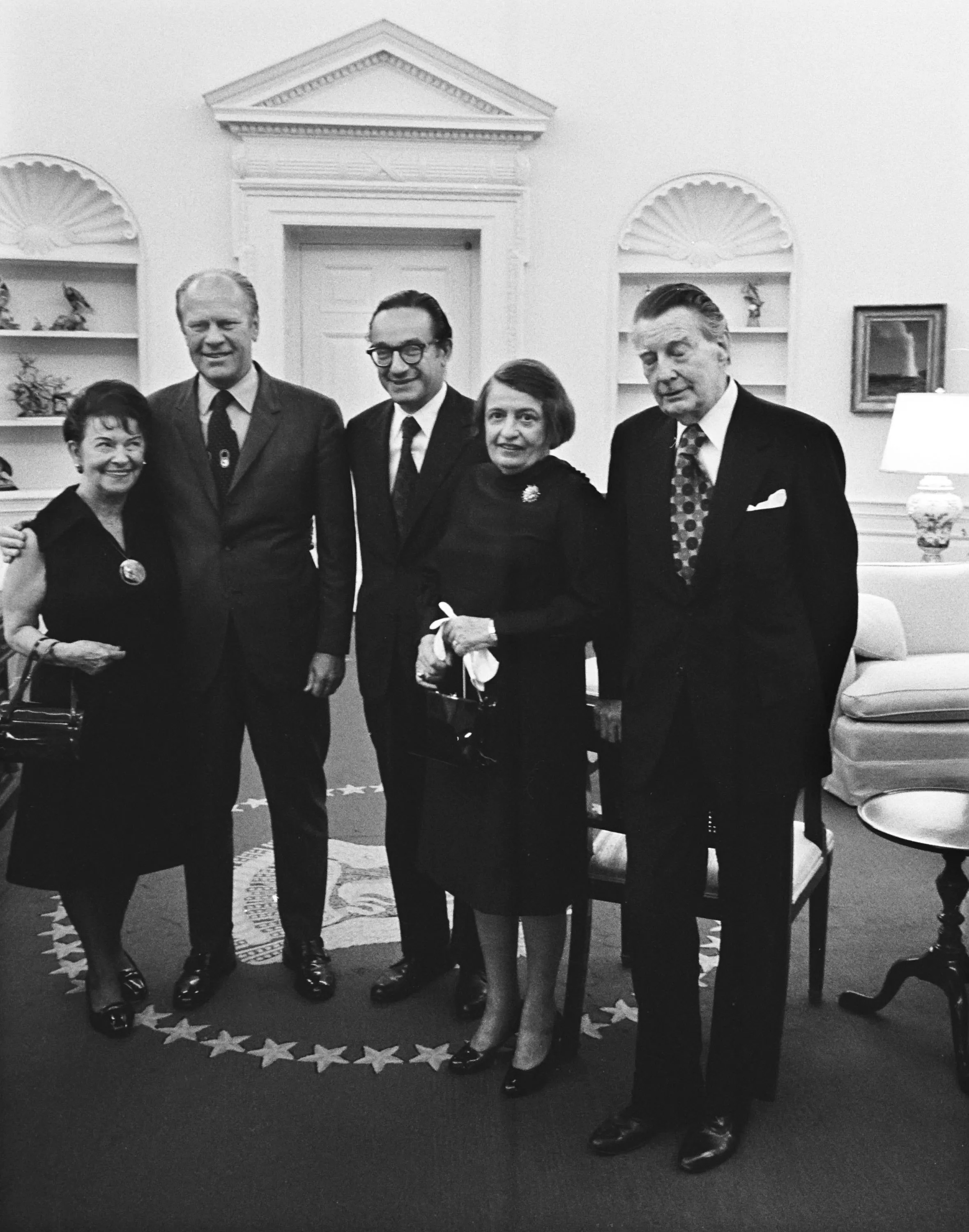
Greenspan had an extraordinary life. Brought up the child of German-Jewish immigrants in uptown Manhattan, he became a professional jazz musician and devoted disciple of the libertarian philosopher Ayn Rand on his way to power at the Fed, an institution he’d once said should not exist.
Other central bankers built their reputations fighting crises — Paul Volcker and 1970s stagflation, Ben Bernanke and the Global Financial Crisis, or Jerome Powell and the pandemic. Greenspan had his share of scary moments, from the Black Monday crash of 1987 through to the 9/11 terror attacks, but the economy sailed on with only one brief recession during the 1990 Gulf War. He presided over declining inflation and unemployment, and ever-reducing bond yields.
The debate over his reputation hinges on how he handled prosperity. From 1996 to 1999, when almost nothing seemed to go wrong, the seeds for future disaster — arguably — were sown. And by happy coincidence, they overlapped exactly with my first tour of duty covering the Fed.
1996: Irrational Exuberance and the Hike That Wasn’t
The first Federal Open Market Committee meeting I ever covered came in September 1996. There wasn’t a lot to do. At 2 p.m., the communique dropped, with a few convoluted words and the announcement that rates weren’t changing. That was it. There were no press conferences or dot plots then, and Greenspan didn’t explain himself. Earlier leaks had suggested a number of governors wanted to hike, so stock markets briefly got excited, then subsided by the close.
That meeting is back on the agenda because Kevin Warsh, Greenspan’s latest successor, cites it as evidence that standing firm against rate hikes can pay dividends (and that there’s no need for the Fed to explain itself). Unlike the rookie Warsh, however, by this point Greenspan carried an aura of invincibility that no central banker since has come close to matching. He’d been a dove when necessary after Black Monday, and was hawkish enough to provoke a bear market in bonds in 1994. Proven right every time, by 1996 it literally didn’t seem to occur to Wall Street or the media that he might be wrong. He didn’t explain his actions, and showed everyone who was boss.
Three months later, he prepared for a hike in classically Greenspan fashion by “mumbling with great incoherence” (his own words). It came on a Thursday night in December 1996, buried deep in a seven-page speech on the history of monetary policy. After ranging from William Jennings Bryan’s “cross of gold” through Alexander Hamilton and Andrew Jackson to Vietnam, Watergate and the end of the gold peg, he made a hypothetical observation halfway down the sixth page:
Sustained low inflation implies less uncertainty about the future, and lower risk premiums imply higher prices of stocks… But how do we know when irrational exuberance has unduly escalated asset values which then become subject to unexpected and prolonged contractions as they have in Japan over the past decade?
He made no assertion, but just raised a provocative rhetorical question. The words “irrational exuberance” entered history. The point followed:
We as central bankers need not be concerned if a collapsing financial asset bubble does not threaten to impair the real economy… But we should not underestimate or become complacent about the complexity of the interactions of asset markets and the economy. Thus, evaluating shifts in balance sheets generally, and in asset prices particularly must be an integral part of the development of monetary policy.
In translation: “It’s our business to stop bubbles forming and that might mean hiking rates.” Traders got the message, and the result was a wild and messy Friday selloff, which I struggled to understand as I had gone to sleep that Thursday night safe in the knowledge that his speech was just a bland journey through history. You live and learn.
A hike followed in March 1997, which engineered a desired 10% correction in the S&P 500. Greenspan as Wizard was at his apex, acting on his own time, expressing himself like the Delphic oracle, and using his personal discretion to take the market exactly where was good for it.
1998: The New Economy and LTCM
Then, something changed. Rates didn’t rise further, the economy boomed and stocks surged. By the summer of 1998, the S&P 500 was up 59% from the eve of the “Irrational Exuberance” speech, at the same multiple of cyclically adjusted earnings at its peak before the Great Crash in 1929. Rolling emerging market crises ushered in a summer of angst — and then in September, Greenspan gave a speech asking “Is There a New Economy?” As ever, he didn’t give a clear answer. But the mere fact that he was asking showed that he thought technology might have wrought a step change in productivity.
High share prices brought “an increased potential for instability,” but technological improvements were driving remarkable growth and prompting the notion of a new paradigm. The key signal, he argued, came from markets. The rally in stocks demonstrated confidence in an economic process that was “generally self-correcting as consumers and investors interact with a continually changing market reality.” He almost directly contradicted his alarm over irrational exuberance 21 months earlier:
I do not claim that all market behavior is a rational response to changes in the real world. But most of it must be.
At some point, he had changed his mind. Days later, the Long-Term Capital Management hedge fund imploded, and the New York Fed engineered a bailout by its creditor banks. For the first time, Volcker criticized his successor in public: “Why should the weight of the federal government be brought to bear to help out a private investor?”
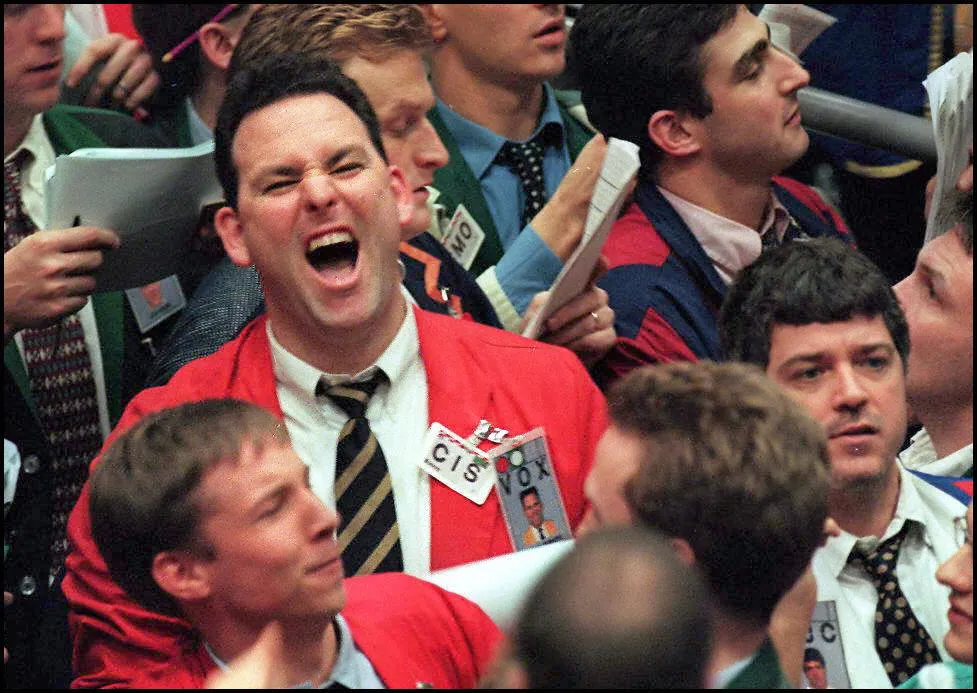
More drama followed. The Fed cut rates to ease the credit market, then did so again late on a Thursday afternoon. I was reporting on it at the time; it came completely out of the blue, following no speculation. People at the other end of the phone sounded aghast, and rushed to buy stocks. Sentiment turned on a dime that afternoon in a way I’ve never witnessed since.
From that rate cut until the top 15 months later, the tech-heavy Nasdaq 100 rose an unfathomable 325% — irrational exuberance by any credible definition. Yet Greenspan had decided he didn’t need to put a stop to it.
By the time the bubble burst — and the Fed leapt in with rate cuts to cushion the blow — he was no longer the inscrutable wizard above criticism. A new phrase entered the Wall Street lexicon: the “Greenspan Put.” The theory was that if the stock market sold off, Greenspan would cut rates to bail out investors. That belief has dogged the Fed ever since — while the notion of a central banker ever again enjoying a Greenspan-like aura of authority is also over.
1999: The End of Glass-Steagall
The demise of America’s tight post-Depression system of regulation came in 1999. Greenspan’s Fed had peeled away its limits on interstate banking, which had created a balkanized system of many small banks. Amid merger mania, Glass-Steagall, the 1933 act that barred investment banks from commercial banking and insurance, finally met its end.
Looking back, it’s remarkable how inevitable this seemed. Glass-Steagall and interstate banking restrictions were “obsolete.” US banks needed to compete with Europe’s financial supermarkets and benefit from scale. The only prominent dissenting voice I can recall belonged to Henry Kaufman, the Salomon Brothers economist known as “Dr. Doom” from his years of spookily accurate and very pessimistic economic forecasts in the 1970s. He went to the same George Washington High School in Washington Heights as Greenspan and Henry Kissinger, who died in 2023. (As the neighborhood changed after World War II, its most famous subsequent alumni included baseball players Rod Carew and Manny Ramirez). Kaufman, still alive at 98, argued that allowing giant bank mergers would create institutions too big to be allowed to fail, and thus force the Fed to regulate them as tightly as utilities. He was treated like a crank. The massive bailouts for Citigroup and Bank of America a decade later showed that he was right.
Yet Greenspan brought his authority to bear against “outdated restrictions that serve no useful purpose, that decrease economic efficiency, and that as a result, limit choices and option for the consumer.” There were real benefits to “one-stop shopping. ” He told Congress that change was inevitable, and he got what he wanted.
Charles Calomiris, a Columbia University professor, found that Greenspan was a “first-rate rhetorician”:
When he advocated deregulation, he argued that there was no clear evidence that deregulation would cause harm. When he opposed deregulation, he argued that there was no clear evidence that deregulation would not cause harm.
The Legacy
Greenspan’s admission to Congress in October 2008 during the thick of the crisis — that he was in a “state of shocked disbelief,” as he had expected lenders’ self-interest to protect shareholders — is rightly famous. Few other players in that drama were as honest.
Rereading his last testimony to Congress as chairman, in 2005, reveals that he had already identified many of the problems that would soon hit. He was worried by the mispricing of credit, feared that the economy was growing reliant on rising house prices, and was alarmed by the Fed’s inability to push up long-term bond yields and mortgage rates (a “conundrum,” as he called it). All were part of the hangover from the dot-com bubble of 2000, and the Fed’s response with easy money. He was also concerned about inequality, warning that “such a stark bifurcation of wealth and income trends among large segments of the population can fuel resentment and political polarization.”
Just like the prosperity he had preserved for almost two decades, these factors were in many ways his creation. We can never know counterfactuals. But by failing to follow his own precepts from the Irrational Exuberance speech for another three years, he fostered the conditions that led to crisis.
More From Bloomberg Opinion
- The Race to Replace Jamie Dimon Is On. There’s One Big Loss: Paul J. Davies
- Europe’s Weapons Makers Are Facing a Battalion of Problems: Chris Bryant
- It’s Too Soon toBreathe Easy on China’s Economy: Daniel Moss
Want more Bloomberg Opinion? OPIN. Or you can subscribe to our daily newsletter.
This column reflects the personal views of the author and does not necessarily reflect the opinion of the editorial board or Bloomberg LP and its owners.


Comments
Post a Comment