- Get link
- X
- Other Apps
OBITUARY
MARY- DELL CHILTON| 1939- 2026
She Was Known as the Mother Of Genetically Modified Crops
She led the research team that produced the first transgenic plant but had little interest in becoming the spokesperson for GMOs
BY JON MOOALLEM
In 1970, Mary-Dell Chilton was a perseverant but underemployed chemist teaching parttime at the University of Washington in Seattle— a position she’d leapt at only because, after months at home caring for an infant, she was desperate to get back to work.
One of her students gave a presentation about a recently published paper about a tumor-producing disease that affected grapes, stone fruits and other crops. The paper claimed that a common soil bacteria, Agrobacterium tumefaciens , was actually transplanting its own genes into the DNA of the affected plant—genes that, once expressed, spurred the growth of those tumors.
“I just absolutely did not believe it,” Chilton recalled. In the 2018 book “Seeds of Science,” journalist Mark Lynas writes that Chilton even called the paper’s lead author in Belgium, Marc Van Montagu, just to tell him she thought his results—this idea that a bacteria was going around smuggling its DNA into a plant—were “nonsense, total nonsense.”
Chilton set out to debunk the idea. She wound up proving it instead. And in 1982, after a dozen years of work to decode how agrobacterium was pulling this off, then to harness and manipulate that capability herself, Chilton led the research team that produced the first transgenic plant.
Chilton, who died June 24 at her home in Carrboro, N.C., at age 87, was effectively the mother of genetically modified crops. The method she helped develop unlocked a biotechnological revolution in agribusiness, leading to the widespread and often controversial adoption of genetically modified crops. More than 90% of the corn, soybeans, canola and cotton planted in the U.S. are now genetically modified, according to the Food and Drug Administration, typically to boost their resistance to pests and commercial herbicides.
Chilton left academia for the private sector after her early pioneering work, joining Syngenta in 1983, when it was still known as Ciba-Geigy, to build the Swiss multinational’s first biotech lab. She served as Syngenta Biotechnology’s executive director of agricultural biotechnology and, later, principal scientist. In 2013, Chilton received the World Food Prize and, in 2023, President Joe Biden awarded her a National Medal of Technology and Innovation at the White House.
In a statement, Tom Vilsack, the World Food Prize Foundation’s CEO and former U.S. Agriculture secretary, said: “Millions of farmers all over the world have Dr. Chilton to thank for protecting their crops from disease, pests and climate shocks.” Chilton enjoyed the attention but seemed far less interested in it than in puzzling out new problems in her lab. According to her son Mark Chilton, it took some arm-twisting to get her to attend the White House ceremony. Mary Dell Matchett II was born Feb. 2, 1939, in Indianapolis. Her mother, also Mary Dell Matchett, later hyphenated her daughter’s name after a teacher called her “Mary.”
She was primarily raised by her maternal grandparents in North Carolina. Back with her parents in suburban Chicago for high school, Chilton discovered a love of science but “had no sense that I was particularly good at it,” she wrote. The signs got more obvious. She did so well on one exam that school administrators assumed she cheated. When she decided to build a Cassegrainian telescope for a school science fair, she was invited by the director of Chicago’s Adler Planetarium to complete her project there, and she was one of 40 students (and only eight girls) brought to Washington, D.C., for the annual Westinghouse Science Talent Search.
She entered the University of Illinois in 1956 and earned her Ph.D. in chemistry there in 1967. While finishing her dissertation, Chilton followed a mentor to the University of Washington. There, in 1966, she married Scott Chilton, also a chemist at the univer sity. They had two sons, both of whom survive her. Scott Chil --ton died in 2004. Chilton didn’t have her own lab or re --search program at the
University of Washing --ton when she first en --countered the paper about agrobacterium. But she talked another chemist, Eugene W. Nester, into letting her design experiments in his lab to investigate. For several years, scientists had been ex perimenting with splic ing genes from one or ganism into another. The work was controversial; the safety and ethics of such tinkering was debated. But now, Chilton showed that nature concocted such chimeras on its own. Chilton published her findings in the journal Cell in 1977. Kathleen Postle, a colleague around that time, called the paper “a tour de force.” And yet, Chilton still couldn’t get the University of Washington to give her a tenure-track position like her husband had.
Scott Chilton encouraged his wife to look elsewhere. In 1979, they were both hired at Washington University in St. Louis, and in 1982, Mary-Dell’s team, collaborating with scientists from the University of Pennsylvania, implanted a yeast gene into a tobacco plant, creating the first transgenic plant. They further showed that the plant’s progeny retained that new DNA; their creation regenerated itself. Chilton’s success was announced at a 1983 symposium, alongside two competitors who’d achieved similar feats at nearly the same time. One was a European group led by Montagu and the other was Monsanto. Based near Chilton’s lab, the corporation had funded two postdoc positions for Chilton and engaged her as a consultant in exchange for access to her groundbreaking science.
Chilton’s group was the first to publish its results, but the press consistently put the spotlight on Monsanto alone. In “Lords of the Harvest,” a 2001 book by reporter Daniel Charles, Chilton described her feelings toward Monsanto as “some terrible mixture of jealousy and respect and admiration and anger.” She later recalled: “I woke up and smelled the coffee pretty quickly. Industry wanted this science.”
In 1983, she joined Ciba-Geigy, which became Syngenta. There, Chilton could staff up and build her own lab at the company’s campus in Research Triangle Park, N.C., near Chapel Hill.
Even after Chilton’s retirement in 2018, she frequently returned to her lab—in a building with her name over the door, and her portrait in the lobby— to discuss recent publications and mentor other researchers, according to Trevor Hohls, the company’s global head of seeds research and development.
In the course of Chilton’s career, genetically modified crops became both commonplace and controversial. The safety, efficacy and equitable global use of the technology has been furiously debated while, in various parts of the world, GMOs have been the target of strict regulations, lawsuits and protests. Chilton had little interest in being a spokesperson for GMOs however, other than to insist they were safe.
“These are social questions, not science,” she said. “I do science.”
‘Millions of farmers all over the world have Dr. Chilton to thank for protecting their crops.’
TOM VILSACK World Food Prize Foundation’s CEO
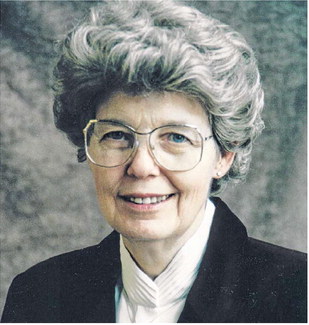
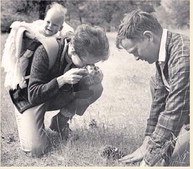
CHILTON FAMILY; RON SACHS/ CNP/ ZUMA PRESS
Mary-Dell Chilton in the 1980s, left, and with her husband and son Andrew in 1969, below.
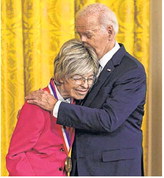
Chilton receives the National Medal of Technology and Innovation from President Joe Biden in 2023.
- Get link
- X
- Other Apps
Comments
Post a Comment