Danger of Carney’s ‘middle power’ manifesto
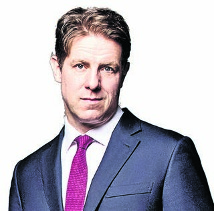
A star was born in Davos last week. Everyone knew Donald Trump was coming to denounce the global elite and their liberal order. But no one expected Mark Carney, Canada’s prime minister, to emerge as the anti- Trump with a speech that stole the conference. He invoked a famous essay by Vaclav Havel, the Czech playwright-turned-president, about living under the lies of communism and compared this to the US rulesbased order. It’s time to admit those days are gone, he said. Stop living the lie. Instead, “middle powers” can get together and build something new.
Carney was as eloquent as Trump was rambling; as considered as his counterpart is reckless. The Havel reference was perfectly pitched to my generation, who saw communism collapse and the liberal order emerge. My wife’s parents fled the regime that Havel so beautifully lampooned in The Power of the Powerless, but my reading of that essay is very different. We certainly live in times of denial and self-deceit. But if you apply Havel’s lens to those gathered in Davos, we see Europe, not America, living the lie.
He was writing in 1978 about a greengrocer in communist Czechoslovakia who places a sign in his window saying “Workers of the World, Unite!” He doesn’t believe it. No one does. But everyone goes along with the pretence, for an easy life. This creates a “bridge of excuses”, letting both the greengrocer and the regime pretend something nobler is happening than mere submission. The result? A “world of appearances”. Ritualistic language, detached from reality. But sooner or later, he says, people stop living the lie, take the sign down — and the illusion shatters.
Does Carney’s analogy hold? Havel’s target was communism, a lie that killed millions and immiserated hundreds of millions. The US-led liberal order led to the greatest explosion of wealth and the fastest fall in global poverty in human history. Are we so sure this era is over? Do we really see, in Trump, a president unleashed in the “unhindered pursuit of power and influence”, as Carney says? Or a president who has hit the limits of his authority and was last week forced to row back?
Annexing Greenland, for example, would be illegal under US law. Congress would not have authorised funds for such a venture; generals would have refused or resigned. Americans were appalled that Trump was even talking about it; polls showed it went down worse than even the Epstein scandal. Markets tanked. Not for the first time, Trump had to back down: a US president facing midterms can ill afford such public reaction. It’s a basic democratic constraint. Even his tariffs, those tools of economic coercion, may soon be ruled illegal by the Supreme Court.
Even hinting at a rupture with the US is preposterous
So it’s dangerous to talk about the “middle powers” being squeezed between two bullying great powers. There is no moral equivalence between American democracy and Chinese autocracy — and no doubt about who we should stay closer to. It was certainly dismaying to see Trump threaten tariffs to undermine the territorial integrity of a Nato ally. But his suggestion was also illegal and, ergo, unworkable. Safe to say the death of the US rules-based order has been rather exaggerated.
Much of what Carney said did make sense: to grow economies you need to cut taxes and red tape. Strike more trade deals, find new allies. But this was not a popular theme among the European leaders, who preferred what he said about an alliance of middle powers. Emmanuel Macron has been talking for a while about the need to end the “era” of relying on America. Ursula von der Leyen, the EU’s president, informed Davos that “Europe must speed up its push for independence” and promised an “unflinching, united and proportional” response to American bullying. Donald Tusk, who as Polish prime minister holds the EU presidency, declared Europe to be “equal to the greatest powers in the world”.
Yet without a proper military, there is no power. The great lie that Europe has told itself is that the post-Soviet world is so safe there’s hardly any need for an expensive military. When threats do emerge in Europe’s backyard (Bosnia, Libya, Ukraine) we beg the US to do most of the work. This is why even hinting at a rupture with America is preposterous for a Europe that relies entirely on the US nuclear deterrent for defence against Russia and China. To pontificate about freedom without being willing to defend it is to build up the very “world of appearances” that Havel held up to ridicule.
It fell to Volodymyr Zelensky to call out the hypocrisy. Going to Davos is like Groundhog Day, he said: always the same grandstanding before leaders scarper back to the shelter of the fictions they built. “Europe loves to discuss the future,” he said, “but avoids taking action today that defines what kind of future we will have.” Look at the massacred Iranian protesters, he said: what did Europe offer them? When just 40 European soldiers were sent to Greenland, what did that tell Xi and Putin? He might have quoted Havel’s 1990 speech to the US Congress suggesting that a new, free Europe could pay for its own defence. “American soldiers shouldn’t have to be separated from their mothers,” he said, “just because Europe is incapable of being a guarantor of world peace.”
Had those words been heeded, things might be different now. America might see Europe as a partner rather than a nagging dependent. Things are changing but nowhere near fast enough. Keir Starmer says he’ll raise defence spending to 3 per cent of GDP. He doesn’t believe it. No one does. But the sign goes in the window anyway. France is doing the same. Germany has pledged the money but struggles to find enough people to raise the army to its proposed strength. Only Poland and the Baltics have a credible plan to tool up.
Greatest threat to Nato is European denial not Trumpian outrage
Sticking with America is not just the best hope of protecting Europe’s security, it’s the only hope. And the greatest threat to this alliance is European denial and parsimony, not Trumpian outrage. As Zelensky said, there is worryingly little sign of this changing, which may be an issue if Ukraine ends up partitioned and a million Russian soldiers are sent back home as the Kremlin works out what to do with them.
“Without free, self-respecting, and autonomous citizens,” Havel wrote, “there can be no free and independent nations.” Europe’s leaders might start by becoming such citizens themselves. Not by quoting dissidents but by doing what dissidents actually did: facing uncomfortable truths, accepting responsibility — and then, acting accordingly.


Comments
Post a Comment