Is gold’s meteoric price rise merely a bubble? I wouldn’t bank on it
''Sometimes bare statistics showing how a particular asset has performed over a period of time do not tell the whole story.
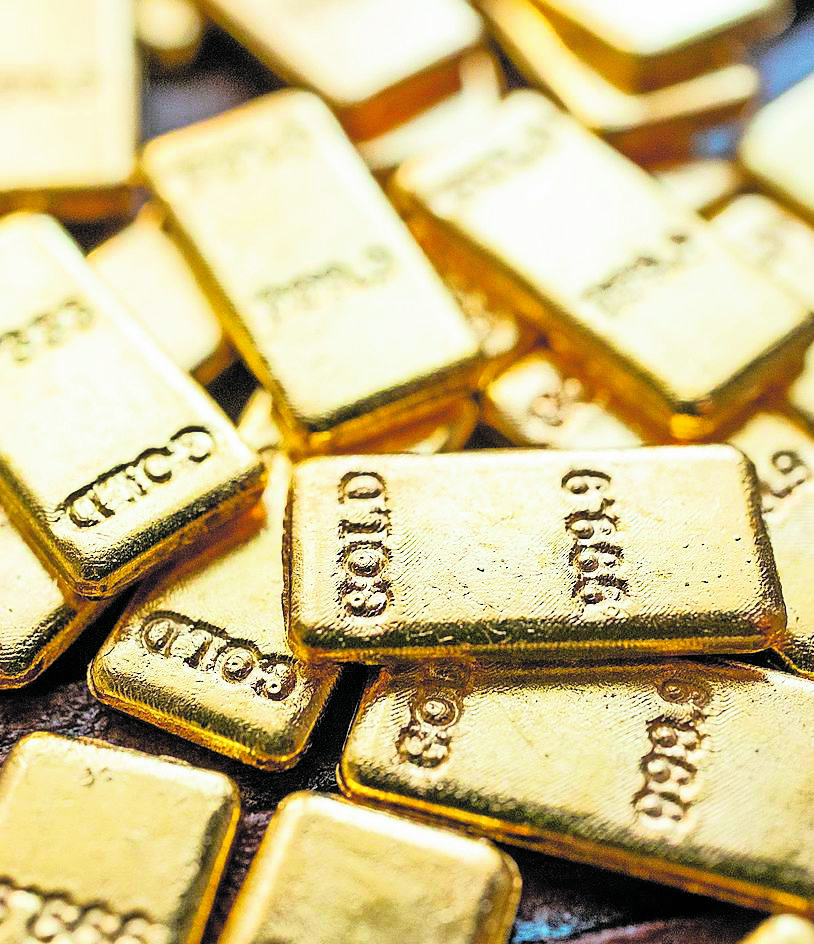
Take the gold price. It has risen by more than 70 per cent this year, hitting a new record on more than 50 occasions, the latest of which was Monday.
Compare it with other assets, though, and that performance is even more stunning.
Michael Hartnett, investment strategist at Bank of America Securities, pointed out last week that, in 2022, one ounce of gold would buy 15 barrels of oil. Today, one ounce of gold will buy just over 70 barrels.
Hartnett noted that, should gold rise by more than 10 per cent in 2026, it would be the fourth consecutive year in which it has achieved double-digit returns, something that has happened only twice in the past 100 years.
Those two previous periods bear ominous similarities to the state of the world today.
The first was from 1971 to 1974, when inflation took off and when geopolitical tensions were running high. The US was still embroiled in the Vietnam War and hostilities in the Middle East were bubbling, culminating in the 1973 Yom Kippur War between Israel and a coalition of Arab countries led by Egypt and Syria. There was an additional factor — not analogous with today — which was that, in August 1971, the US ended the dollar’s convertibility into gold at a fixed price, allowing the latter’s true market value to be established.
The second period of outperformance was from 1977 to 1980, again during which geopolitical tension was elevated, with the Cold War at its height. There was rampant inflation and confidence in the US dollar was severely undermined.
Today geopolitics is again of grave concern while confidence in the dollar has been undermined by various factors. Chief among these is the unpredictability of US government policy, most notably tariffs, but also the way tax cuts enshrined in President Trump’s “Big Beautiful Bill” will add substantially to America’s debt pile.
Analysts believe the run has further to go: Goldman Sachs said this month its base case was for the gold price to reach $4,900 an ounce by December 2026, and the risks to this forecast were to the upside. Last month, meanwhile, Deutsche Bank set a target for $5,150 an ounce by 2027.
Those forecasts are underpinned by a growing sense that demand for gold is, currently, increasingly inelastic. The most recent figures from the World Gold Council, covering the three months to the end of October, suggest 1,313 tonnes of the metal were bought during the period, the highest on record, driven by buying both from exchange traded funds (ETFs) and central banks.
The latter is the most interesting. During the three months to the end of October, central banks bought 220 tonnes of gold, up 10 per cent year on year, despite gold already being at record levels. The world’s central banks are now reckoned to own 32,000 tonnes globally — not far off the peak of 35,000 tonnes in 1965.
However, while the People’s Bank of China (PBoC) is regularly assumed to be the biggest central bank buyer of gold, that accolade in 2025 goes to the National Bank of Poland (NBP). It reported last week that it has now accumulated more than 543 tonnes of gold, buying a further 12.4 tonnes in November on top of the 67.1 tonnes it had bought from the beginning of the year to mid-October. That means the NBP has now amassed a larger amount of gold than the European Central Bank and comfortably more than the Bank of England.
The NBP, which currently holds 26 per cent of its reserves in gold, is now targeting 30 per cent — up from the previous 20 per cent — and may not stop there.
Adam Glapinski, the NBP governor, stated this month: “We do not cease to operate after success. We will strive to increase the share of gold in reserves even further.”
What has informed this buying is Russia’s invasion of Ukraine in 2022. The freezing of Russian assets following the invasion brought home to many central banks that they needed to have greater diversification of reserves, particularly given the weaponisation of the dollar and systems such as Swift, the main messaging network through which international payments are initiated.
Gold, with its traditional safe-haven qualities and being free of ties to any national economic policies, was an obvious beneficiary. Poland aims to take this to its logical conclusion by eventually having its gold stored in equal amounts in London, New York and Warsaw.
Significantly, among other leading central-bank buyers of gold this year have been a number of countries in Russia’s immediate orbit: Kazakhstan has been second only to Poland this year in its buying, while the central banks of Turkey, the Czech Republic and Serbia are all in the top ten.
Ironically, one of the few net sellers in the past year — three tonnes in October alone — has been Russia’s central bank, since selling gold is one of the few viable options open to Moscow to raise liquid funds to support its war effort.
Meanwhile, demand is also coming from another relative newcomer to the gold markets in the form of Tether Holdings, issuer of USDT, the world’s largest stablecoin. It told Bloomberg in July that it holds 80 tonnes of gold and has since been adding to that, acquiring 26 tonnes just in the third quarter of 2025, five times more than the PBoC has reported buying.
Many will assume that this explosive rise in the gold price is a bubble and the rally certainly has bubble-like characteristics. But for those sceptical that the rally has further to go, it is worth noting that it still pales in comparison with the period from 1977 to 1980, during which gold rose by more than 300 per cent.
Ian King is a former Business & City Editor of The Times


Comments
Post a Comment